Nature and humanity
For generations, the relationship between nature and humanity was often viewed through a lens of extraction: how much could be taken from the land to support a growing population? However, a profound shift is occurring across the British countryside. Farmers, landowners, and communities are increasingly recognising that long-term viability—both financial and ecological—relies on stewardship rather than mere production. This holistic approach integrates biodiversity, community connection, and economic resilience into a single, functioning ecosystem.
Navigating this landscape requires more than just traditional farming skills; it demands an understanding of ecology, social dynamics, and modern economics. Whether you are looking to transition to regenerative practices, establish a Community Supported Agriculture (CSA) scheme, or simply understand the value of the hedgerows on your land, this resource serves as a comprehensive guide to aligning agricultural practice with natural rhythms and human needs.
Valuing Natural Capital: Beyond the Balance Sheet
The concept of ‘Natural Capital’ has moved from academic papers to the forefront of farm business planning. In the UK, with the transition towards « PublicMoneyforPublicGoods » under schemes like ELMS (Environmental Land Management Schemes), understanding the economic value of your ecological assets is no longer optional—it is a financial necessity.
Assets Beneath Your Feet
Traditionally, a farm’s value was calculated by its tonnage of wheat or litres of milk. Today, investors and government bodies look at assets such as soil health, water filtration capacity, and pollinator populations. Soil erosion is no longer just an agronomic problem; it is a liability that devalues a land portfolio. Conversely, a farm that retains water and supports biodiversity commands a higher valuation and is more resilient against climate shocks.
Intensive vs Extensive Models
The debate between intensive and extensive farming is often framed as ‘profit vs nature’. However, when asset value protection is considered over the long term, extensive models often prove superior. Intensive systems may offer high short-term yields but can rapidly depreciate the natural capital (soil biology, water table quality) required to sustain those yields, leading to higher input costs and lower resilience.
Restoring Biodiversity: Practical Stewardship
Biodiversity is the engine that drives a healthy farm ecosystem. Moving from a monoculture to a species-rich environment requires specific technical knowledge and careful management. It is not simply about ‘letting nature take its course’, but about active, informed intervention.
The Science of Species Richness
To qualify for higher-tier stewardship payments, landowners must often prove the ecological value of their land. This involves precise monitoring:
- Using Quadrats: Estimating plant diversity per square metre is a fundamental skill. It provides the data needed to demonstrate progress to inspectors and investors.
- Indicator Species: Plants like Yellow Rattle are crucial. Known as the ‘meadow maker’, Yellow Rattle parasitises vigorous grasses, allowing delicate wildflowers to establish, thereby restoring species-rich grasslands.
- Timing is Everything: The timing of hay cutting is critical. Delaying mowing until after key indicator species have set seed ensures the persistence of the meadow for the following year.
Herbal Leys vs Improved Leys
While improved leys (often dominated by ryegrass) offer consistency, herbal leys are gaining traction for their multi-functional benefits. Deep-rooting herbs like chicory and plantain drought-proof the forage, improve soil structure, and offer medicinal benefits to livestock, often scoring higher for biodiversity metrics than standard swards.
Building Food Sovereignty and Community
The vulnerability of just-in-time supermarket supply chains has highlighted the need for robust local food systems. Food sovereignty is about returning control to producers and local communities, ensuring that food security is not dependent on fragile global logistics.
The Community Supported Agriculture (CSA) Model
CSAs represent a partnership between the farm and the consumer. Members pay upfront for a share of the harvest, sharing both the risks and the rewards of the season. To build a viable CSA, one must accurately calculate share prices that cover true costs—including fair wages—rather than just competing with supermarket prices.
Direct Sales and Distribution
Reaching the consumer efficiently is a constant challenge. Farmers markets offer high visibility and direct feedback, but can be labour-intensive. Food hubs, which aggregate produce from multiple local farms for distribution, often reach more people efficiently with a lower carbon footprint. The choice depends on the farm’s scale and the local demographic.
Marketing Ethics and Consumer Trust
In a crowded market, trust is the ultimate currency. Modern consumers are increasingly sophisticated; they can distinguish between genuine stewardship and ‘greenwashing’.
Navigating Labels: Regenerative vs Organic
While ‘Organic’ remains a legally protected and trusted standard, ‘Regenerative’ is resonating strongly with consumers interested in climate action and soil health. However, the lack of a strict legal definition for regenerative agriculture makes transparency vital. Labels like ‘Pasture for Life’ or ‘Soil Association’ Organic carry different weight and imply different management styles. Choosing the label that fits your specific ethos—rather than just the one you think will sell—is crucial for long-term authenticity.
The Transparency Trap
A common mistake is claiming transparency without delivering it. If you build a brand on ethical stewardship, your storytelling on social media must match the reality in the field. Hosting events like Open Farm Sunday can be powerful for building loyalty, but they expose your operation to public scrutiny. Authenticity protects against the reputational damage that occurs when consumer trust is broken.
Seed Sovereignty: The Foundation of Independence
True food security begins with the seed. Reliance on external seed suppliers for every season creates a dependency that can threaten farm independence.
- Open-Pollinated vs F1 Hybrids: While F1 hybrids offer uniformity, they cannot be saved true-to-type. Open-pollinated varieties allow farmers to save their own seed, adapting crops to their specific local microclimate over generations.
- The Legal Landscape: It is essential to understand the regulations regarding seed saving. Generally, saving seed for your own use is permitted, but selling that seed involves strict listing and certification rules.
- Maintaining Viability: Creating an on-farm seed bank requires technical skill. Seeds must be dried to specific moisture contents and stored correctly to maintain viability. conducting germination tests before spring sowing is a mandatory step to avoid crop failure.
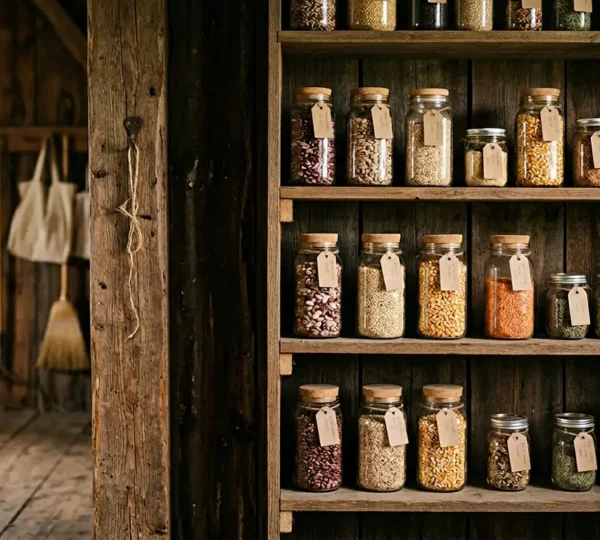
Creating On-Farm Seed Banks: Your Legal Guide to Saving Open-Pollinated Seeds
Relying on fragile, corporate-controlled seed supply chains is a significant risk for any farm. The solution is not just saving seeds, but building a legally sound and genetically resilient on-farm seed bank. This requires a professional approach, combining a clear…
Lire la suite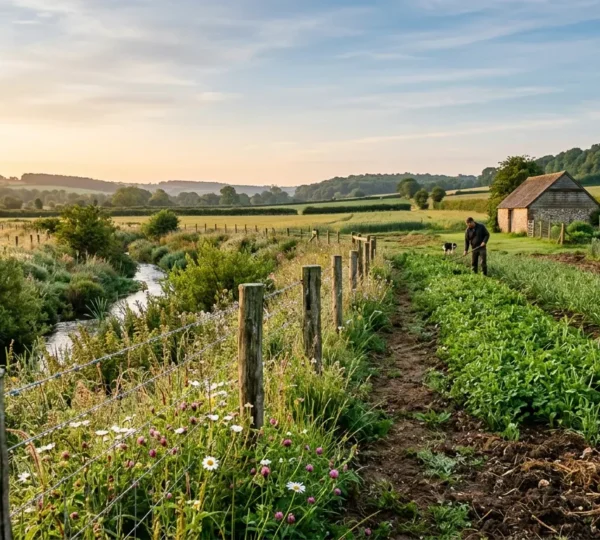
Preserving Natural Capital: How to Valuate Your Farm’s Ecological Assets
Valuing natural capital is not about abstract environmentalism; it’s a financial imperative for accurately pricing your land portfolio and securing investment. Ecosystem services like pollination and water filtration are quantifiable assets with calculable replacement costs that belong on your balance…
Lire la suite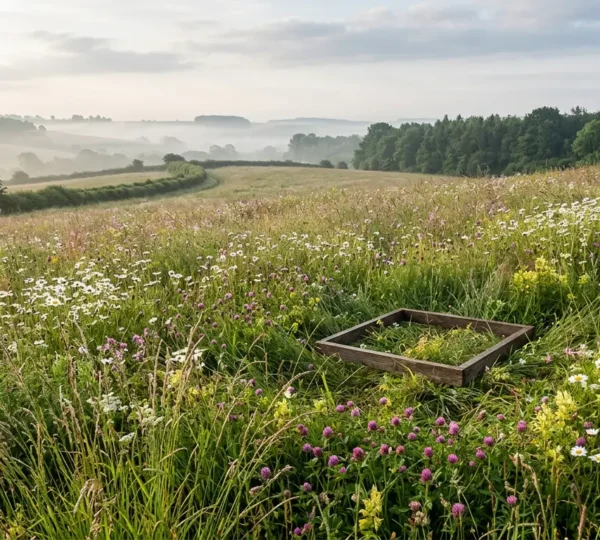
How to Conduct an Audit-Proof Species Richness Check to Qualify for Higher Tier Stewardship
Securing higher-tier stewardship payments is less about the act of planting and more about providing indisputable, audit-proof evidence of biodiversity that withstands an inspector’s scrutiny. Utilise the W-transect quadrat sampling method for robust, defensible data collection. Master the identification of…
Lire la suite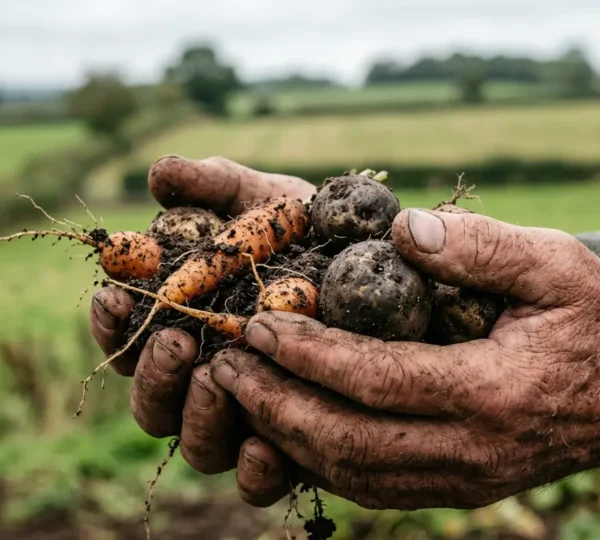
How to Build Food Sovereignty in Local UK Communities via Community Supported Agriculture?
Building a Community Supported Agriculture (CSA) scheme is a political act of engineering a resilient, decentralized food system to challenge our dependency on fragile corporate supply chains. Success depends on designing robust operational systems for finance, logistics, and labour before…
Lire la suite
How to Leverage Ethical Stewardship to Command a Premium Price for UK Produce?
True premium pricing for UK produce isn’t achieved through labels, but by building a brand narrative of provable ethical value that customers can see, feel, and invest in. ‘Regenerative’ stories that showcase visible ecosystem benefits resonate more powerfully with modern…
Lire la suite