True premium pricing for UK produce isn’t achieved through labels, but by building a brand narrative of provable ethical value that customers can see, feel, and invest in.
- ‘Regenerative’ stories that showcase visible ecosystem benefits resonate more powerfully with modern consumers than rule-based organic claims.
- Community models like CSA and interactive farm events transform passive customers into loyal advocates who understand and champion your premium price point.
Recommendation: Shift your focus from simply stating your credentials to communicating measurable outcomes (soil health, biodiversity) and transparently sharing your farm’s unique stewardship journey.
For UK farmers navigating a volatile market, the pressure to secure a fair price for high-quality produce is immense. The default advice often revolves around gaining certifications like ‘organic’ or simply being more active on social media. While these steps have merit, they often fall short of creating a truly resilient brand that can command a consistent premium. Many producers find themselves trapped, having invested in sustainable practices without seeing a corresponding increase in customer willingness to pay.
This happens because the conversation has moved beyond simple labels. Consumers, especially those seeking out premium, local food, are looking for a deeper connection. They are tired of greenwashing and hungry for authenticity. They want to invest in a story they believe in and see tangible proof of the positive impact their purchase makes. This is where the concept of ethical stewardship becomes a powerful marketing tool, not as a box-ticking exercise, but as the central plot of your brand’s story.
But what if the key wasn’t just *telling* your story, but building a complete ethical infrastructure that makes that story undeniable? The true opportunity lies not in the label itself, but in crafting a compelling narrative of provable value. This means demonstrating your commitment through every touchpoint—from the visible health of your soil and the diversity of your pastures to the vibrant community you build around your farm.
This guide will deconstruct how to move beyond generic claims and build a brand founded on tangible stewardship. We will explore how to articulate your value, choose the right certifications to support your ethos, engage your community, and leverage public funding to create a farm business that is not only environmentally sound but also commandingly profitable.
This article provides a strategic roadmap for UK farmers to translate their hard work in the field into demonstrable brand equity. Below is a summary of the key areas we will cover, from crafting your narrative to structuring a community-supported model.
Summary: How to Build a Premium Brand Through Ethical Stewardship
- Why ‘Regenerative’ Sells Better Than ‘Organic’ to Modern Consumers?
- How to Tell Your Farm’s Stewardship Story on Social Media?
- Pasture for Life vs Soil Association: Which Label Fits Your Ethos?
- The Transparency Mistake That Destroys Consumer Trust Instantly
- Open Farm Sunday: How to Host an Event That Builds Loyal Customers?
- How to Calculate Share Prices for a Viable Community Supported Agriculture Scheme?
- Public Money for Public Goods: How to Maximize ELMS Income?
- How to Build Food Sovereignty in Local UK Communities via Community Supported Agriculture?
Why ‘Regenerative’ Sells Better Than ‘Organic’ to Modern Consumers?
For years, the ‘organic’ label has been the gold standard for ethical consumerism. However, a new term is capturing the imagination of discerning buyers: ‘regenerative’. The reason for its growing power lies in its narrative potential. While organic is often perceived as a static, rule-based system defined by what it *avoids* (pesticides, artificial fertilisers), regenerative agriculture tells a dynamic, positive story of what it *creates*: healthier soils, increased biodiversity, and more nutrient-dense food. It’s a story of active improvement, not just passive avoidance.
This forward-looking narrative is highly appealing. For instance, recent AHDB research highlights that 69% of UK consumers who have heard of regenerative agriculture find on-pack claims about it appealing. They are drawn to the idea of farming as a solution to environmental challenges, not just a less-damaging version of the status quo. The concept of ‘provable value’ is easier to communicate with regenerative practices. You can visually show the thriving ecosystems you are building, which is more compelling than simply stating you’ve followed a set of rules.
This shift requires focusing on the tangible benefits. As one study notes, consumers need a clear explanation of how regenerative agriculture acts as an ecosystem service that directly impacts the quality and nutrient density of their food. It’s about connecting healthy soil directly to better-tasting, more nutritious produce on their plate.
Case Study: The Wildfarmed Narrative
Wildfarmed has masterfully built a premium brand by selling regenerative flour and products. Instead of focusing on complex organic standards, their marketing showcases the visually compelling story of their methods, such as growing milling wheat with companion plants. This dynamic narrative of building a living ecosystem is more engaging and easier to market than a list of prohibited inputs. As a result, they have successfully commanded premium prices in high-end bakeries, restaurants, and supermarkets, proving that a powerful story of regeneration can create significant narrative equity and market value.
How to Tell Your Farm’s Stewardship Story on Social Media?
Social media is not just a platform for pretty pictures of sunsets over fields; it is your primary stage for building narrative equity. To do this effectively, you must move beyond generic « day in the life » posts and start telling a targeted story of provable value. The key is to make the invisible visible. Your audience can’t see the carbon being sequestered in your soil or the mycorrhizal networks expanding beneath their feet, so you have to show them the results.
Focus on tangible, visual evidence. This means sharing content that demonstrates the health of your farm’s ecosystem. A video of earthworms in a handful of soil, a photo series tracking the return of a specific bird species, or a time-lapse of a cover crop growing all serve as powerful, visual proof of your stewardship. This creates a direct, emotional connection that a simple « certified organic » logo cannot replicate. This is data-driven storytelling.
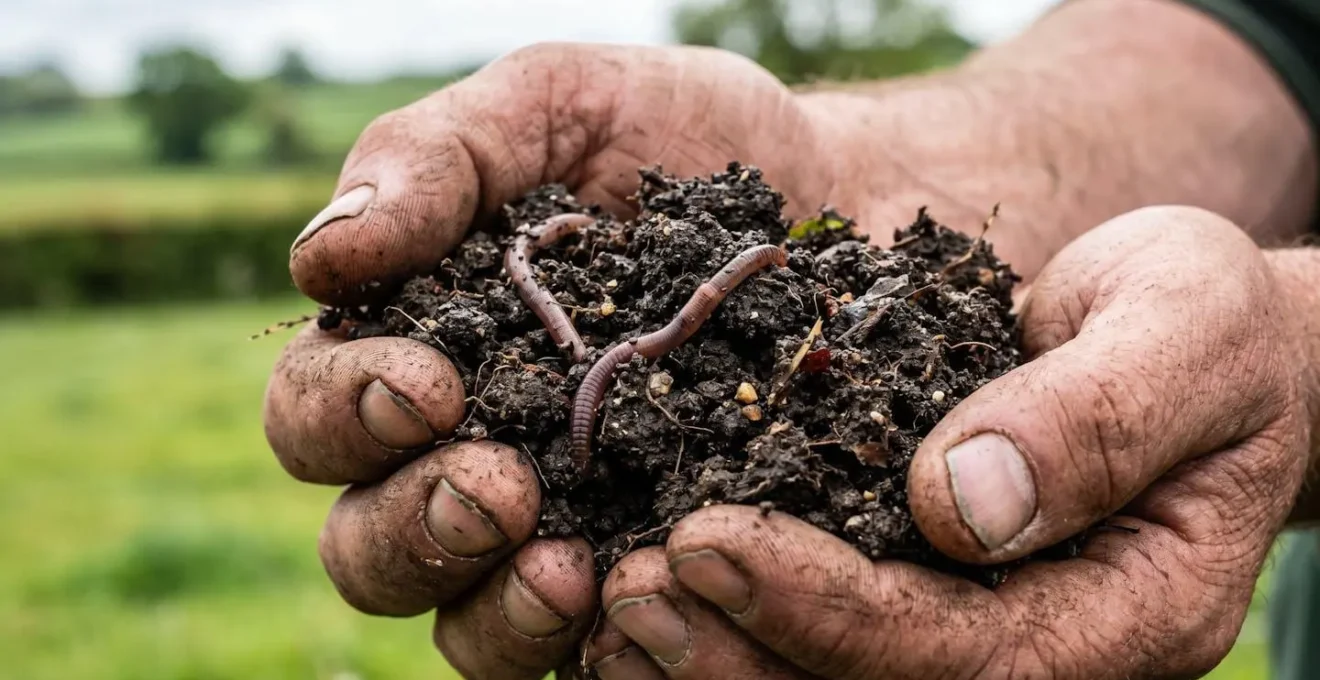
As this image demonstrates, the proof of a healthy system is often tangible and visceral. The goal is to translate your agricultural practices into consumer-centric benefits. Instead of talking about the technicalities of your crop rotation, talk about how it leads to better-tasting tomatoes or carrots packed with more nutrients. Frame your regenerative work as an ecosystem service that delivers a superior product. This approach avoids blaming conventional farming and instead positions you as a forward-thinking leader providing solutions that benefit both the planet and the consumer’s plate.
Pasture for Life vs Soil Association: Which Label Fits Your Ethos?
Choosing a certification is a strategic brand decision, not just an operational one. It forms a core part of your ethical infrastructure and communicates your values to customers. In the UK, two of the most respected labels in the sustainable farming space are the Soil Association (for organic) and Pasture for Life. While they overlap, they represent different philosophies and appeal to different consumer motivations. The choice is about which story you want to tell.
The Soil Association Organic certification is a legally protected, whole-system standard. It acts as a ‘Guardian’ archetype in branding—trusted, established, and a guarantee of safety from artificial chemicals. It signifies a comprehensive commitment to a farm-wide ecological approach. For many consumers, especially those shopping in major retailers, it is the most recognised and trusted benchmark for environmental and animal welfare standards.
Pasture for Life, on the other hand, is a more specialist certification focused on a single, powerful principle: 100% pasture-fed ruminants. It positions a brand as a ‘Specialist Innovator’. Its narrative is laser-focused on the benefits of a natural diet for animal welfare, soil health, and producing nutrient-rich meat and dairy. While not (yet) a legally defined term like organic, its clear and compelling message about grass-fed systems resonates strongly with a dedicated niche of consumers. The fact that one-third of Pasture for Life certified producers are also certified organic shows that many farms build a layered ethical infrastructure, stacking certifications to strengthen their story. Deciding between them—or combining them—depends entirely on the core message you want your brand to own.
The following table, drawing on information from the Soil Association’s analysis of regenerative farming, breaks down the key distinctions to help you align your certification with your brand ethos.
| Criterion | Soil Association Organic | Pasture for Life |
|---|---|---|
| Legal Status | Legally protected term with robust standards independently audited | No legal definition in UK; voluntary certification scheme |
| Core Focus | Whole farm system approach prohibiting artificial pesticides, herbicides, insecticides and fertilizers | 100% pasture-based diet for ruminants (grazing or conserved forage); no grains, soya, or maize silage |
| Environmental Outcomes | On average 30% more wildlife, 25% more soil carbon storage, more soil microorganisms | Rotational grazing regenerates soil, captures carbon, promotes biodiversity through pasture diversity |
| Animal Welfare | UK’s highest animal welfare standards throughout supply chain | High welfare with health planning, no prophylactic antibiotics, enrichment for housed animals |
| Chemical Use | Bans chemical weedkillers including glyphosate; uses mechanical weeding and cultivations | Prohibits glyphosate use on certified land due to negative effects on earthworms and soil biology |
| Brand Positioning | ‘Guardian’ archetype – trusted, established, safe; appeals to Waitrose-type shoppers | ‘Specialist Innovator’ – focused narrative on 100% pasture, animal welfare, and nutrient-rich products |
The Transparency Mistake That Destroys Consumer Trust Instantly
In the rush to embrace terms like ‘regenerative’, many businesses fall into a trap that can irreparably damage their brand: making vague claims without any proof. This is the transparency paradox: consumers demand transparency, but providing unsubstantiated claims is worse than providing no information at all. True transparency isn’t about lofty promises; it’s about measurable progress. Without data, ‘regenerative’ becomes just another meaningless buzzword, fuelling cynicism and destroying the very trust you’re trying to build.
The scale of this problem is significant. As the Food Unfolded report highlighted, the ambiguity around regenerative claims can lead to massive consumer confusion. They pointed out the critical issue of brands making claims without backing them up:
Only 16 per cent of the 50 companies discussed metrics or data, and only four had established baselines to measure progress. In turn, this ambiguity can confuse consumers and water down meaningful change.
– Food Unfolded Report, Regen, organic & agroecology: what’s the difference? – Wicked Leeks
This failure to provide provable value creates a fertile ground for greenwashing. When a farmer who simply practices no-till on one field can use the same ‘regenerative’ label as a farmer who has implemented a complex, holistic, whole-farm ecosystem, the term loses all meaning. For the consumer, there is no way to tell the difference. This ambiguity erodes the value of the term for everyone and punishes the producers who are genuinely committed to deep ecological practices.
To command a premium price, your claims must be backed by evidence. This doesn’t necessarily mean overwhelming customers with scientific data. It means choosing a few key metrics—like soil organic matter, bird counts, or water infiltration rates—and sharing your journey of improvement over time. This honest, data-informed storytelling is the antidote to greenwashing and the foundation of lasting consumer trust.
Open Farm Sunday: How to Host an Event That Builds Loyal Customers?
An open day is far more than a PR exercise; it’s your single most powerful tool for converting passive consumers into passionate advocates for your brand. Events like Open Farm Sunday provide an unparalleled opportunity to build a community dividend—a sense of belonging and shared purpose that goes far beyond a simple transaction. When customers walk your land, meet your animals, and get their hands dirty, they are no longer just buying food; they are investing in your farm’s story and its future.
The goal is to design an experience, not just a tour. The most successful farm events create opportunities for genuine participation. This transforms the dynamic from a one-way broadcast (farmer talking at consumers) to a two-way dialogue and shared experience. This hands-on involvement is what builds deep, lasting loyalty and makes your premium price point not just acceptable, but desirable. Customers who have participated in the work of the farm have a visceral understanding of the skill, effort, and values embedded in the food they buy.
Case Study: Stroud Community Agriculture’s Engagement Model
Stroud Community Agriculture in Gloucestershire has created a thriving social network around its farm. By hosting monthly work days, they invite their 200+ member families to actively participate in the farming enterprise. This hands-on model transforms them from passive box-scheme subscribers into active stakeholders who understand the direct link between the farm’s regenerative practices and the quality of their food. This experiential understanding builds immense loyalty and provides a powerful justification for the premium they pay.
To maximise the impact of your event, you need a clear strategy for fostering this sense of community and capturing the value created on the day. The focus should be on building social capital that will pay dividends long after your visitors have gone home.
Your Action Plan: Building Social Capital at Your Next Event
- Create opportunities for members to contribute labour beyond monetary exchange, making them participants rather than just customers.
- Design communication methods that enable both farm-to-member interaction and member-to-member networking to build a sense of community.
- Capture visitor information during the event to enable post-event digital journeys that continue the farm’s narrative and create new purchase opportunities.
- Focus communication efforts on the interactions that members value most, whether that’s learning a new skill or simply connecting with like-minded people.
How to Calculate Share Prices for a Viable Community Supported Agriculture Scheme?
A Community Supported Agriculture (CSA) scheme fundamentally changes the relationship between a farmer and a consumer. Instead of selling a product, you are offering membership in your farm’s ecosystem. Calculating the share price, therefore, is not about competing with supermarket prices; it’s about transparently costing out a year of sustainable food production and dividing it amongst the members who will share in the risks and rewards. This transparency is the cornerstone of a viable CSA and a powerful justification for a premium price.
The first step is to create a comprehensive annual budget. This must include all production costs (seeds, compost, tools), infrastructure costs (polytunnel maintenance, irrigation), and, crucially, a fair wage for the farmer. Too many CSAs fail because they undervalue the skilled labour required to run them. By including a proper salary in the budget, you are making a clear statement about the value of skilled agricultural work—a community dividend that members are often proud to support.
Once you have your total annual budget, you divide it by the number of shares you can realistically support. This gives you your base share price. This model’s strength is its honesty. You can show members exactly where their money is going—so much for seeds, so much for land rent, so much for the grower’s salary. This transforms the price from an arbitrary number into a direct investment in local, sovereign food production. With a growing number of CSAs in the UK—research from 2020 identified at least 179 operating schemes—this model is a proven path to creating a stable, community-funded farm business.
Case Study: The Stroud CSA Fair Wage Model
At Stroud Community Agriculture, the grower is employed at a fair hourly rate, with his salary forming a transparent part of the CSA’s annual budget. This budget is shared with members, who can see exactly how their subscription supports a fair livelihood, not just the purchase of vegetables. This transparent approach to pricing is a core part of their value proposition, helping to justify the share price by framing it as a community investment in skilled labour and local food security.
Public Money for Public Goods: How to Maximize ELMS Income?
For UK farmers, building an ethical infrastructure is no longer just a private endeavor; it’s a publicly supported one. The government’s Environmental Land Management schemes (ELMS) represent a fundamental shift, moving from direct payments based on land area to « public money for public goods. » This provides a vital income stream for farmers who are delivering the very ecosystem services—like improved soil health, biodiversity, and clean water—that form the backbone of a premium stewardship brand.
Maximising this income requires a strategic, « stacking » approach. The foundational layer for most is the Sustainable Farming Incentive (SFI), which offers payments for actions that many regenerative farmers are already undertaking, such as planting cover crops and creating integrated pest management plans. On top of this, you can layer more targeted, higher-paying options from Countryside Stewardship for specific habitat creation or natural flood management. And as DEFRA’s guidance confirms, these schemes can be blended with private finance, opening up new revenue models.
This isn’t just about subsidies; it’s about aligning your farm’s ecological goals with national policy to fund your transition and enhance your profitability. As the UK Government states, « The SFI will pay farmers to adopt and maintain sustainable farming practices that can protect and enhance the natural environment alongside food production. » With ambitious targets to have 70% of farms in England covered by ELMS agreements by 2028, engaging with these schemes is no longer optional for a forward-thinking farm business. It’s a core component of a financially resilient stewardship model.
Key ELMS Actions for Maximizing Income
- Apply for the Sustainable Farming Incentive (SFI) for foundational payments on soil management, with options from £22 per hectare.
- Combine SFI with Countryside Stewardship agreements for targeted actions on specific habitats, leveraging the expanded offer of 102 actions.
- Utilize capital grants for one-off funding for infrastructure like hedgerow planting, improved slurry storage, or precision farming equipment.
- Stack ELMS payments with private finance opportunities where possible to create blended funding for ambitious environmental projects.
- Leverage high-value SFI standards, such as the integrated pest management option offering up to £55 per hectare for companion cropping.
Key Takeaways
- Shift your marketing from rule-based labels (like organic) to dynamic narratives of regeneration and provable value (healthy soil, biodiversity).
- Build a community, not just a customer base, through participatory events and CSA models that create loyal advocates who champion your premium price.
- Embrace radical transparency by backing up all stewardship claims with visible evidence and measurable data to build unshakeable consumer trust.
How to Build Food Sovereignty in Local UK Communities via Community Supported Agriculture?
At its heart, ethical stewardship is about more than just selling produce; it’s about rebuilding a broken food system from the ground up. Community Supported Agriculture (CSA) is one of the most powerful models for achieving this, moving beyond a simple commercial transaction to create genuine food sovereignty. In a CSA, the community doesn’t just buy food from the farmer; they share in the inherent risks and rewards of farming. This creates a resilient, hyper-local food system insulated from the volatility of global supply chains.
This model fundamentally redefines the farmer-consumer relationship. Members who commit to a full season, understanding that their weekly box will reflect the realities of that season’s successes and failures, become true partners. They gain a deep, first-hand understanding of what it takes to produce food sustainably. This shared experience is the ultimate community dividend, fostering a powerful sense of connection and collective ownership over the local food supply.
Case Study: Earthshare Scotland’s Pioneering Model
As one of the UK’s first CSA farms, Earthshare in Scotland embodies the principle of shared risk. Its 170+ subscribers make a one-year commitment and receive an equal share of everything harvested. If the beetroot harvest is bountiful, their boxes overflow; if a blight hits the potatoes, they share in the loss. By encouraging members to participate in seasonal tasks like weeding and fruit picking, Earthshare builds true food sovereignty through shared knowledge, labour, and risk, creating a powerful bond that transcends a simple customer relationship.
This movement is gaining significant momentum across the country. With the CSA Network UK’s strategic vision aiming to establish ‘a thriving CSA in every UK neighbourhood’, the model is increasingly recognised as a viable and inspiring path towards a more just and resilient food future. For farmers, it offers a stable, predictable income and a deeply engaged community. For communities, it offers access to fresh, nutritious food and a direct stake in their local agricultural landscape.
By weaving these threads together—a compelling narrative of regeneration, radical transparency, deep community engagement, and a financially sound structure—you can transform your farm from a price-taker into a brand leader. The next logical step is to audit your own practices and identify the most powerful story you have to tell.