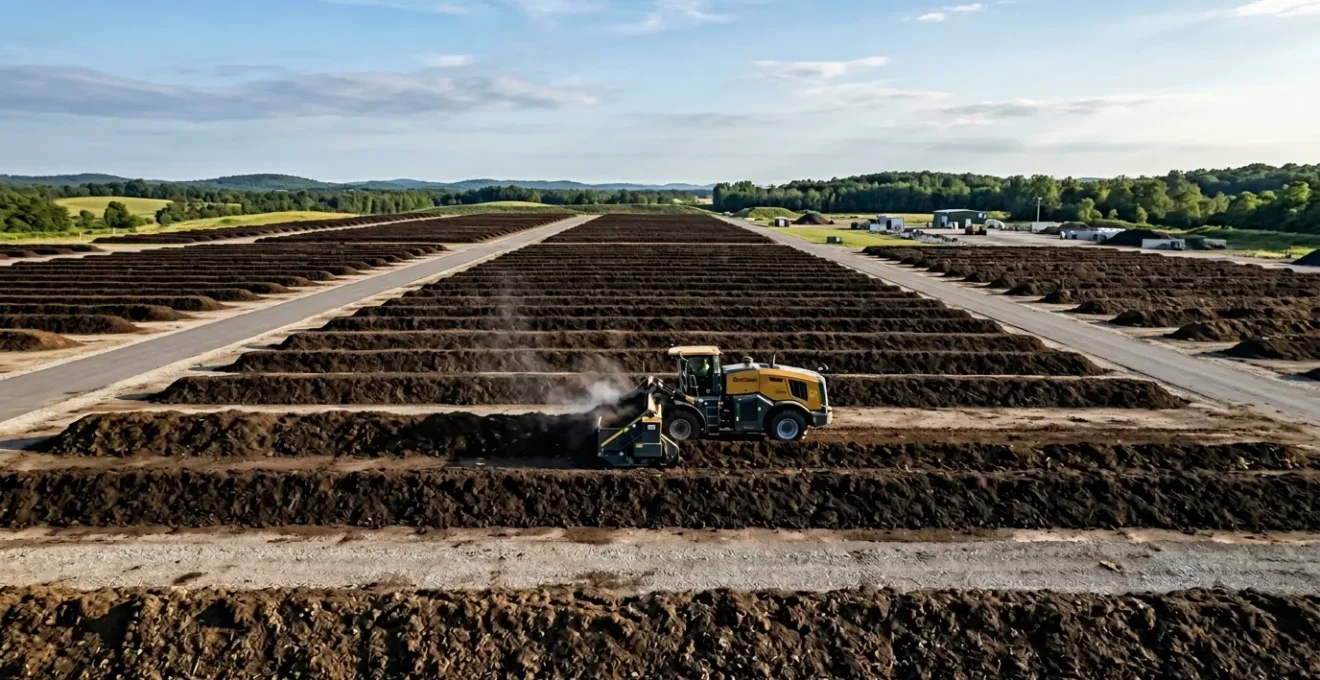
Achieving profitability in large-scale composting hinges on treating it as an industrial manufacturing process, not large-scale gardening.
- Focus on rigorous feedstock decontamination to meet product specifications and avoid contaminating your final asset.
- Leverage specialized equipment like windrow turners and multi-stage screens for process efficiency, consistency, and quality control.
- Adhere strictly to regulatory frameworks like PAS 100 to de-classify waste, unlock full market value, and ensure legal compliance.
Recommendation: Implement a test-and-verify protocol at every stage—from initial C:N ratio to final curing analysis—to guarantee a high-value, legally compliant end product.
For a farm operator, a mountain of green waste from a municipal contract can look like either a problem or an opportunity. The conventional approach often treats it like gardening on a larger scale: pile it up, turn it occasionally, and hope for the best. This frequently leads to odour complaints, inconsistent product quality, and a low-value output that is still legally considered waste. This approach is a liability in waiting, vulnerable to regulatory scrutiny and community opposition.
The key to unlocking the true value of this resource is a paradigm shift. We must move away from the gardening mindset and embrace the principles of industrial manufacturing. Large-scale composting is a biochemical process that demands rigorous process control, strict adherence to quality specifications, and an unwavering focus on operational efficiency. The raw material may be variable and contaminated, but the end goal is a standardized, high-value, and legally compliant agricultural input. This is not about simply managing waste; it’s about manufacturing a product.
This guide provides an operator-focused framework for this industrial approach. We will dissect the critical control points of the process, from initial feedstock decontamination and achieving the perfect biological conditions, to the nuances of equipment selection. We will then examine the quality assurance and regulatory hurdles that separate a low-grade soil improver from a premium, certified product. Finally, we will demonstrate how this commitment to process and quality transforms a potential waste liability into a diversified and significant revenue stream.
Summary: A Commercial Operator’s Guide to Municipal Composting
- Why Achieving PAS 100 Standard Adds Value to Your Compost?
- How to Screen Out Plastics from Municipal Green Waste Efficiently?
- Windrow Turner vs Front Loader: Which Aerates Compost Better?
- The Pile Size Mistake That Creates Odors and Bad Neighbors
- Curing Time: When is Compost Actually Safe to Spread on Crops?
- How to Create the Perfect C:N Ratio for Rapid Humification?
- The Waste Exemption Mistake That Leads to Environment Agency Fines
- Implementing Circular Management to Turn Farm Waste into Revenue Streams?
Why Achieving PAS 100 Standard Adds Value to Your Compost?
In the world of commercial composting, the Publicly Available Specification 100 (PAS 100) is not just a certificate; it’s a fundamental change in your product’s legal and commercial status. Achieving this standard transforms what is legally considered ‘waste’ into a recognized, high-quality product. This distinction is critical for market access, as many agricultural and horticultural buyers will not accept non-certified material due to risks of contamination and inconsistent performance. More importantly, it provides a clear competitive advantage and a quantifiable return on investment.
The financial benefits are twofold. First, there is the direct nutrient value of the compost itself. A certified product has a guaranteed minimum level of quality, allowing for precise valuation. Second, there are significant indirect savings. According to the UK’s Compost Certification Scheme, Quality Compost certified to PAS 100 eliminates costly waste regulatory controls on storage and transport after dispatch. This reduces administrative burden, inspection risks, and associated operational costs, directly improving your bottom line.
Case Study: The Tangible Value of PAS 100 Certification
Decoy Farm’s PAS 100 certified compost provides a clear example of quantifiable value. Analysis shows a nutrient value of £4.54 per tonne in crop-available nitrogen, phosphate, and potassium. An application of 33.3 tonnes per hectare delivers approximately £151 per hectare in tangible nutrient value. This figure doesn’t even account for the long-term benefits to soil health, such as increased microbial biomass, improved structure, and enhanced moisture retention, all of which contribute to higher yields and reduced input costs over time.
Therefore, viewing PAS 100 not as a regulatory hurdle but as a crucial product specification is the first step towards a professional, profitable operation. It is the definitive quality mark that unlocks the full commercial potential of your composting enterprise.
How to Screen Out Plastics from Municipal Green Waste Efficiently?
The single greatest challenge in processing municipal green waste is feedstock contamination. While it may be called ‘green’ waste, the reality is a mix of organics, soil, stones, and a significant amount of inorganic contaminants. Of these, plastics are the most pervasive and problematic. In fact, plastics make up about 85% of the contaminants received by composters. Failure to remove them results in a low-quality product that is unsellable, visually unappealing, and a source of long-term environmental pollution. An effective decontamination strategy is non-negotiable.
A robust decontamination system is not a single machine but a multi-stage process designed to remove different types of contaminants at different points. The goal is to remove large contaminants early and fine-tune the material as it moves through the composting process. This protects downstream equipment and improves the efficiency of each subsequent stage. Technologies like low-speed shredders can liberate plastics at the pre-processing stage without creating difficult-to-remove microplastics.
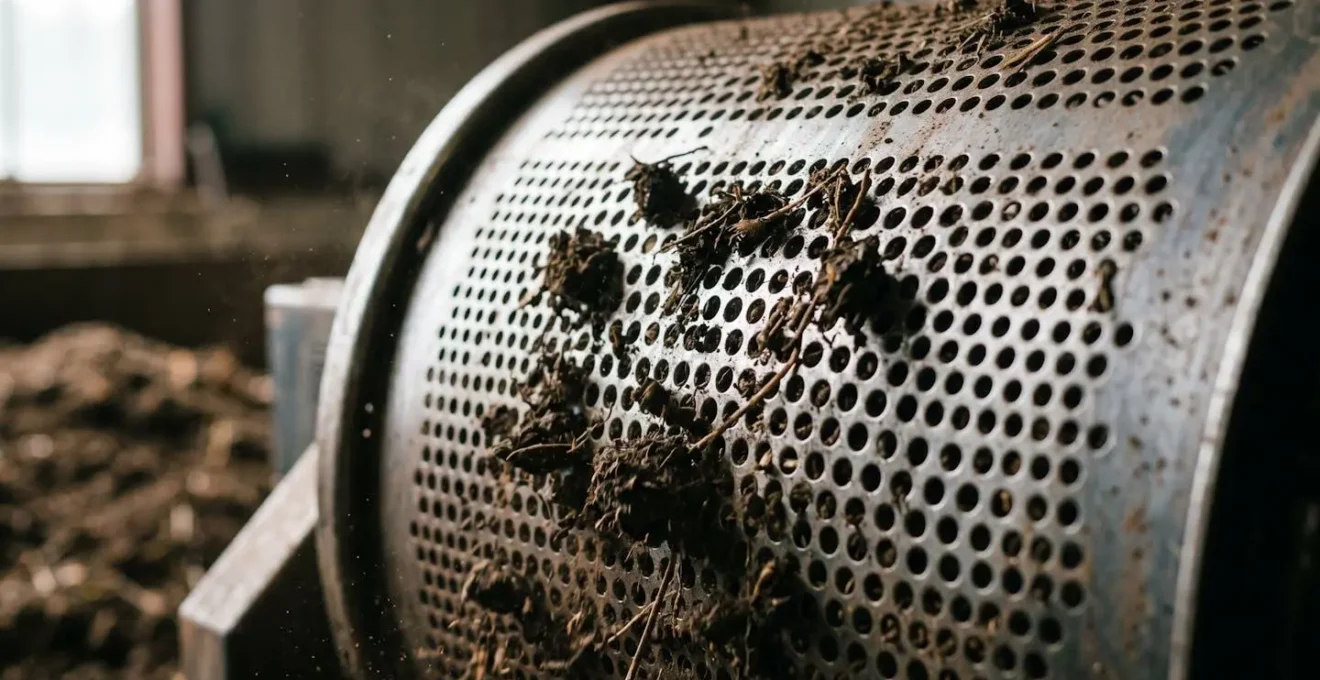
Post-composting, equipment like trommel screens, as shown above, are essential for size separation, while windsifters are crucial for removing lightweight plastic films that screens might miss. For operators aiming for the highest quality standards like PAS 100, a final polishing stage using advanced optical sorters may be required to achieve the necessary purity. Each piece of equipment has a specific role in the overall process control strategy.
This table outlines the primary technologies involved in a multi-stage screening process, highlighting their function and optimal placement within the operational workflow.
| Screening Technology | Primary Function | Optimal Stage | Key Benefits | Limitations |
|---|---|---|---|---|
| Low-Speed Shredders | Liberate plastics without microplastic creation | Pre-processing | Reduces contamination at source; preserves material integrity | Requires large capital investment |
| Trommel Screens | Size separation via rotating cylindrical drum | Post-composting | Handles high throughput; separates multiple fractions | May not catch lightweight films |
| Windsifters / Density Separators | Air flow separation of light plastics | Final polishing | Removes lightweight contaminants missed by screens | Weather-dependent performance |
| Optical Sorters | Sensor-based plastic identification | High-purity finishing | Precision sorting; enables PAS 100 compliance | High cost; requires clean feed material |
Windrow Turner vs Front Loader: Which Aerates Compost Better?
Aeration is the engine of the composting process. Maintaining aerobic conditions is essential for promoting the rapid decomposition of organic matter by beneficial microorganisms, achieving sanitizing temperatures, and preventing the formation of odour-causing compounds. The method of aeration is a critical decision that directly impacts operational efficiency, product quality, and throughput. The two most common methods on farms are using a front-end loader or a specialized windrow turner.
While a front-end loader is a versatile piece of equipment already present on most farms, using it for turning compost is a compromise. It tends to lift and drop material, which can lead to compaction and inefficient aeration, especially in the core of the pile. This often necessitates more frequent turning to achieve the same result as a dedicated machine. As the Australian Poultry CRC notes in its guidelines, the choice is clear from an efficiency standpoint.
Windrow turners are usually more efficient than front-end loaders or excavators because turners are specifically designed for the job.
– Australian Poultry CRC, Poultry Waste Composting Guidelines – Setting up and managing turned windrows
A specialized windrow turner, by contrast, is engineered for one purpose: to efficiently mix and aerate compost. Its paddles or drums are designed to fluff the material, break up clumps, and introduce oxygen uniformly throughout the windrow. This leads to more consistent temperatures, faster processing times, and a higher quality, more homogenous end product. The data clearly shows that while the initial investment is higher, the operational efficiency gains are significant, particularly for large-scale facilities targeting certification.
The following table provides a direct operational comparison, based on data and analysis from agricultural research institutions, highlighting the trade-offs in efficiency, cost, and quality.
| Criteria | Windrow Turner (Self-propelled) | Front-End Loader |
|---|---|---|
| Turning Time (per ton) | 0.8 minutes | 1.5 minutes |
| Oxygenation Efficiency | High – designed for thorough mixing and aeration | Moderate – can achieve aeration but less uniformly |
| Risk of Pile Compaction | Low – paddles lift and fluff material | High – bucket weight can compress pile |
| Throughput Capacity | Up to 900 cubic yards/hour (professional models) | Variable, generally lower |
| Turning Frequency Required | 2 turnings typically adequate | 4 turnings necessary for equivalent results |
| Initial Investment | $15,000-$50,000+ (can be shared among farms) | $2,750 (if not already owned) |
| Annual Operating Cost | $185/cow/year (60-cow dairy example) | $142/cow/year (60-cow dairy example) |
| Best For | Large-scale municipal facilities seeking PAS 100 certification; consistent product quality | Smaller farm operations; non-critical end-use; existing equipment leverage |
The Pile Size Mistake That Creates Odors and Bad Neighbors
Odour management is one of the most critical aspects of running a successful composting facility. Odours are not just a nuisance; they are a public signal of an inefficient, poorly managed process. Persistent odour complaints can lead to regulatory inspections, fines, and even the shutdown of an operation. The primary cause of significant odour is the development of anaerobic conditions within the compost pile, leading to the production of hydrogen sulfide and other volatile compounds. This is most often a direct result of a fundamental process control error: improper pile size.
The temptation is to build piles as large as possible to save space. However, this is a critical mistake. Piles that are too large and dense cannot naturally draw air into their core, regardless of the ambient wind. This starves the aerobic bacteria of oxygen, allowing anaerobic microbes to thrive and produce foul odours. The solution is rigorous adherence to proven dimensional parameters. According to research from the Cornell composting science program, the ideal windrow height is 1-3 meters. Piles exceeding these dimensions must be subdivided to ensure adequate passive aeration and prevent the onset of anaerobic conditions at the core.
While proper pile size is the first line of defense, a professional operation should have a multi-layered odour mitigation strategy. This involves a combination of biological covers, aeration system design, and the use of appropriate bulking agents. It is a systematic approach to ensuring the process remains aerobic and odour-free, protecting your relationship with neighbors and regulators.
Your Action Plan: Advanced Odor Mitigation for Professional Composting
- Apply biocovers: Cover freshly built piles with 6 to 12 inches of screened, finished compost (overs) and water them twice daily in warm weather. This creates a biological filter that can reduce odor emissions by over 80%.
- Install biofilters: Position filters made of old, woody compost at the site perimeter. The large surface area provides a habitat for bacteria that consume odour compounds, acting as a final line of defense.
- Maintain oxygen levels: Design aeration systems (if used) to keep oxygen levels above 13%. For fresh, biologically active feedstocks, aim for up to 5 CFM per cubic yard to prevent any anaerobic zones from forming.
- Add bulking materials: Incorporate materials like sawdust or ground coconut husk to absorb excess moisture from « gooey » feedstocks and create structural porosity, allowing air to penetrate the pile.
- Monitor pile dimensions: Strictly adhere to the Cornell University guideline of 1-3 meters in height. If a pile is built too large, take immediate action to subdivide it into smaller windrows to restore core aeration.
Curing Time: When is Compost Actually Safe to Spread on Crops?
A common misconception in composting is confusing a « finished » pile with a « mature » one. A finished compost pile is one that has completed the hot, thermophilic phase of decomposition where sanitization occurs. However, it is not yet stable or safe for agricultural use. Spreading immature compost can be catastrophic for crops. It can lock up nitrogen in the soil as microorganisms continue to break down unstable carbon, and it may still contain phytotoxic compounds like organic acids that can inhibit seed germination and stunt plant growth. True maturity is a measure of stability, achieved only after a proper curing period.
The curing phase is a cooler, slower, and longer process that allows for the formation of complex, stable humus. It’s during this time that the microbial community shifts and the material becomes truly beneficial for soil life. Determining maturity isn’t a matter of guesswork; it requires objective, scientific testing. A professional operator must be able to prove that their product is not only free from pathogens and contaminants but also biologically stable and beneficial for plant growth. This is the final and most important stage of quality assurance.
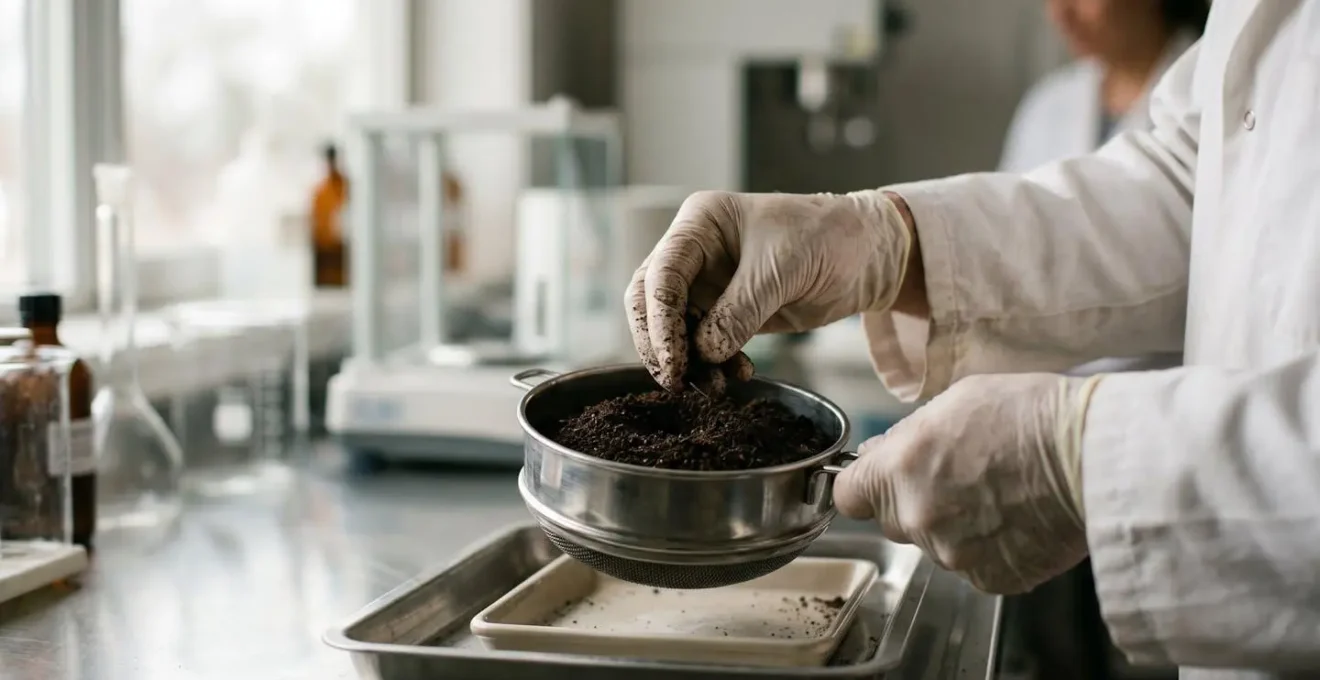
A robust quality control protocol for compost maturity involves a suite of laboratory tests. These tests move beyond simple observation and provide quantifiable data on the stability and safety of the final product. Key assessments include:
- CO2 Respiration Rate (Solvita Test): This measures the level of microbial activity. A mature, stable compost will have a very low respiration rate, indicating that the rapid decomposition phase is over.
- Seed Germination Bioassay: A sample of the compost is used as a growing medium for sensitive seeds, like tomato or cress. Healthy germination and seedling growth confirm the absence of phytotoxic compounds.
- Persistent Herbicide Screening: Municipal green waste can contain herbicides like aminopyralid which survive the composting process. Specialized lab tests are essential to screen for these compounds and prevent devastating crop damage for your customers.
- Heavy Metals and Pathogen Testing: To meet PAS 100 standards and ensure safety, the final product must be tested for pathogens like E. coli and salmonella, as well as a range of heavy metals.
How to Create the Perfect C:N Ratio for Rapid Humification?
The carbon-to-nitrogen (C:N) ratio is the foundational recipe for successful composting. It is the single most important factor governing the speed and efficiency of the decomposition process. Carbon provides the energy source for microorganisms, while nitrogen is essential for building their cell structures and proteins. Getting this balance right from the start creates the ideal environment for the thermophilic bacteria that drive rapid, odour-free decomposition. An incorrect ratio will, at best, slow the process to a crawl, and at worst, create significant odour problems.
The optimal starting point is a C:N ratio of approximately 30:1 by weight. According to Cornell University’s extensive composting research, this ratio provides the perfect balance of food for the microbial workforce. Ratios below 20:1 are too rich in nitrogen, which will be off-gassed as ammonia, leading to nutrient loss and characteristic foul odours. Ratios above 40:1 are too carbon-heavy; the process will be slow as there isn’t enough nitrogen for the microbes to multiply rapidly. Maintaining this ratio is a core task of process control.
However, the C:N ratio doesn’t exist in a vacuum. It is part of a critical trinity of factors required for optimal microbial activity, as expert Craig Coker highlights. True process control involves managing all three elements simultaneously.
The first step in controlling the microbial activity is a mix that adheres to good Best Management Practices: the right nutrient balance between carbon and nitrogen (at least 25 parts of carbon for each part of nitrogen, on a weight basis), adequate moisture to form and maintain the biofilm (around 50-55%) and enough structural porosity to ensure a free air space of at least 40 percent.
– Craig Coker, BioCycle – Controlling Composting Odors
For an operator dealing with variable municipal feedstock, this means active management. Green, « wet » materials like grass clippings are nitrogen-rich, while brown, « woody » materials like shredded branches or woodchip are carbon-rich. The art of large-scale composting lies in accurately assessing the incoming feedstock and blending it with appropriate bulking agents or other waste streams to consistently hit that target 30:1 ratio, 50-55% moisture, and 40% porosity. This initial mixing stage sets the trajectory for the entire process.
The Waste Exemption Mistake That Leads to Environment Agency Fines
For many farm-based composting operations in the UK, operating under a waste exemption from the Environment Agency (EA) seems like a straightforward, low-cost way to get started. Exemptions like the T23 (aerobic composting) and U10/U11 (spreading waste to benefit agricultural land) allow for certain low-risk waste activities without the need for a full environmental permit. However, treating these exemptions as a « free pass » is a costly mistake that can lead to severe financial penalties and a damaged reputation.
The most common error is a failure to rigorously adhere to the strict limits and conditions of the exemption. Each exemption specifies maximum quantities of waste that can be treated or stored at any one time, as well as the total amount that can be processed annually. Exceeding these limits, even unintentionally, is a breach of the regulations. Furthermore, operators often fail to maintain the meticulous records required to prove compliance. The burden of proof is on the operator to demonstrate that they have stayed within the exemption’s boundaries.
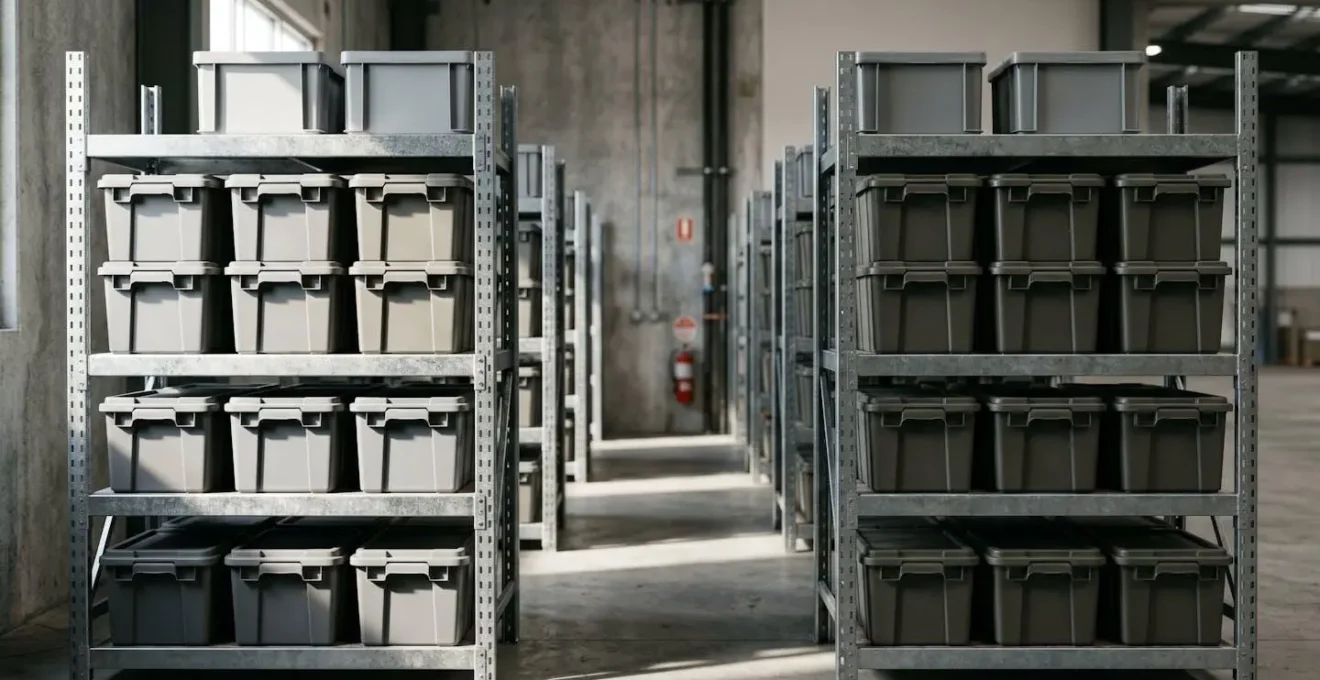
As the image above symbolizes, robust record-keeping is not just administrative paperwork; it is your primary legal defense. An EA inspector will want to see a clear paper trail: weighbridge tickets for all incoming and outgoing materials, detailed records of pile creation dates and turning schedules, and signed transfer notes confirming that the final product is being used appropriately. Without this documentation, you have no way to defend your operation against accusations of mismanagement or exceeding exemption limits. The « we didn’t know » defense does not work. A single misstep can result in fines, the revocation of your exemption, and a requirement to apply for a much more expensive and complex environmental permit. Regulatory compliance is a core operational activity, not an afterthought.
Key Takeaways
- PAS 100 certification is a commercial tool that transforms waste into a valuable, regulated product with clear market access.
- A multi-stage decontamination process (shredders, screens, sifters) is a non-negotiable industrial system for producing quality compost from municipal feedstock.
- Rigorous process control over key parameters like pile size, C:N ratio, and aeration method is the foundation of efficiency, quality, and odour prevention.
Implementing Circular Management to Turn Farm Waste into Revenue Streams?
The industrial-scale composting process, when executed with rigorous process control and a commitment to regulatory compliance, ceases to be a waste management cost center. Instead, it becomes a powerful engine for circular management and a significant, diversified revenue stream for the farm enterprise. The final product—a high-quality, PAS 100 certified compost—is just one part of the economic equation. A truly professional operation leverages every stage of the process to generate value.
This « revenue stacking » model is the hallmark of a successful circular economy enterprise. It begins with charging tipping fees for the acceptance of green waste, immediately turning a raw material into an income source. The next revenue stream is internal: cost avoidance. By producing your own high-nutrient soil amendments, you drastically reduce the farm’s reliance on expensive synthetic fertilizers, representing a direct and substantial saving. Finally, there is the sale of the surplus compost product to other farms, landscapers, and horticultural businesses, a market unlocked by achieving PAS 100 certification.
This model is not theoretical; it is being proven at scale by forward-thinking municipalities and private operators. These facilities demonstrate that when organics diversion is treated as an economic opportunity rather than a disposal problem, it can be robustly profitable while delivering significant environmental benefits.
Case Study: The Howard County Revenue Stacking Model
The Howard County composting facility in the US provides a compelling blueprint for economic viability. The facility processes food waste, yard trim, and manure at scale, generating income from multiple streams. This includes tipping fee revenue, landfill airspace cost avoidance valued in the hundreds of thousands annually, and direct compost sales. This integrated approach proves that large-scale organics programs can be highly profitable. In fact, a 2024 case study of this large-scale facility demonstrates it projects nearly $1 million annually in combined revenue at full capacity.
By adopting this manufacturing mindset—controlling inputs, optimizing processes, and certifying outputs—a farm operator can transform a stream of municipal green waste from a liability into a cornerstone of a resilient and profitable agricultural business.
To transform your green waste stream from a liability into a regulated, revenue-generating asset, the next step is to implement a rigorous process audit based on these industrial principles. Assess your current operations against these benchmarks for feedstock control, process management, and regulatory adherence to identify key areas for improvement and investment.