Understanding the Earth
Soil is often treated as a mere medium for holding roots upright and accepting chemical inputs, yet it is the most complex and valuable asset on any farm. For generations, the focus has been on chemistry—NPK ratios and pH levels. However, true land stewardship requires a holistic understanding of the earth beneath our feet. This involves mastering physical structure, biological activity, and hydrological cycles.
In the United Kingdom, where weather patterns are becoming increasingly erratic—oscillating between prolonged wet winters and intense summer heatwaves—understanding your soil’s pedological foundations is no longer optional. It is the defining factor between a resilient farming business and one vulnerable to the elements. This guide explores the essential mechanisms of the pedosphere, offering practical insights for managing texture, structure, and biology to secure long-term productivity.
Assessing Your Pedological Foundations
Before implementing any cultivation strategy, one must understand what they are working with. Soil is not uniform; it varies significantly across regions and even within a single field. Assessing these foundations is the first step toward informed management.
Texture vs. Structure: Knowing the Difference
Soil texture is defined by the proportion of sand, silt, and clay particles. This is an inherent property that cannot be changed easily. For instance, a heavy clay soil will always be chemically reactive and prone to waterlogging, while a sandy loam will drain freely but leach nutrients. Farmers can perform a simple ‘Jar Test’ to determine their texture class within 24 hours, providing a baseline for decision-making regarding crop suitability—such as why sandy loams are preferred for market gardening over heavy clays.
Diagnosing Physical Limitations
Structure, unlike texture, can be managed. Good structure implies a network of aggregates and pores that allow roots to penetrate and air to circulate. Conversely, poor management can lead to compaction. A critical assessment involves digging soil pits to identify plough pans—dense layers caused by repeated tillage at the same depth. These historical compaction zones can devalue land significantly by restricting yield potential. Using a penetrometer or conducting a porosity test helps check for compaction before drilling, ensuring that the physical environment is conducive to root development.
Managing Water: Drainage and Aquifers
Water management is perhaps the most critical challenge for UK agriculture. The goal is to maximize water infiltration during winter to recharge aquifers while retaining enough moisture to sustain crops during summer dry spells.
The Dangers of Capping and Slaking
Soil capping occurs when the surface structure collapses under the impact of rain, sealing the soil. This process, often driven by slaking (the breakdown of soil aggregates when wetted), prevents rainwater from entering the profile. Instead of recharging the aquifer, water runs off, taking valuable topsoil and nutrients with it. To prevent this, maintaining a living root system or crop residue on the surface is essential to dissipate the energy of falling rain.
Aquifer Recharge and Filtration
Farmers play a crucial role in the hydrological cycle. Healthy, porous soils act as massive filters. Techniques such as establishing infiltration basins or simply maintaining deep, vertical fissures (macropores) allow clean water to percolate downward. This not only replenishes groundwater reserves but also prevents the tragic mistake of chemical spills or nitrate runoff contaminating aquifers for decades.
Restoring Soil Structure and Porosity
Once assessment is complete, the focus shifts to remediation. Restoring damaged soil structure is a multi-year process that requires patience and mechanical precision.
Mechanical Intervention: Subsoiling vs. Ploughing
When soil is compacted, mechanical intervention may be necessary. However, timing is everything. Subsoiling must only be done when the soil is dry enough to fracture rather than smear. The « moisturewindow » is critical; working wet soil causes further damage. Furthermore, the debate between deep ploughing and low-disturbance methods continues. While ploughing can invert horizons to bury weeds, it often destroys the continuity of vertical channels (biopores) created by worms. Subsoiling or keyline plowing, when done correctly, lifts and aerates the B-horizon without mixing layers, preserving the soil’s natural profile.
Biological Aggregation
Mechanical loosening is temporary; biology makes it permanent. Fungi produce a sticky protein called glomalin, which acts as a glue, binding soil particles into stable aggregates. This structure resists erosion and maintains porosity. Therefore, minimizing soil disturbance (e.g., choosing a direct drill over a power harrow) preserves these fungal networks and the soil aggregates they support.
The Living Pedosphere: Biology as the Engine
Transitioning from a chemical to a biological model of farming is a paradigm shift. A « livingpedosphere » relies on the interaction between roots, microbes, and larger fauna to cycle nutrients and build structure.
- Earthworms: These are the ecosystem engineers. Counting earthworm populations provides a direct metric of soil recovery. Deep-burrowing worms create essential drainage channels, while surface dwellers recycle organic matter.
- Fungal Networks: Mycorrhizal fungi extend the root system, accessing phosphorus and water that the plant cannot reach alone. Over-application of fungicides or heavy tillage disrupts these vital connections.
- Compost Teas: To jumpstart dormant biology, some farmers utilize compost teas. These brewed inoculants can introduce beneficial microbes to sterile soils, accelerating the breakdown of organic matter.
Farming on Challenging Substrata: The Case of Chalk
Specific geological formations, such as the chalk lands found in parts of the UK, present unique challenges. Farming on a chalk substratum often means dealing with limited topsoil depth and high pH levels that can lock up nutrients like manganese and phosphorus.
On these soils, preserving every millimetre of soil is vital. The mistake of aggressive cultivation can bring abrasive flint to the surface, damaging machinery and diluting the fertile topsoil. Instead, techniques like surface mulching help build a « falsetopsoil » layer of organic matter. Additionally, choosing crops that tolerate shallow rooting depth, or those with aggressive roots capable of exploring chalk fissures (like certain barley varieties over wheat), is a strategic necessity.
Navigating the Regenerative Transition
Moving toward a regenerative system—reducing inputs and disturbing the soil less—is fraught with financial risk. The infamous « yielddip » is a reality for many during the first few years as the soil biology re-establishes itself to take over the work previously done by synthetic fertilizers.
Avoiding the « ColdTurkey » Mistake
A common error is cutting inputs too fast before the biology is ready. This « ColdTurkey » approach can lead to crop failure. A gradual reduction, accompanied by the use of biostimulants and cover crops, bridges the gap. Choosing robust crops like oats, which are often less demanding than high-input wheat, can be a safer bet for the first year of transition.
Dynamic Horizons and Continuous Cover
Finally, the goal is to deepen the A-horizon (the topsoil) over time. Using deep-rooting cover crops adds organic matter to the subsoil, effectively deepening the productive profile by small increments annually. This practice not only improves water holding capacity but also ensures that nutrients are cycled from deep within the profile, reducing the dependency on external inputs.
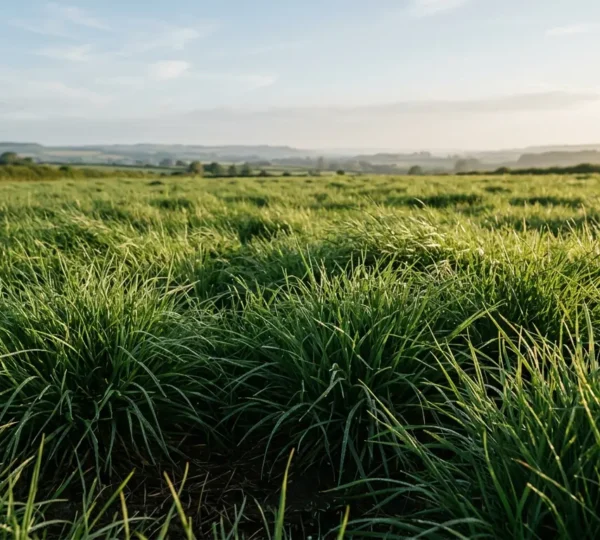
How to Keep Pastures Green in a Heatwave by Mastering Evapotranspiration
Seeing your pastures turn brown by August isn’t inevitable; it’s a sign that the field’s water cycle is broken and losing too much moisture to evapotranspiration. Leaving taller grass acts as « soil armour, » cooling the ground, trapping humidity, and drastically…
Lire la suite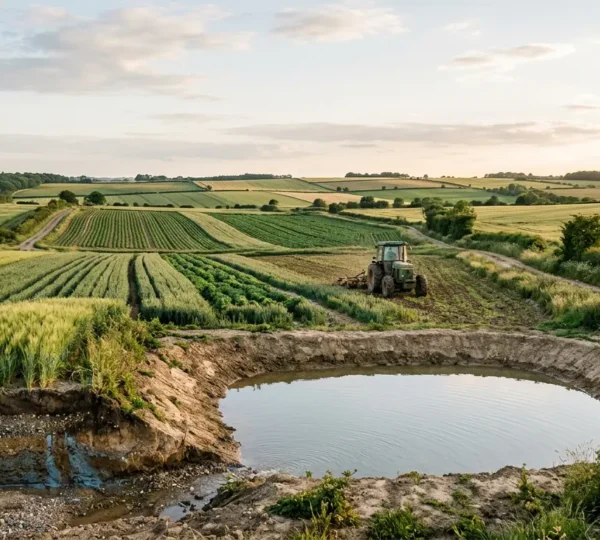
Aquifer Recharge: A Farmer’s Guide to Replenishing Groundwater Reserves
Falling water tables are not just from drought; they are often a direct result of modern farming practices sealing the soil surface, preventing rainfall from reaching the deep reserves your farm depends on. Heavy machinery and intensive tillage create an…
Lire la suite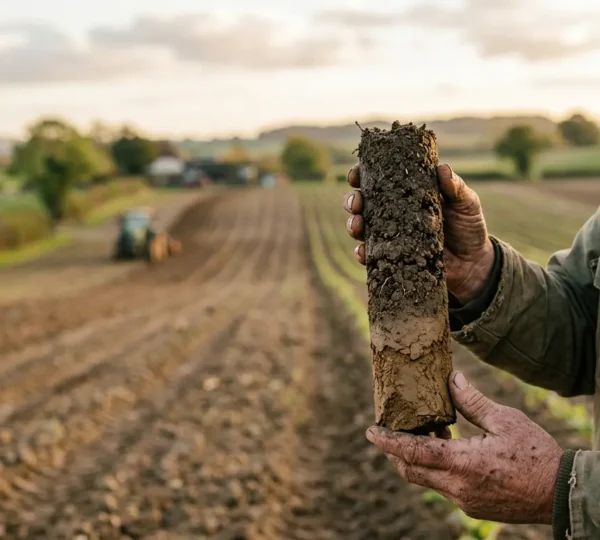
Porosity Testing for Soil Compaction: A Technical Guide for Arable Farmers Before Drilling
Soil compaction is not a simple problem of restricted root growth; it’s a systemic failure of the soil’s pore network, directly impacting nutrient and water availability and costing significant yield even in fertile fields. Quantifying compaction is critical: A simple…
Lire la suite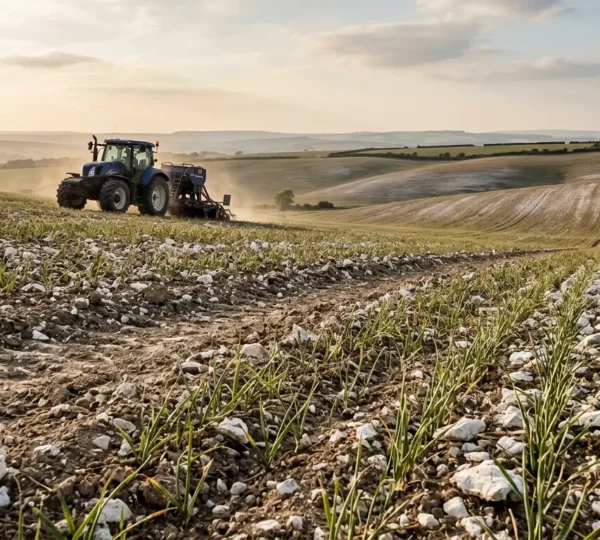
How to Farm Successfully on a Chalk Substratum With Limited Topsoil Depth?
The key to profitable farming on shallow chalk isn’t fighting its alkaline nature, but mastering biological and structural workarounds to build a new, functional topsoil on the surface. Nutrient availability is dictated by pH; biological strategies like rhizosphere acidification can…
Lire la suite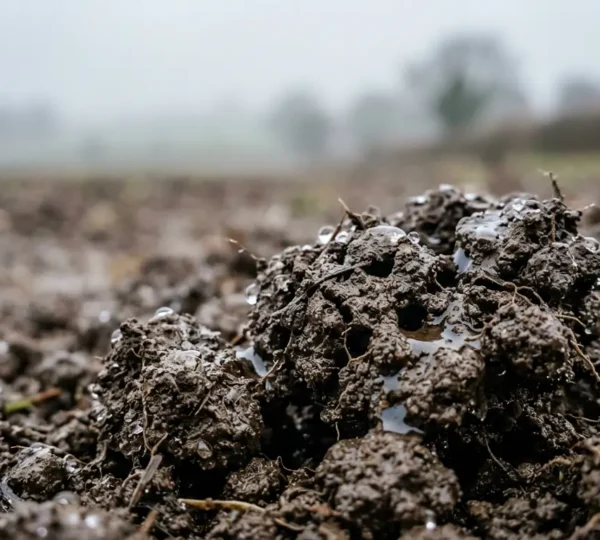
Protect Your Soil Armour: A Farmer’s Guide to Preventing Runoff in Wet UK Winters
Protecting your farm from winter runoff isn’t about fighting the weather, but building a soil structure that works with it. The key is fostering a ‘biological glue’ (glomalin) and physical ‘flocculation’ to create stable aggregates that resist the force of…
Lire la suite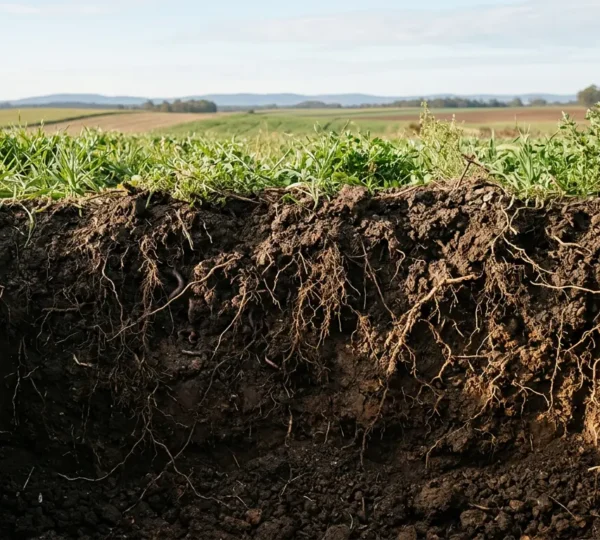
The Farmer’s Roadmap to a Living Soil: How to Transition Profitably from Day One
Transitioning to regenerative agriculture is not an expense; it’s a strategic investment in your farm’s most valuable asset: its biological capital. The dreaded « yield dip » is a manageable, budgetable cash flow event, not an inevitable catastrophe when planned correctly. Systematically…
Lire la suite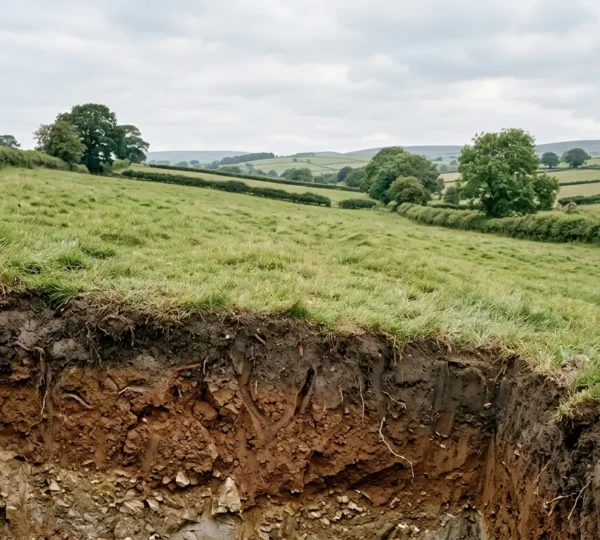
Stop Watching Your Soil Wash Away: How to Manage Dynamic Horizons and Prevent Topsoil Loss on Sloping UK Fields
In summary: Stop treating soil as a uniform block; learn to diagnose the health of each horizon (A, B, C) to apply the right intervention. Deep, inverting ploughing is destructive, burying your active topsoil. Use deep-rooting cover crops to build…
Lire la suite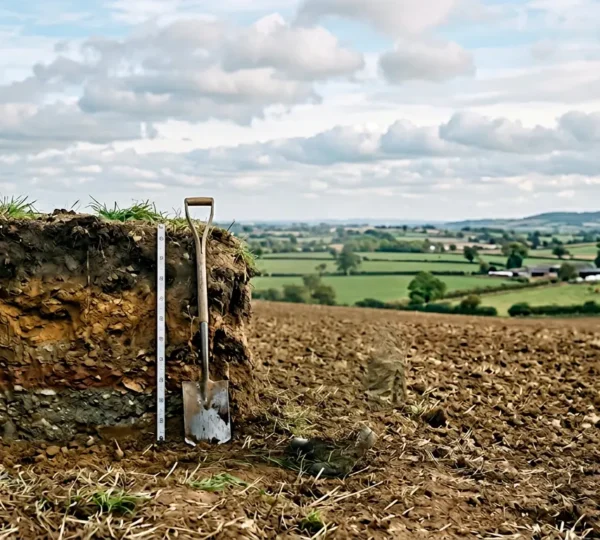
How to Assess the Pedological Foundations of UK Agricultural Land Before You Buy
The true value of agricultural land is determined by its hidden pedological structure, not just its location; overlooking deep-seated compaction or drainage flaws can devalue a property by thousands per acre. Historical compaction, forming a « plough pan, » is a major…
Lire la suite