Living things in relation
Modern agriculture often treats a farm as a factory: inputs in, commodities out. However, a farm is fundamentally a biological system where every organism, from the microscopic bacteria on a root hair to the buzzard circling overhead, plays a distinct role. Understanding living things in relation—how these organisms interact, compete, and support one another—is the key to reducing reliance on synthetic inputs and building genuine resilience against climate variability.
Whether you are managing large arable acres or a specialised market garden, the principles remain the same: diversity breeds stability. This resource explores the intricate web of life on your land, categorising the vital relationships that drive fertility, pollination, and pest control. We will move beyond the simple N-P-K mindset to look at the living dynamos that actually power your soil and protect your crops.
The Rhizosphere: The Engine Room of Crop Health
The rhizosphere is the narrow region of soil that is directly influenced by root secretions and associated soil microorganisms. It is here that the most critical trade deals in agriculture take place. Plants trade carbon (sugars) in exchange for nutrients and water provided by fungi and bacteria. When this relationship is functioning correctly, it acts as a biological insurance policy against abiotic stress.
Mycorrhizal Networks and Drought Resistance
In the context of increasingly dry UK summers, the symbiotic relationship between crops and Arbuscular Mycorrhizal Fungi (AMF) is paramount. These fungi effectively extend the root system by hundreds of times, accessing water in micropores that plant roots simply cannot reach. However, this network is fragile.
- Tillage impact: Deep ploughing and rotavating slice through hyphal networks, forcing the fungi to restart from scratch, which costs the plant energy and leaves it vulnerable.
- Chemical disruption: Excessive use of water-soluble phosphorus fertilizers signals the plant to stop feeding the fungi, effectively starving your soil’s workforce.
- Fungicides: As indicated by recent research, certain fungicide applications can decimate non-target soil fungi, severing the connection just when the crop needs it most.
Inoculation and Seed Coatings
Building a robust rhizosphere starts at planting. While native soil biology is often superior due to local adaptation, degraded soils may require a kickstart. Using seed coatings to inoculate cereals with mycorrhizae or beneficial bacteria ensures that the relationship begins the moment germination occurs. This early colonisation is far more effective than trying to introduce biology later in the growing season.
Above-Ground Ecology: Pollinators and Corridors
Pollination services are often taken for granted until they fail. Yields in oilseed rape, beans, and orchards are directly linked to the abundance and diversity of wild pollinators. However, a field margin of grass is not enough; these insects require high-quality, continuous habitat.
Bridging the ‘June Gap’ with Native Wildflowers
One of the biggest challenges for UK pollinators is the ‘June Gap’—a period when spring blossoms have faded but summer flowers haven’t yet peaked. To support wild pollinators across large acreages, it is crucial to establish angiosperm pathways using native wildflower mixes rather than generic, non-native seeds. Native plants have co-evolved with local insect populations and often provide better quality nectar and pollen at the right times.
Corridors vs. Islands
Isolated patches of habitat are essentially traps. To be effective, trophic networks must be linked across the landscape. Connecting corridors allows beneficial insects to move from nesting sites to foraging grounds within the crop. Implementing in-field strips rather than just perimeter field margins can significantly boost pollination rates in the centre of large fields, where yield drag is often highest.
Natural Pest Control: Rebuilding Trophic Pyramids
The goal of an ecological approach is not to eradicate pests, but to manage them below economic injury levels by maintaining a healthy population of natural predators. This requires a shift in mindset: you need a small population of pests (aphids, slugs) to sustain the predators (ladybirds, ground beetles) that will prevent a major outbreak.
The Predator-Prey Balance
Beneficial insects like lacewing larvae and ground beetles are voracious hunters, but they are highly sensitive to management practices.
- Habitat provision: Beetle banks and tussocky grass provide essential overwintering shelter for ground beetles, which are the heavy lifters of slug control.
- Chemical fallout: Broad-spectrum insecticide sprays often kill the predators more effectively than the pests, leading to secondary outbreaks. Similarly, slug pellets can poison the very beetles and birds that would naturally control the slug population.
- Banker Plants: In protected cropping, such as polytunnels, growing ‘banker plants’ that host non-crop-damaging aphids provides a constant food source for predators, keeping your biological control agents fit and ready for when the real pests arrive.
Soil Health in Perennials: Fungal Dominance
While annual crops thrive in bacterial-dominated soils, perennial crops like fruit trees and soft fruit require a fungal-dominated environment. Creating this shift is essential for long-term orchard health.
Woodchip and Mulching
The application of Ramial Chipped Wood (RCW)—made from small diameter branches—is the premier food source for saprophytic fungi. Unlike straw, which breaks down quickly and promotes bacteria, woody mulch encourages the development of thick mycelial mats. These mats improve soil aggregation, retain moisture, and cycle nutrients slowly, mimicking the forest floor environment that trees evolved in.
Measuring Success: Are Your Organisms Working?
You cannot manage what you do not measure. Moving beyond chemical soil tests to assess biological activity is vital for the modern regenerative farmer.
Low-Tech Field Tests
You don’t always need a lab to spot trends. Simple methods like the Tea Bag Index (burying tea bags to measure decomposition rates) offer a reliable proxy for microbial activity. Furthermore, using a hand lens to spot mesofauna or counting earthworms and ground beetles in a set area can give you immediate feedback on whether your management changes—such as reducing tillage or changing rotations—are helping or hindering soil life.
Genetics: The Role of Heritage Varieties
Finally, the relationships in your field are dictated by genetics. Modern cultivars are often bred for high input systems, effectively ‘lazy’ plants that have lost the ability to signal soil biology for help.
Heritage varieties and landraces, having evolved before the era of synthetic fertilizers, often retain strong genetic traits for biological cooperation. They may have larger root systems, better disease resistance through biological associations, and higher nutrient uptake efficiency. Preserving this diversity isn’t just about nostalgia; it is about keeping a genetic library available to breed resilience back into our farming systems against new disease strains and changing weather patterns.
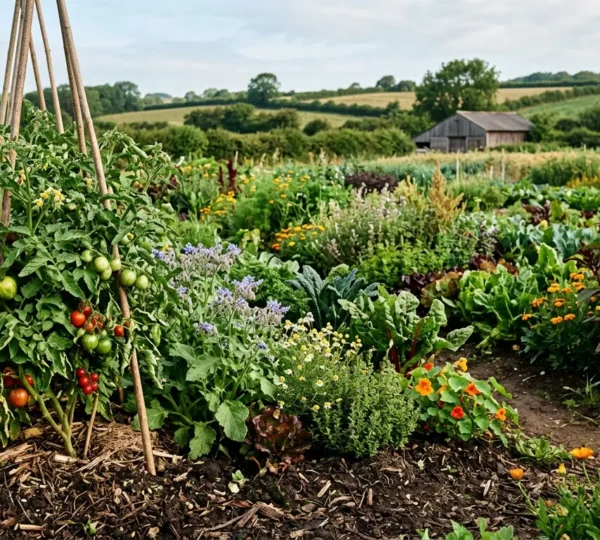
Why Heirloom Diversity Preservation Protects Your Farm Against New Disease Strains
The greatest security for your farm lies not in the latest hybrid seed catalogue, but in the genetic history you curate in your own soil. Heirloom landraces possess diverse immune repertoires that offer systemic, « community-level » resistance to pathogens that easily…
Lire la suite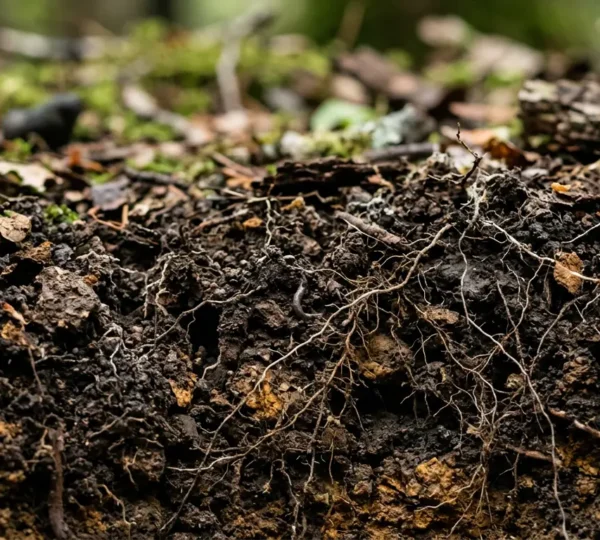
Measuring Fauna Activity: Are Your Soil Organisms Working or Sleeping?
To truly manage soil health, you must measure it. Moving beyond simple earthworm counts, a suite of quantifiable, field-based protocols allows any regenerative farmer to assess the real-time activity of their entire soil food web. Microbial decomposition can be reliably…
Lire la suite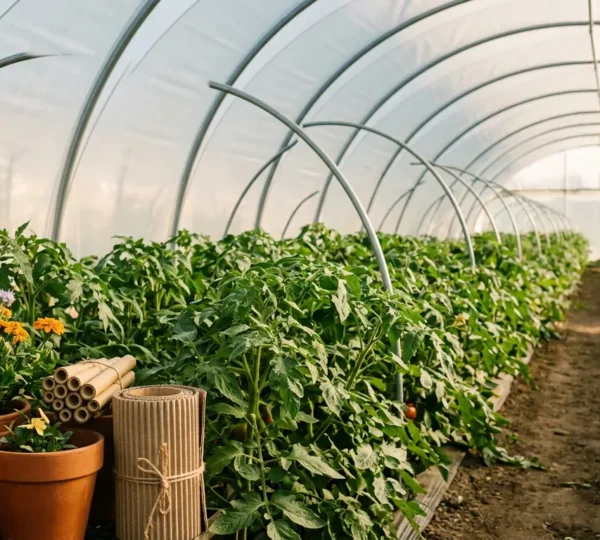
How to Engineer a Natural Predator Workforce to Control Greenhouse Pests
Effective greenhouse pest control is not about attracting beneficial insects, but engineering a permanent, in-house predator workforce. Success depends on building a closed-loop system of predator housing, food production, and habitat management within the greenhouse itself. Preventative strategies that sustain…
Lire la suite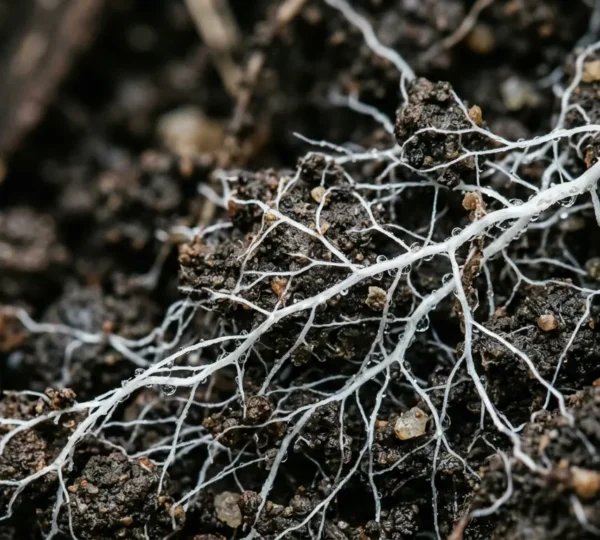
How to Encourage Mycelium Growth to Improve Soil Aggregation in Orchards?
The secret to a resilient, productive orchard lies not in managing the trees, but in architecting the underground fungal superhighway that feeds them. Shifting from bacterial to fungal-dominant soil is essential for perennial crops and is achieved by feeding the…
Lire la suite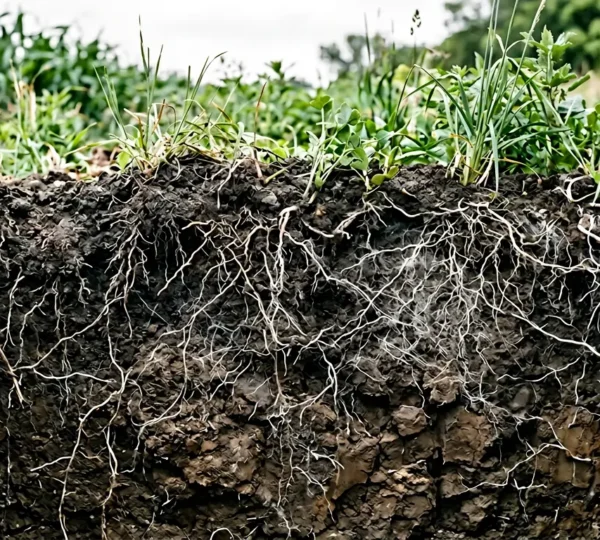
How to Facilitate Mycorrhizal Root Exchange to Reduce Phosphorus Fertilizer Use?
The key to reducing fertilizer bills isn’t just in the bag; it’s a living, microscopic infrastructure beneath your feet that can be engineered for profit. Preserving and building your soil’s native fungal network is more cost-effective than repeatedly buying inoculants….
Lire la suite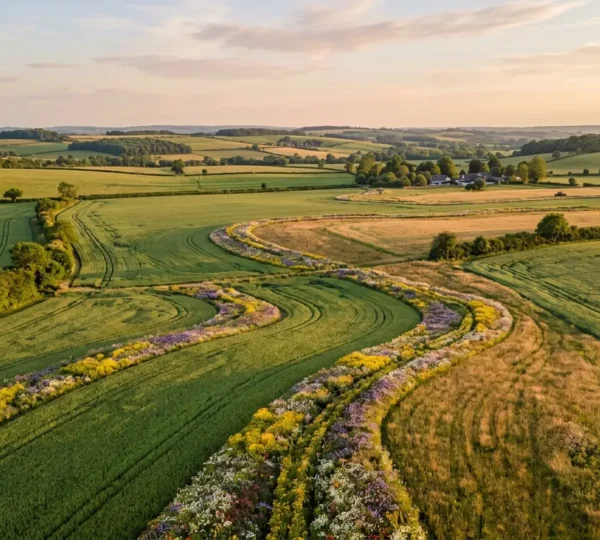
A Landscape-Scale Guide: Designing Angiosperm Pathways for Wild Pollinators on 500+ Acres
To successfully meet Biodiversity Net Gain (BNG) targets, large-scale farms must transition from simply planting flowers to engineering a resilient, landscape-scale ecological system for pollinators. Effective pollinator support requires using native wildflowers of local provenance to match the co-evolved needs…
Lire la suite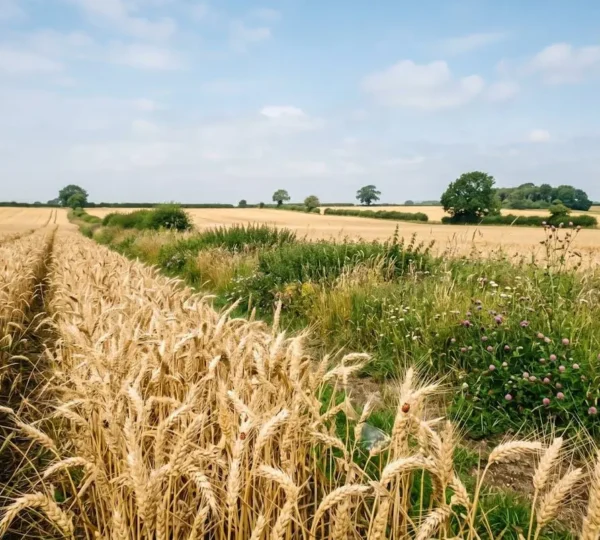
How to Rebuild Trophic Networks to Naturally Control Aphids in Cereal Crops
Relying on insecticides for aphid control is an increasingly fragile strategy; the ecological solution is to engineer a permanent, on-farm predator workforce. Effective biocontrol relies on maintaining a baseline level of prey to keep predator populations like ladybirds and ground…
Lire la suite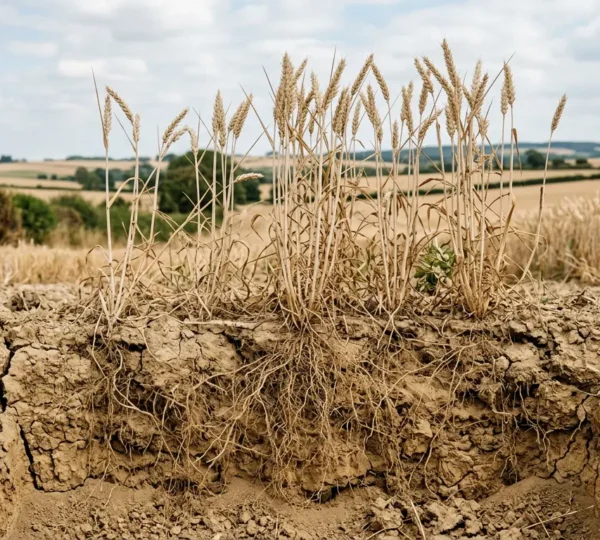
Rhizosphere Engineering: The Blueprint for Drought-Proofing Wheat in East Anglia’s Dry Summers
The key to crop survival during dry UK summers is not just in the plant’s genetics, but in actively engineering the soil’s living infrastructure to function as a water-retention engine. Conventional wisdom on drought-tolerant varieties fails when the soil physics…
Lire la suite