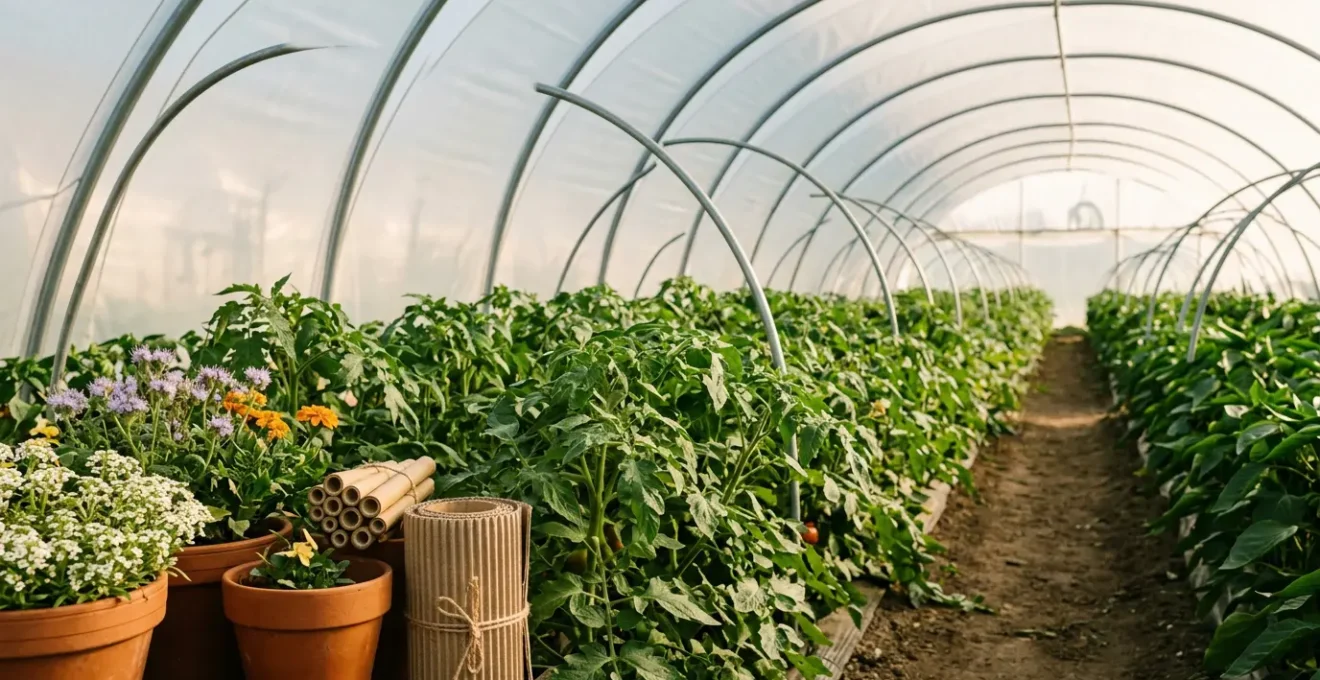
Effective greenhouse pest control is not about attracting beneficial insects, but engineering a permanent, in-house predator workforce.
- Success depends on building a closed-loop system of predator housing, food production, and habitat management within the greenhouse itself.
- Preventative strategies that sustain predator populations are more cost-effective than reactive, curative releases against established pest outbreaks.
Recommendation: Shift focus from simply releasing predators to actively managing their entire lifecycle—food, shelter, and climate—to create a self-regulating biocontrol ecosystem.
For any protected cropping grower, the pressure from pests like mites and whiteflies is a constant operational and financial battle. The standard response often involves reactive treatments, whether chemical or biological, once an infestation takes hold. Many growers attempt to attract beneficial insects by planting companion flowers or making sporadic purchases of ladybirds, hoping for the best. This approach, however, is fundamentally flawed for a commercial-scale enclosed environment. It relies on chance and treats beneficials as a disposable tool rather than a managed asset.
The core issue is a lack of systemic thinking. True, long-term success doesn’t come from randomly attracting predators from the outside; it comes from building a resilient, self-sustaining ecosystem inside. But what if the key wasn’t attracting beneficials, but rather retaining and breeding them? This requires a paradigm shift from pest control to predator workforce management. It involves deliberately engineering a closed-loop system where your natural enemies have permanent housing, a reliable food supply even in the absence of pests, and an optimised environment to thrive. This is not just ecology; it is strategic biocontrol architecture.
This article will deconstruct this systems-based approach. We will move beyond simplistic advice to detail the specific, professional-grade strategies for building this in-house predator workforce. We will cover the selection of superior predators, the design of effective habitats, the economics of preventative release, the critical role of environmental management, and the advanced techniques that turn your greenhouse into a fortress defended by nature itself.
To navigate these advanced concepts, this guide is structured to build your expertise from the ground up, moving from predator selection to full-system integration. Explore the sections below to master each component of a professional biocontrol program.
Summary: How to Engineer a Natural Predator Workforce to Control Greenhouse Pests
- Why Lacewing Larvae Are More Voracious Than Ladybirds?
- How to Install Insect Hotels That Actually Work in Commercial Polytunnels?
- Preventative vs Curative Release: Which Strategy Saves Money on Biocontrols?
- The Temperature Mistake That Kills Your Purchased Beneficials Overnight
- Banker Plants: How to Grow Food for Predators Inside the Greenhouse?
- How to Use Trap Crops Like Nature Uses Sacrificial Plants?
- Why Stone Walls and Water Butts Keep Polytunnels Warmer at Night?
- Creating Micro-Climates to Extend the UK Growing Season by 4 Weeks?
Why Lacewing Larvae Are More Voracious Than Ladybirds?
While ladybirds are the poster child for biocontrol, for a commercial grower, lacewing larvae (Chrysoperla spp.) represent a far more efficient and aggressive predator workforce. The primary reason is their sheer voracity and specialised hunting behaviour. Unlike ladybirds, which can be indiscriminate and may fly away, lacewing larvae are non-flying, voracious predators during their entire larval stage. They are essentially microscopic killing machines confined to your crop canopy. Their diet is broad, covering aphids, mites, whitefly eggs, and mealybugs, making them a versatile tool against common greenhouse pests.
The quantitative difference is significant. While a ladybird might consume 50 aphids a day, scientific research confirms that a single lacewing larva can consume approximately 120 aphid nymphs in a 24-hour period. This heightened feeding rate means a smaller population of lacewings can exert greater control, a critical factor for managing costs and efficiency. Their hunting method is also superior for scattered pest populations; they actively search for prey rather than waiting for it to be abundant.
A greenhouse trial on sweet peppers provides clear evidence of their effectiveness. The release of second-instar lacewing larvae led to an astonishing 98% suppression of aphid populations and a 78% suppression of mealybugs compared to control groups. This level of efficacy demonstrates their power not just as a predator, but as a reliable tool for outbreak prevention and control in a high-value protected cropping environment. Choosing lacewings is choosing a dedicated, stationary, and highly effective clean-up crew.
How to Install Insect Hotels That Actually Work in Commercial Polytunnels?
The concept of « insect hotels » is often reduced to a hobbyist garden ornament. For a commercial greenhouse, they must be reimagined as professional predator real estate—functional, hygienic, and strategically placed habitats designed to retain and overwinter your valuable biocontrol agents. A poorly designed hotel can become a hub for disease and mould, doing more harm than good. A functional commercial design focuses on modularity, material science, and targeted microclimates.
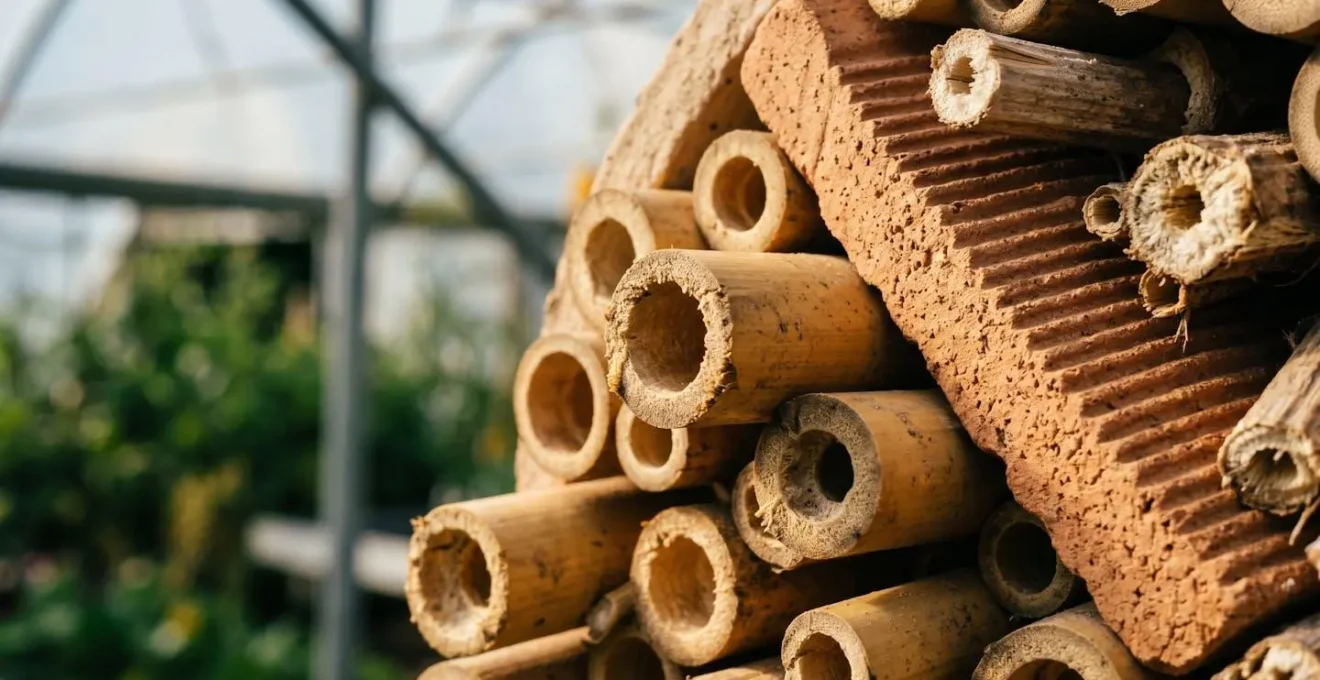
As the image shows, the focus is on natural, breathable materials. The goal is to provide safe, dry, and species-specific compartments that encourage beneficials like solitary wasps and predatory mites to establish a permanent residence. Forget decorative pinecones; think grooved terracotta for humidity-loving mites and dry pithy stems for solitary wasps. The design must be modular, allowing for easy sanitation or replacement of individual sections—a non-negotiable for maintaining hygiene protocols in a commercial setting.
Strategic placement is equally critical. These habitats should not be placed randomly. They function as « recharge stations » for your predator workforce. Position them near banker plants (their food source) or known pest hotspots to drastically reduce the time it takes for predators to find and eliminate threats. Annual maintenance, including cleaning debris and replacing decayed materials, ensures the habitat remains effective and safe year after year.
Action Plan: Building Commercial-Grade Predator Real Estate
- Select Materials: Use FSC-certified wood and breathable natural materials like bamboo canes and pithy stems to prevent moisture buildup and ensure long-lasting shelter.
- Design for Hygiene: Create single-species compartments that can be easily sanitized or replaced, which is critical for meeting commercial hygiene protocols and preventing disease spread.
- Target Microclimates: Utilise different materials for different predators. Use grooved terracotta to create humid zones for beneficial mites, and dry, hollow stems for solitary wasps.
- Position Strategically: Install habitats as ‘recharge stations’ near banker plants or known pest hotspots to minimise predator dispersal time and maximise their impact.
- Maintain Annually: Clean compartments to remove debris, check for structural damage, and replace any decayed materials to ensure the habitats remain dry, mould-free, and effective.
Preventative vs Curative Release: Which Strategy Saves Money on Biocontrols?
The decision between a preventative and a curative biocontrol strategy is one of the most significant economic choices a grower can make. A curative approach involves releasing large numbers of beneficials only after a pest population has been detected and is causing damage. A preventative strategy, by contrast, involves establishing a small, standing army of predators *before* pests become a problem. While the upfront cost of preventative releases may seem higher, it is almost always the more cost-effective strategy in the long run.
The reason lies in the inherent efficiency of biological controls. A recent meta-analysis reveals a 40-50% average efficiency for biological control agents in curative scenarios, compared to 80% or higher for synthetic chemicals. This means that once a pest population is established, BCAs struggle to overcome the sheer numbers. A preventative approach sidesteps this issue entirely. As the CABI Bioprotection Portal states:
Preventative augmentation strategies evade the risk of pest outbreaks, overcoming the loss of income from yields destroyed by pests.
– CABI Bioprotection Portal, Augmentative biological control: The power of enhancing ecosystems
This approach transforms biocontrol from a reactive firefighting tool into a proactive, systemic insurance policy. A Canadian greenhouse study highlighted that the key to cost-efficiency is not blanket application, but targeted enrichment. This means using scouts to detect the very first signs of pest presence and then enriching those specific hotspots with predators. This avoids the massive cost of a full-greenhouse curative release and stops the outbreak before it can impact yield. Preventative biocontrol isn’t about spending more; it’s about spending smarter to protect your revenue.
The Temperature Mistake That Kills Your Purchased Beneficials Overnight
One of the most common and costly errors in biocontrol is improper temperature management during the introduction of purchased predators. Growers invest significantly in these agents, only to have their effectiveness nullified by thermal shock before they even get to work. Beneficial insects are living organisms highly sensitive to their environment, and abrupt temperature changes can be lethal. The mistake often happens at the point of delivery: the insects arrive in a chilled container and are immediately released into a warm, humid greenhouse.
This sudden shift from a cool, dormant state (often 4-8°C) to a hot, active environment (25°C+) causes severe physiological stress, which can lead to high mortality rates within hours. The key to preventing this is acclimation. Instead of opening the package inside the greenhouse, it should be placed in a shaded, cool area within the structure for several hours. This allows the temperature inside the container to rise gradually, giving the insects time to adjust their metabolism safely.
Furthermore, it is vital to release them during cooler parts of the day, such as early morning or evening, avoiding the peak heat of midday. Optimal performance itself is temperature-dependent. For instance, biocontrol suppliers specify an optimal range of 67-89°F (19-28°C) with at least 30% relative humidity for green lacewing larvae activity. Releasing them outside this window—either too cold or too hot—will dramatically reduce their hunting efficiency and survival. Ignoring temperature is like throwing money away; proper acclimation and release timing are non-negotiable for protecting your biocontrol investment.
Banker Plants: How to Grow Food for Predators Inside the Greenhouse?
A preventative biocontrol strategy hinges on a critical question: what does your predator workforce eat when the primary pest is absent? Without a consistent food source, your standing army of beneficials will starve or leave, forcing you to repurchase and re-release them. The solution is the « banker plant » system—a method for creating a dedicated, in-house canteen for your predators.
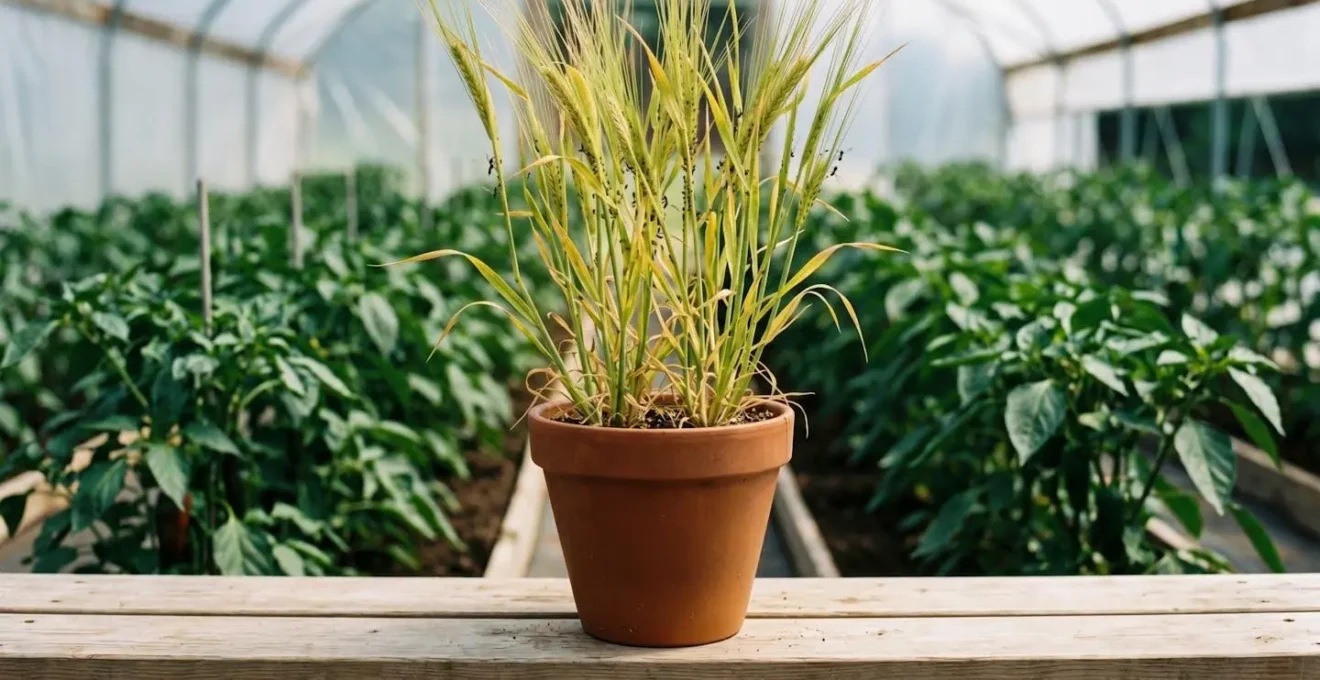
A banker plant is a non-crop plant that hosts a specific, non-pest species of aphid. This alternative prey serves as a food source for generalist predators like lacewings or specialist parasitoids. For example, barley or wheat plants are often used to cultivate cereal aphids (e.g., *Rhopalosiphum padi*), which do not feed on or harm commercial greenhouse crops like tomatoes or strawberries. This creates a self-sustaining food web within the greenhouse, completely independent of pest pressure on your cash crop.
As Penn State Extension explains, this system is about proactive population management:
Banker plants can support beneficial insects even when pests are absent. For example, grain plants with cereal aphids help maintain parasitoid populations, while sweet alyssum provides pollen for minute pirate bugs, sustaining them until prey becomes available.
– Penn State Extension, Using Biocontrol Agents Proactively in Pest Management
Implementing a banker plant system involves strategically placing these pots throughout the greenhouse. They act as reservoirs from which predators can emerge to control any pest hotspots that appear on your main crop. This transforms your greenhouse from a sterile environment into a living ecosystem, where your predator workforce is housed, fed, and ready to deploy at a moment’s notice. It is the cornerstone of a truly closed-loop biocontrol system.
How to Use Trap Crops Like Nature Uses Sacrificial Plants?
While banker plants feed your predators, trap crops serve a different but complementary purpose: they actively manipulate pest behaviour. A trap crop is a plant that is more attractive to a specific pest than your main cash crop. By planting it on the perimeter of the greenhouse or in designated rows, you can effectively lure pests away from your valuable plants, concentrating them in a « sacrificial » area where they can be managed efficiently.
This concept is the foundation of the advanced IPM technique known as the « push-pull » strategy. As described in a case study on advanced IPM in Canadian greenhouses, this involves combining repellent intercrops within the cash crop (the « push ») with highly attractive trap crops on the perimeter (the « pull »). This actively herds pests towards the trap crop, which then becomes a concentrated « kill zone. » Here, you can apply targeted organic pesticides or make massive releases of predators with surgical precision, avoiding the need for whole-greenhouse spraying.
This strategy is particularly important when dealing with specialist predators, which have a very narrow diet. As Dr. Abida Nasreen notes, you cannot use these specialists preventatively.
The use of specialists is not suggested as a preventative measure, because specialists will not survive in the absence of its prey.
– Dr. Abida Nasreen, The economics of biocontrol – Greenhouse Canada
A trap crop solves this dilemma. It concentrates the specialist’s specific prey in one location, creating the perfect environment for a targeted, curative release without letting the pest establish on the cash crop. By using trap crops, you are not just passively defending your plants; you are actively directing pest traffic and creating strategic ambush points for your biocontrol agents.
Why Stone Walls and Water Butts Keep Polytunnels Warmer at Night?
Effective biocontrol is not just about biology; it’s also about physics. The performance and survival of your predator workforce are directly tied to the stability of the greenhouse microclimate. Extreme temperature swings between day and night stress both plants and beneficial insects. The solution lies in incorporating materials with high thermal mass into your polytunnel structure, such as stone walls and large water butts (barrels).
Thermal mass is a material’s ability to absorb, store, and release heat energy. During the day, dense materials like stone and water absorb a tremendous amount of solar radiation, preventing the greenhouse from overheating. As the sun sets and the ambient temperature drops, these materials slowly release that stored heat back into the environment. This acts as a natural, passive heating system, buffering the temperature drop and keeping the polytunnel significantly warmer at night.
This temperature stabilisation has a direct impact on your biocontrol program. It extends the active hours for predators, reduces cold stress on their populations, and helps prevent condensation by keeping surfaces warmer. For example, a stone wall along the north side of a polytunnel or strategically placed black-painted water barrels can raise the minimum nighttime temperature by several degrees. This simple, passive technology creates a more stable, resilient micro-environment, which in turn fosters a more stable, resilient predator population. It’s a low-cost, high-impact way to improve the overall health and efficiency of your entire greenhouse ecosystem.
Key Takeaways
- Effective biocontrol is a closed-loop system, not a one-time fix. It requires managing predators as a permanent, in-house workforce.
- Preventative strategies that sustain predator populations with banker plants are more cost-effective than reactive, curative releases against outbreaks.
- Physical environment management, using thermal mass and purpose-built habitats, is as critical as the biological agents themselves for system stability.
Creating Micro-Climates to Extend the UK Growing Season by 4 Weeks?
The culmination of engineering a complete biocontrol system—integrating superior predators, purpose-built habitats, stable food sources, and physical buffers like thermal mass—is the creation of a highly controlled and stable micro-climate. This stability provides a powerful competitive advantage that goes far beyond pest control: it directly translates into an extended growing season and increased profitability. By decoupling your production environment from the volatility of the external climate, you can start planting earlier in the spring and continue harvesting later into the fall.
A case study of Canadian growers using high-gothic polytunnels demonstrates this principle perfectly. By implementing advanced structures that optimise light quality and improve internal climate stability, they successfully extended their growing seasons for high-value crops like strawberries and raspberries. The controlled environment resulted in earlier planting capabilities, reduced disease pressure (by eliminating rain splash), and improved labour efficiency. The growers were able to manage production from spring straight through to fall, achieving higher yields through a longer, more predictable season.
For a UK grower, this could realistically mean adding four or more weeks to the productive season. This represents a significant increase in revenue potential, turning the investment in a holistic biocontrol system into a powerful driver of profitability. The goal is no longer just to fight pests, but to achieve a level of environmental control that unlocks the full production potential of your protected cropping operation. This is the ultimate return on investment for treating your greenhouse as an integrated, engineered ecosystem.
Begin today by auditing your current pest management strategy. Identify the first component—be it predator housing, an in-house food source, or an environmental buffer—to start building your integrated, self-regulating biocontrol system and unlock a more resilient and profitable growing season.