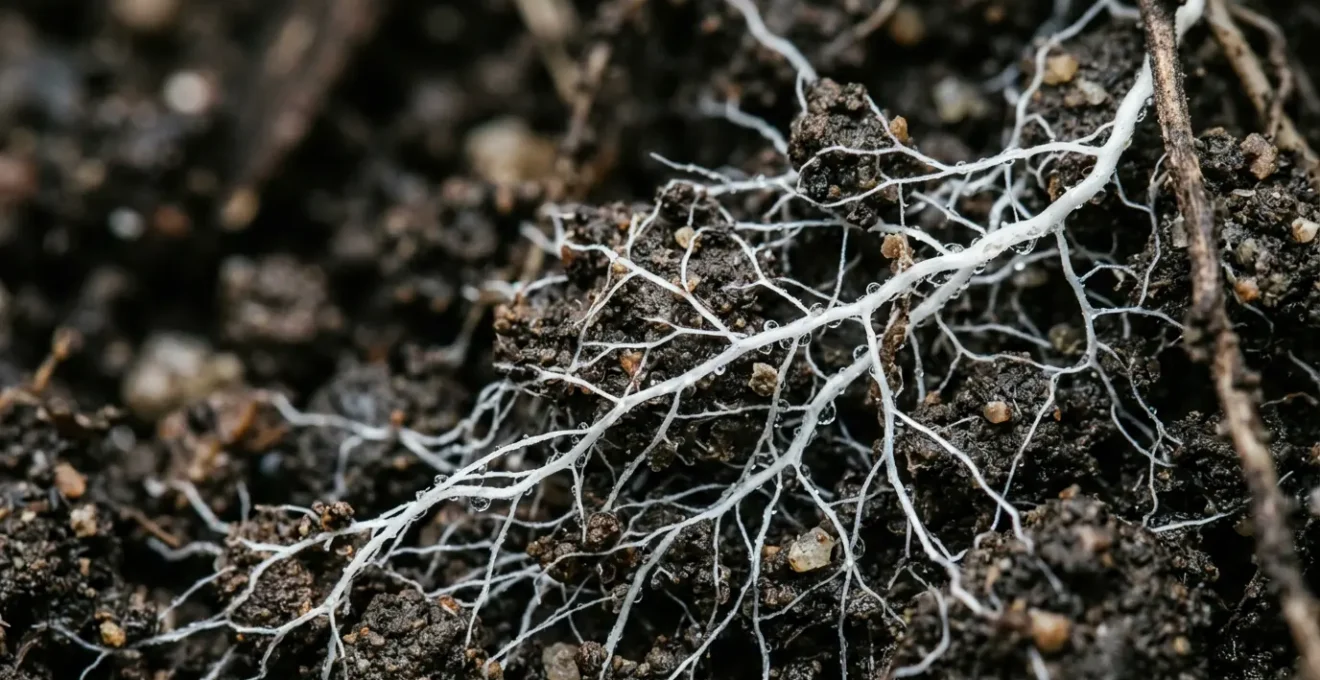
The secret to a resilient, productive orchard lies not in managing the trees, but in architecting the underground fungal superhighway that feeds them.
- Shifting from bacterial to fungal-dominant soil is essential for perennial crops and is achieved by feeding the soil a high-carbon, lignin-rich diet.
- Eliminating soil disturbance (tillage) is the single most critical factor in allowing vast, unbroken mycelial networks to establish and create stable soil structure.
Recommendation: Start today by ceasing all tillage and applying a deep mulch of ramial chipped wood (RCW) to begin the long-term process of building a living soil engine.
For many fruit growers, the soil beneath their trees can become a source of frustration. It feels compacted, lifeless, and seems to repel water rather than absorb it. The conventional response often involves more intervention: tilling to « loosen » the soil, applying synthetic fertilisers to feed the trees, or using generic compost that disappears in a season. While well-intentioned, these actions often treat the symptoms rather than the root cause, frequently favouring a bacterial-dominant soil environment that is better suited to annual vegetables than long-lived fruit trees.
But what if the key to unlocking your orchard’s true potential wasn’t about adding more, but about building a self-sustaining system from the ground up? The true foundation of a healthy orchard is not just soil; it’s a living, breathing ecosystem dominated by fungi. This guide shifts the perspective from short-term fixes to a long-term architectural project: the construction of a vast, interconnected mycelial network. This « fungal superhighway » is the engine that drives nutrient cycling, water retention, and ultimately, the creation of the stable, aggregated soil structure that perennial crops crave.
This article will guide you through the essential principles for engineering this fungal dominance. We will explore the specific fuel that powers this engine, the cultivation practices that protect its delicate infrastructure, and the strategic partnerships that make the entire system thrive, transforming your orchard floor into a powerhouse of fertility.
This comprehensive guide details the practical steps and scientific principles behind cultivating a thriving fungal ecosystem in your orchard. Explore the sections below to understand each critical component, from choosing the right food for your soil to designing resilient plant communities.
Summary: A Pomologist’s Guide to Building a Fungal Soil Superhighway
- Why Ramial Chipped Wood is the Best Food for Saprophytic Mycelium?
- How to Shift Bacterial Soil to Fungal Dominance for Perennial Crops?
- Straw vs Woodchip: Which Mulch Promotes Better Mycelial Mats?
- The Rotavator Mistake That Sets Back Orchard Soil Health by Years
- Humidity Management: How to Keep the Soil Surface Moist for Hyphae?
- How to Use Glomalin from Fungi to Glue Soil Particles Together?
- How to Pair Nitrogen Fixers with Fruit Trees for Natural Fertility?
- How to Design Polyculture Guild Associations for Productive UK Forest Gardens?
Why Ramial Chipped Wood is the Best Food for Saprophytic Mycelium?
Not all organic matter is created equal when the goal is to cultivate a fungal-dominant soil. While any mulch is better than bare ground, the most effective fuel for building a long-lasting mycelial network is Ramial Chipped Wood (RCW). This refers specifically to wood chips from the smaller branches and twigs of deciduous trees, typically less than 7cm in diameter. This isn’t just woody bulk; it is the most nutrient-dense part of the tree, packed with the ideal ingredients for saprophytic fungi, the primary decomposers in a forest ecosystem.
The magic of RCW lies in its high concentration of nutrients in the cambium layer. This is where the tree’s lifeblood flows, and it contains starches, sugars, proteins, and a wide array of minerals. In his research on humification, pomologist Michael Phillips highlights this critical distinction. He notes that while the main trunk is mostly structural carbon, the smaller branches are where the tree stores its functional wealth.
75% of minerals are stored in the smaller portions of the tree, while only 25% of minerals are stored in cambium cells in the tree trunk.
– Michael Phillips, Humification and Ramial Wood Chips presentation
This nutrient-rich material, combined with the complex lignins in the wood, provides a slow-release, high-energy food source. It’s the perfect diet for the long-term, lignin-decomposing fungi (Basidiomycetes) that are the master architects of stable soil humus. By applying a deep layer of RCW, you are not just mulching; you are serving a carefully prepared feast to the specific microorganisms you want to encourage, setting the stage for a profound shift in your soil’s biology.
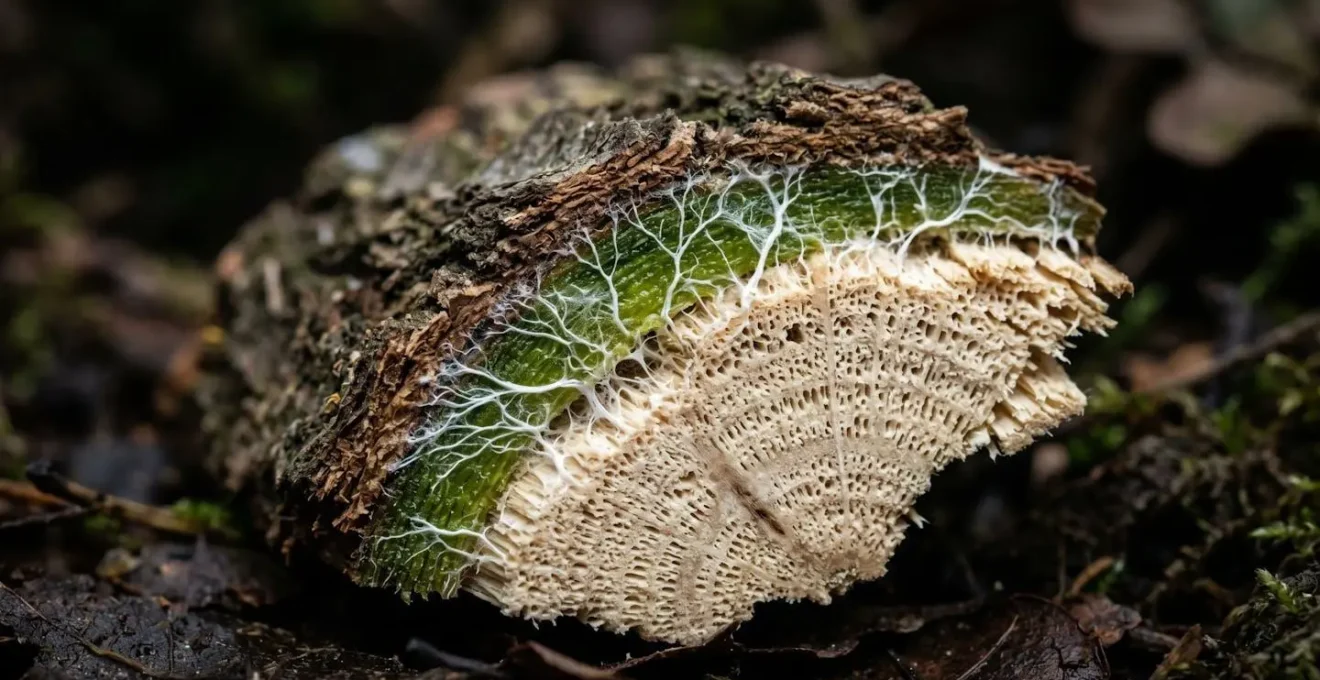
As this image illustrates, the process begins as fungal hyphae colonize the nutrient-rich cambium of a fresh wood chip. This is the first step in unlocking the stored energy and minerals, initiating the creation of a complex soil food web that will sustain your orchard for years to come. This patient process of decomposition is the engine of natural soil building.
How to Shift Bacterial Soil to Fungal Dominance for Perennial Crops?
Most agricultural soils, especially those that have been tilled or left bare, are dominated by bacteria. Bacteria thrive on simple sugars and proteins, multiply rapidly, and are the « first responders » to soil disturbance. This environment is perfect for annual plants that live and die in a single season. However, perennial crops like fruit trees thrive in a fungal-dominant soil, which mirrors the stable, undisturbed floor of a forest. Shifting your orchard’s soil from bacterial to fungal dominance is a foundational goal for long-term health and requires a deliberate, patient strategy.
The key to this shift lies in changing the soil’s diet. Bacteria prefer « green » materials with a low carbon-to-nitrogen ratio (C:N), like fresh grass clippings or manure. Fungi, especially the wood-decomposing types we want, thrive on « brown » materials with a high C:N ratio, like wood chips, straw, and autumn leaves. These complex, lignin-rich materials are tough for bacteria to break down but are the preferred food source for fungi. By consistently adding high-carbon mulch, you selectively feed the fungal populations, allowing them to outcompete bacteria over time.
This process is not just about food; it’s also about habitat. Fungi build intricate, delicate networks of hyphae that are destroyed by physical disturbance. Therefore, a core principle for encouraging fungal dominance is to minimise soil disturbance entirely. Adopting no-till practices is non-negotiable. Furthermore, the soil should never be left bare, as mycorrhizal fungi depend on living plant roots for their energy. Using cover crops or allowing a living mulch to establish between trees ensures a continuous supply of carbon exudates from roots to their fungal partners, keeping the underground network alive and active.
Straw vs Woodchip: Which Mulch Promotes Better Mycelial Mats?
When deciding on a mulch to promote mycelial growth, growers often face a choice between two common materials: straw and woodchips. Both can be effective, but they serve different roles and favour different types of fungal activity, making the choice dependent on your long-term goals. Straw is a fast food, while woodchips are a slow, sustaining banquet. Understanding their distinct characteristics is key to designing an effective mulching strategy for your orchard.
Straw decomposes quickly, providing a rapid food source for early-succession fungi. This can lead to faster initial mushroom production if you’re inoculating with species like the Wine Cap (Stropharia rugosoannulata). However, its life is short, and it’s more prone to drying out, often requiring a thicker layer (6-8 inches) to maintain adequate moisture. It’s an excellent « Phase 1 » accelerator to quickly cover the ground and kickstart biological activity.
Woodchips, on the other hand, are the foundation for a long-term, complex fungal network. Their high lignin content is the preferred diet of the Basidiomycetes fungi that are the master soil builders. While colonization is slower, a woodchip bed can remain productive for several years, retaining moisture more effectively and creating a more stable, resilient habitat for a diverse soil food web. The following table, based on insights from mushroom cultivation experts, summarizes the key differences.
This comparison, drawing from data on fungal cultivation, shows how each material plays a unique role. A detailed analysis of their properties provides a clear picture for strategic application.
| Characteristic | Straw Mulch | Woodchip Mulch |
|---|---|---|
| Production Speed | Produces mushrooms quicker | Slower initial colonization |
| Bed Longevity | Shorter overall life (1-2 seasons) | Can produce for several years |
| Moisture Retention | More prone to drying out, requires 6-8 inch depth | Better moisture retention, 4-6 inch depth sufficient |
| Fungal Type Favored | Fast-acting early succession fungi (Ascomycetes) | Long-term lignin decomposers (Basidiomycetes) |
| Best Use Case | Phase 1 accelerator for quick ground cover | Phase 2 foundation for complex fungal networks |
| Optimal Strategy | Apply as initial layer on soil surface | Layer over straw for long-term stability |
Ultimately, the most effective strategy is often not an « either/or » but a « both/and » approach. Laying down a layer of straw directly on the soil surface first, followed by a deep layer of woodchips on top, combines the best of both worlds. The straw provides a quick initial burst of activity, while the woodchips create the long-term, stable fungal habitat that will build superior soil structure for years to come.
The Rotavator Mistake That Sets Back Orchard Soil Health by Years
In the quest for a clean, weed-free orchard floor, one tool has arguably done more damage to soil health than any other: the rotavator. The act of tilling, while providing a short-term solution to weeds and perceived compaction, is catastrophic for the fungal ecosystem you are trying to build. It is the single biggest mistake a grower can make, effectively pressing a reset button on soil life and setting back ecological succession by years. Each pass of the rotavator is a violent earthquake for the soil’s inhabitants.
The damage is twofold. First, tillage physically shatters the delicate, intricate web of mycelium that has been patiently growing and connecting your soil. These fungal hyphae are the transport network for nutrients and water, and they are the threads that bind soil particles together into stable aggregates. Tearing them apart is like demolishing a city’s entire road and communication system. Second, it introduces a massive influx of oxygen into the soil, causing rapid oxidation of soil organic matter. This burns up valuable soil carbon, releasing it into the atmosphere as CO2, and destroys the food source for future fungal growth. Expert sources are unequivocal about the impact.
Tillage and rototilling mix oxygen with stored soil carbon, converting it to carbon dioxide. Tillage also physically destroys the mycorrhizal mycelial network and the soil structure that protects it.
– No-Till Farmer research compilation, Tillage Proves Most Damaging Factor to Beneficial Fungi in Soil
The scientific evidence confirms this. The research on arbuscular mycorrhizal fungi diversity reveals that no-tillage systems consistently outperform tilled systems, showing a 9.1-12.2% increase in soil macro-aggregates and a 10% increase in soil organic carbon. By choosing not to till, you are choosing to build, rather than destroy, the very foundation of your orchard’s fertility. For those recovering from a history of tillage, a dedicated recovery protocol is essential.
Action Plan: Recovering Tilled Orchard Soil
- Cease all future tilling: Make a permanent commitment to no-till or minimum-till practices. This is the non-negotiable first step to allow recovery.
- Implement cover crops immediately: Sow a diverse mix of cover crops like legumes and small grains to provide living roots that feed the surviving fungi and start rebuilding the network.
- Apply regenerative organic inputs: Begin rebuilding soil carbon by top-dressing with quality compost, well-rotted animal manures, and a deep layer of ramial wood chip mulch.
- Inoculate to accelerate recovery: Consider applying a mycorrhizal fungal inoculant directly to the root zone of your trees or within the cover crop seed mix to reintroduce key species.
- Monitor and be patient: Rebuilding a fungal network is a multi-year process. Observe the return of life in your soil—worms, insects, and visible mycelial mats—as signs of success.
Humidity Management: How to Keep the Soil Surface Moist for Hyphae?
While the right food source and an undisturbed environment are critical, the entire fungal superhighway can grind to a halt without one key ingredient: consistent moisture. Fungal hyphae are delicate structures, and the active growing tips are particularly vulnerable to desiccation. If the soil surface or the mulch layer where they are most active dries out completely, the mycelium will go dormant or die. Effective humidity management is not about keeping the soil waterlogged, but about maintaining a stable, damp environment that allows the fungal network to thrive and expand.
A deep mulch layer is your primary tool for passive moisture management. A coarse, thick layer of woodchips (4-6 inches) acts like a sponge, absorbing rainfall and releasing it slowly. More importantly, it creates a buffer against evaporation from the sun and wind. This mulch layer also creates its own microclimate; the temperature difference between the warm soil and the cool night air causes condensation to form within the mulch, providing a gentle, consistent supply of water directly to the hyphae. This passive hydration is often more valuable than active irrigation.
However, during periods of establishment or prolonged drought, active watering may be necessary. The goal is to mimic natural rain events with deep, infrequent watering rather than light, frequent sprinkling. This encourages the mycelium and tree roots to explore deeper, more stable soil layers. As experts from the University of Nebraska-Lincoln point out, the health of the tree and the fungi are directly linked.
Fungal mycelium dry out and die if soil conditions get very dry during periods of drought. Applying water to maintain the tree’s health will also encourage continued functioning from mycorrhizal fungi.
– University of Nebraska-Lincoln Water Resources, Beneficial Fungi and Tree Health
For targeted efficiency, installing drip irrigation under the mulch layer is the optimal solution. This delivers water directly to the root and fungal zone, eliminating surface evaporation and ensuring the water gets where it’s needed most. When starting a new mulch bed, it’s wise to check the moisture level regularly by digging down with your fingers. The substrate should feel damp like a wrung-out sponge, not soggy or dry. A baseline of one inch of water per week, adjusted for local conditions, is a good starting point to keep your fungal engine running smoothly.
How to Use Glomalin from Fungi to Glue Soil Particles Together?
The ultimate benefit of a thriving fungal network is the creation of a stable, well-structured soil. The hero of this story is a sticky, miraculous substance called glomalin. Produced by arbuscular mycorrhizal fungi (AMF), glomalin acts as the « super-glue » of the soil world. It coats fungal hyphae to protect them and is sloughed off into the soil as the hyphae grow, binding tiny particles of sand, silt, and clay together into larger, stable clumps known as aggregates. You don’t « use » glomalin directly; you create the conditions for the fungi to produce it for you.
These aggregates are the foundation of good soil structure. The spaces between them create pores that allow air and water to penetrate the soil, preventing compaction and runoff. Within the aggregates, water and nutrients are held in a protected environment, creating a slow-release reservoir for plant roots. A soil rich in glomalin-bound aggregates is crumbly, dark, and resilient—it can hold vast amounts of water without becoming waterlogged and resists erosion from wind and rain. This is the holy grail for fruit growers.
The production of glomalin is directly tied to the health and activity of AMF, which in turn is dependent on your management practices. As you might expect, practices that harm fungi also inhibit glomalin production. A 12-month study in UK wheat fields found that both glomalin and water-stable aggregates were significantly greater in zero-tillage soils compared to those under conventional tillage. By avoiding soil disturbance and maintaining a permanent mulch layer, you are providing the perfect habitat for AMF to work their magic.
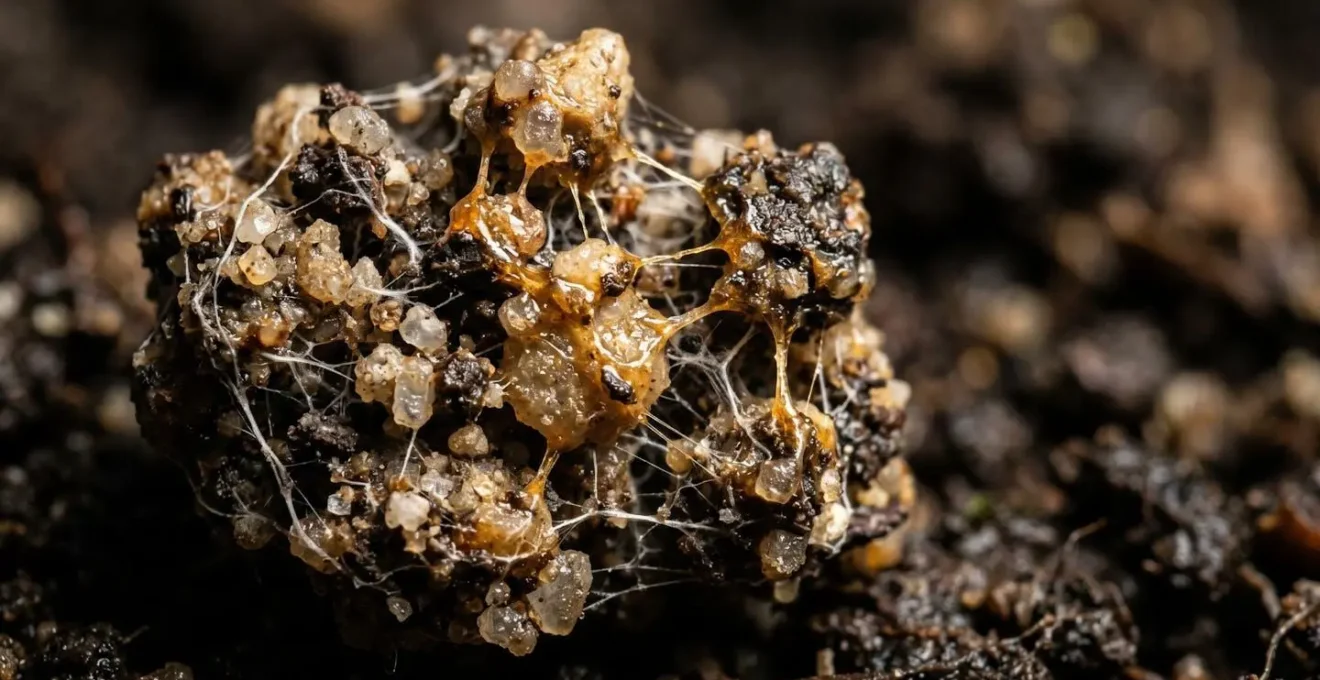
This microscopic view shows the incredible work of glomalin. It is the physical manifestation of a healthy fungal ecosystem, transforming disparate soil particles into a cohesive, life-sustaining structure. Encouraging glomalin production is a long-term investment that pays dividends in water-holding capacity, nutrient availability, and overall orchard resilience. It is the living architecture of fertile soil, built by your fungal partners.
How to Pair Nitrogen Fixers with Fruit Trees for Natural Fertility?
Once your fungal superhighway is under construction, you can begin to leverage it for even greater benefit by introducing strategic partnerships. One of the most powerful is the relationship between fruit trees, nitrogen-fixing plants, and the mycorrhizal network that connects them. Nitrogen-fixing plants, such as clovers, peas, and certain shrubs, have a symbiotic relationship with bacteria (like Rhizobium) that convert atmospheric nitrogen into a plant-available form. A fungal network can create a direct physical link between these nitrogen factories and your fruit trees.
This is not a passive process. The fruit tree, rich in carbon from photosynthesis, trades this energy source with its fungal partners. The fungi, in turn, extend their network to the roots of a nearby nitrogen-fixing plant and trade some of that carbon for the nitrogen it has produced. This creates a sophisticated underground marketplace. As the Koanga Institute explains, the fungal network acts as a direct conduit for this vital trade.
Mycorrhizal networks can physically connect the roots of the nitrogen-fixing plant to the roots of the fruit tree, actively trading the N-fixer’s nitrogen for the fruit tree’s carbon.
– Koanga Institute, Getting Fungi with Ramial Chipped Wood
Choosing the right partners is crucial for designing an effective system. You need plants that are compatible with the orchard environment and won’t compete excessively with the fruit trees. The goal is to create a multi-layered, complementary « guild » of plants that work together. Some excellent choices for temperate orchards include:
- White Clover (Trifolium repens): A low-growing, persistent groundcover that forms a living mulch, suppresses weeds, and is an excellent mycorrhizal associate.
- Goumi Berry (Eleagnus multiflora): A shade-tolerant shrub that fixes nitrogen and produces edible berries, making it a productive addition to the understory.
- Comfrey (Symphytum officinale): While not a nitrogen-fixer, it is a « dynamic accumulator » with a deep taproot that brings up minerals from the subsoil. Its leaves can be chopped and dropped to provide a nutrient-rich mulch.
- Siberian Pea Shrub (Caragana arborescens): An extremely hardy, nitrogen-fixing shrub suitable for creating windbreaks or hedgerows on the orchard’s edge.
By interplanting these companions, you are creating a self-fertilising system. The health of your fruit tree’s canopy, which determines its photosynthetic capacity, directly fuels this underground economy, boosting glomalin production and nitrogen transfer in a virtuous cycle.
Key takeaways
- The foundation of a healthy orchard is a fungal-dominant soil, which is built by eliminating tillage and providing a high-carbon diet of woodchips.
- Ramial Chipped Wood (RCW) from small branches is the superior food source due to its high nutrient and lignin content, fueling the fungi that create stable soil.
- A healthy mycelial network acts as a « fungal superhighway, » facilitating the trade of nutrients (like nitrogen from companion plants) for carbon from the fruit trees, creating a self-fertilizing system.
How to Design Polyculture Guild Associations for Productive UK Forest Gardens?
The final step is to integrate all these principles into a cohesive design. A productive forest garden or polyculture orchard is not a random collection of plants, but a thoughtfully designed « guild » where each member performs multiple functions. The design process starts not with what you see above ground, but with the « underground architecture » you are trying to create. This holistic approach, championed by orchardists like Michael Phillips, aims to create a soil ecosystem that contains ten times more fungal biomass than bacterial biomass.
The strategy involves pairing plants with complementary root structures to create a diverse and cooperative underground community. The deep taproot of a central fruit tree (like an apple or pear) acts as the anchor. This is complemented by the fibrous, surface-rooting system of a dynamic accumulator like Comfrey, which mines the topsoil. A low-growing groundcover like White Clover adds a layer of nitrogen-fixing root nodules. This creates a multi-layered root system that explores different soil horizons without direct competition.
The entire system is fueled by the mulch layer of ramial woodchips, which supports both the saprophytic fungi breaking down the wood and the mycorrhizal fungi partnering with the plant roots. The selection of plants for a UK context should also consider pest confusion and beneficial insect attraction. A well-designed guild might include:
- Central Element: An apple or pear tree on a semi-vigorous rootstock.
- Nitrogen Fixers: A living mulch of White Clover at the base, with a Goumi Berry shrub nearby.
- Dynamic Accumulator: A clump of Comfrey planted just outside the tree’s dripline for a « chop-and-drop » mulch source.
- Pest Confusers: Aromatic herbs like Lavender or Rosemary planted on the sunny side, thriving in the well-drained fungal soil.
- Beneficial Attractors: UK-native plants like Foxglove to attract pollinators and Yarrow to attract predatory insects.
- Bulb Aerators: A ring of Daffodils around the tree, which can help deter rodents and aerate the soil.
Case Study: The Underground Architecture Approach
Michael Phillips’ holistic orchard approach emphasizes that food forest soil should ideally contain ten times more fungi than bacteria. The strategy involves designing guilds starting from soil structure – pairing deep taproots (fruit trees) with fibrous surface roots (comfrey), and nitrogen-fixing root nodule systems (clover), creating complementary underground communities. The ramial chipped wood mulch layer (twigs less than 7cm diameter from deciduous trees) serves as the ideal substrate, supporting both saprophytic and mycorrhizal fungal networks essential for long-term forest garden productivity.
Designing a polyculture guild is a long-term, evolutionary process. It requires patience and observation, planning for succession as the fruit tree canopy grows and shades the understory. But by starting with the soil and focusing on building a robust fungal network, you create a resilient, self-sustaining system that will be productive for decades.
Begin today by observing your soil, ceasing all disturbance, and committing to the patient, rewarding process of feeding the life beneath your feet. Building this living foundation is the most profound investment you can make in the long-term health and productivity of your orchard.