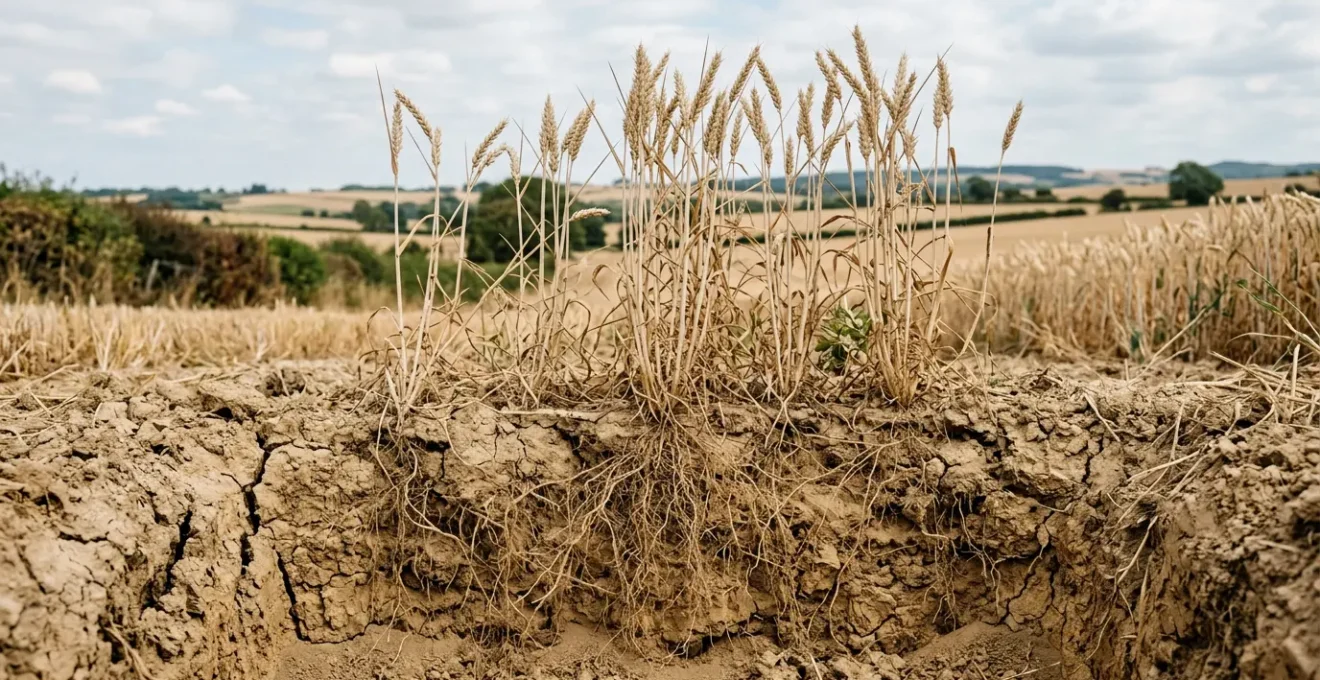
The key to crop survival during dry UK summers is not just in the plant’s genetics, but in actively engineering the soil’s living infrastructure to function as a water-retention engine.
- Conventional wisdom on drought-tolerant varieties fails when the soil physics itself prevents water uptake.
- Strategic biological interventions, from seed inoculation to tillage practices, create a robust fungal network that dramatically enhances water and nutrient access.
Recommendation: Shift focus from solely treating the plant to cultivating the entire root-soil ecosystem as a single, high-performance unit.
As growers in East Anglia know all too well, a promising wheat crop can be decimated by a few critical weeks without rain. The conventional response often involves a search for the latest drought-tolerant varieties or a renewed focus on general soil health. While these are important pieces of the puzzle, they often overlook the most critical arena where the battle for water is won or lost: the microscopic zone surrounding the plant’s roots, known as the rhizosphere.
The common advice to use no-till or add organic matter is sound, but it misses the functional mechanism. True resilience doesn’t come from passive soil improvement; it comes from active, deliberate intervention. It requires thinking less like a farmer and more like a biological systems engineer. The real bottleneck during drought is often not the plant’s inability to cope, but a physical and biological breakdown at the soil-root interface, preventing water from ever reaching the plant, regardless of its genetic potential.
But what if you could fundamentally re-engineer this interface? What if the key to surviving dry spells wasn’t just about the plant, but about building and protecting a vast, subterranean network of fungal superhighways that actively seek out, store, and deliver water? This is the core principle of rhizosphere engineering. It’s a shift in perspective from treating soil as a simple substrate to cultivating it as a dynamic, living partner in crop production.
This guide deconstructs the specific, science-backed strategies to build this resilient foundation. We will explore how to initiate this biological engine from day one, identify the common practices that sabotage it, and detail the mechanical and genetic choices that work in harmony with your soil’s living ecosystem to create a truly drought-proofed crop.
Summary: Rhizosphere Engineering for Drought Resilience
- Why Weak Rhizospheres Lead to Crop Failure Even with Adequate Rainfall?
- How to Inoculate Seeds to Boost Rhizosphere Activity from Day One?
- Commercial Mycorrhizae vs Native Soil Biology: Which is More Effective for Barley?
- The Fungicide Application Error That Destroys Rhizosphere Integrity
- Solving Compaction: How to Deep-Rip Without Breaking Fungal Networks
- How to Direct Drill to Maintain Hyphal Networks Intact?
- Drought Tolerant Varieties: Choosing Wheat That Yields on Light Land
- How to Facilitate Mycorrhizal Root Exchange to Reduce Phosphorus Fertilizer Use?
Why Weak Rhizospheres Lead to Crop Failure Even with Adequate Rainfall?
The paradox of a wilting crop in soil that still holds some moisture is a frustrating reality for many growers. The explanation lies in the failure of the rhizosphere, the thin layer of soil directly influenced by root secretions. A healthy rhizosphere is a bustling hub of microbial activity, creating a biological bridge between soil particles and root hairs. When this ecosystem is weak, the plant’s ability to extract water and nutrients is severely compromised, even if they are technically present. This is because the physical connection is broken.
Drought stress itself is a primary cause of this breakdown. Recent research on spring wheat cultivars shows that drought caused a decrease in the complexity of the rhizosphere microbial network. This creates a vicious cycle: dry conditions weaken the very biological system the plant relies on to survive those conditions. The intricate web of bacteria and fungi collapses, reducing the root’s effective surface area and its capacity to access water held in micropores.
More importantly, this reveals the « soil physics bottleneck. » A landmark study found that once soil dries and its water potential drops below a critical threshold (-1.5 MPa), the plant simply cannot overcome the physical forces holding the remaining water to soil particles. This explains why breeding for drought-resistant plant traits alone has had limited success. If the soil physics and biology aren’t right, the most genetically advanced plant will still fail. The primary role of a robust rhizosphere, therefore, is to manage this bottleneck, keeping the soil-root interface biologically active and physically conductive for as long as possible.
This understanding shifts the goal from merely keeping the plant alive to actively maintaining the integrity and function of its hidden support system.
How to Inoculate Seeds to Boost Rhizosphere Activity from Day One?
If a robust rhizosphere is the goal, then action must begin before the seed even touches the soil. Seed inoculation with beneficial microbes, particularly arbuscular mycorrhizal fungi (AMF), is the most effective way to establish a powerful biological network from the moment of germination. This process, known as rhizosphere engineering, gives the fledgling crop a profound advantage, allowing it to establish its « fungal superhighways » before native competitors or environmental stressors can take hold.
The principle is simple: coat the seed with the right biological partners to ensure they are the first to colonise the emerging roots. This early partnership accelerates root development and vastly expands the volume of soil the plant can explore for water and nutrients. The visual below illustrates how the fine powder of an inoculant adheres to the textured surface of a wheat seed, ready to spring to life upon germination.
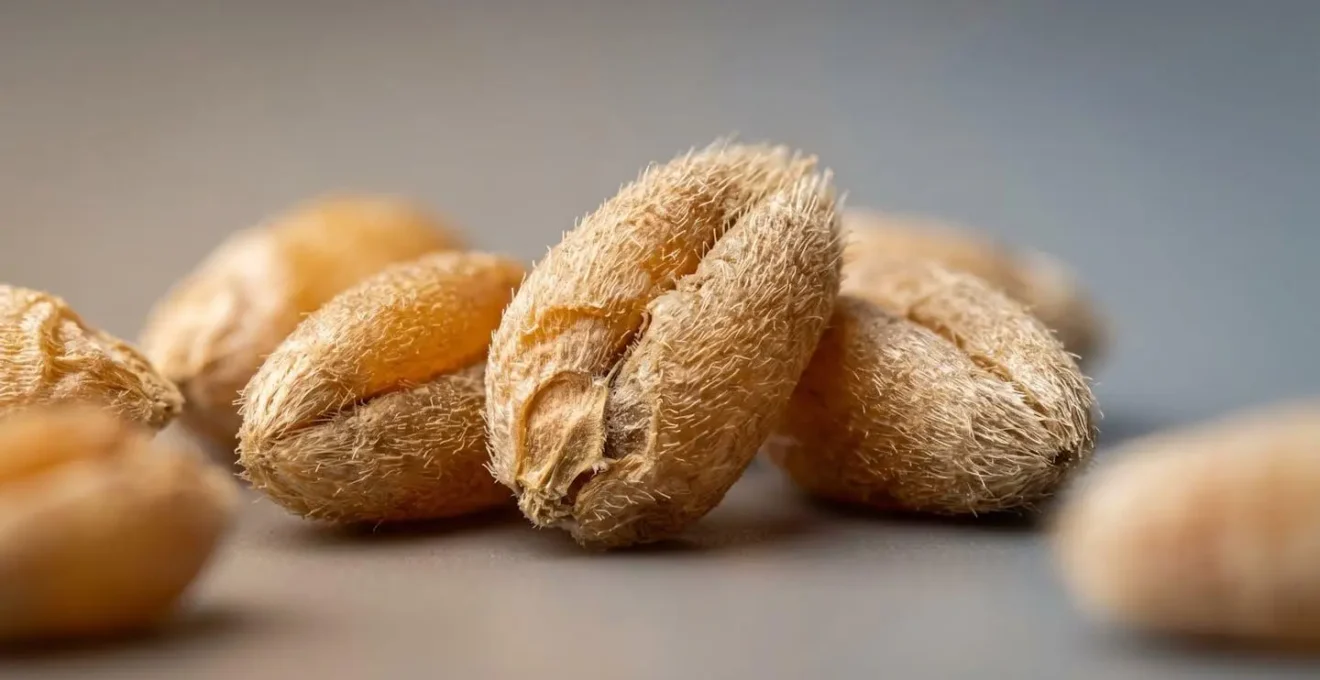
As you can see, the hairy texture of the seed coat provides an ideal surface for the inoculant to stick, ensuring the fungi are in the perfect position to connect with the primary root. The results of this early intervention are not just theoretical. For example, commercial trials with MycoGold Wheat Blend have demonstrated a 12.4% average increase in wheat yield over three years. To apply inoculants effectively, follow these key steps:
- Choose the Right Formulation: Powdered inoculants are ideal for grassy seeds like wheat and barley, as the powder readily sticks to their hairy, textured seed coats.
- Select an Application Method: For fragile seeds or to protect the inoculant from pesticides, applying it directly into the planting furrow (in-soil application) can be more effective than seed dressing.
- Time it Right: Application at the seed treatment or transplant stage is critical. This allows the beneficial fungi to establish contact with the roots before they face competition from less beneficial native soil microbes.
- Ensure Soil Contact: Whether mixed with soil or placed in the planting hole, the inoculant must be *in* the soil, not on the surface. Sunlight can quickly kill the delicate fungal spores.
- Avoid Brewing: Mycorrhizal fungi should not be brewed in compost teas. This process is suited for bacteria and other fungi, but it can damage AMF. They should be applied to the soil directly.
By giving your crop a biological head start, you are laying the foundation for a season-long partnership that pays dividends in resilience and yield.
Commercial Mycorrhizae vs Native Soil Biology: Which is More Effective for Barley?
The market for biological inoculants is growing, presenting growers with a key question: is it better to introduce a commercial, lab-grown strain of mycorrhizae or to foster the native fungal populations already adapted to your specific fields? For crops like barley, especially on the varied soils of East Anglia, the evidence increasingly suggests that local is better. While commercial products offer convenience, they often contain single, generic fungal species that may not be suited to your unique soil chemistry, pH, and climate.
A revealing 2025 study in Italy tested an indigenous AMF consortium on three different barley varieties. The researchers found that the locally-isolated fungi produced positive growth responses that generic strains couldn’t match. The key takeaway was that indigenous inoculants composed of locally-adapted species offer distinct advantages in real-world field conditions. These native fungi have evolved over millennia to thrive in your specific soil, making them more competitive and effective partners for your crop.
The quantitative benefits are significant. Further a comparative study demonstrates that barley plants inoculated with a mix of native AMF had a 22% lower root:shoot ratio—meaning the plant could support more growth above ground with a more efficient root system. The same plants also showed 35% greater foliar phosphorus concentrations, a clear sign of superior nutrient uptake. This suggests that a diverse community of native fungi works more efficiently than a single commercial species. The goal, then, is not just to have fungi, but to have the *right* community of fungi, and that community is likely already in your soil, waiting to be nurtured.
Rather than simply buying a product off the shelf, the most effective long-term strategy is to implement farming practices—like reduced tillage and diverse rotations—that preserve and enhance your farm’s unique, native soil biology.
The Fungicide Application Error That Destroys Rhizosphere Integrity
One of the most damaging and overlooked agronomic practices is the misapplication of fungicides, particularly as seed treatments. While essential for disease control, certain chemical families are devastating to the beneficial mycorrhizal fungi that form the backbone of a resilient rhizosphere. Applying the wrong fungicide at the wrong time is akin to bulldozing your carefully constructed fungal superhighways, leaving your crop vulnerable to the very drought stress you’re trying to combat.
The conflict is direct and measurable. A 2025 greenhouse and field study in Belgium found that six conventional seed treatments significantly reduced root colonization by arbuscular mycorrhizal fungi in winter wheat. Products containing the active ingredient fludioxonil, a common component in many seed dressings, showed particularly prolonged negative effects. This means that from the very start, the crop’s ability to form its vital symbiotic network is stunted.
The image below contrasts a healthy root system, teeming with biological connections, against one compromised by chemical disruption, illustrating the invisible damage that can occur beneath the soil surface.
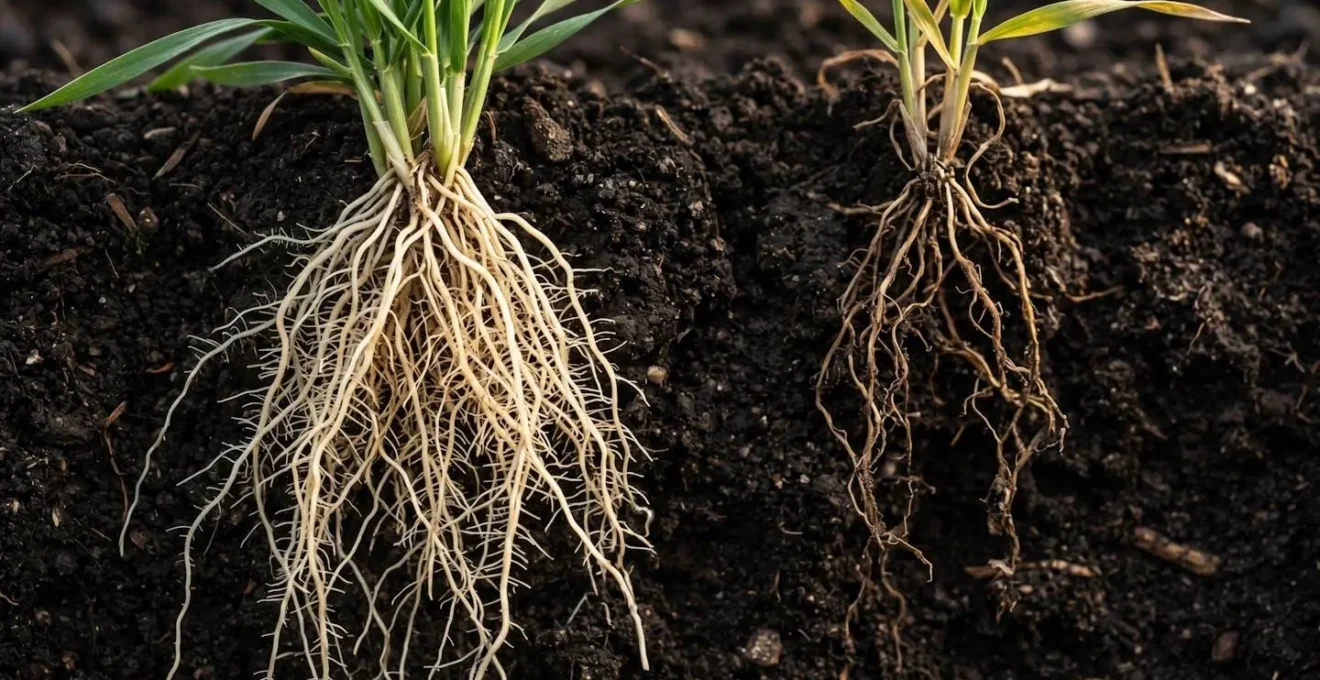
A landmark UK study on winter wheat confirmed these impacts at field rates. The fungicide Bavistin (carbendazim) completely prevented the germination of AMF spores. Tilt Turbo (propiconazole) was also inhibitory. Interestingly, the study found that not all fungicides are created equal. Calixin (tridemorph) actually *increased* infection levels, leading to greater yields than untreated control plants. This highlights the critical need for selective chemistry. It’s not about eliminating fungicides, but about choosing products and application strategies that are compatible with your goal of building a healthy rhizosphere.
Protecting your crop from disease should not come at the expense of its fundamental ability to access water and nutrients. A truly integrated pest management approach must consider the health of the entire soil-plant system.
Solving Compaction: How to Deep-Rip Without Breaking Fungal Networks
Soil compaction is the silent yield killer in many East Anglian fields, creating an impenetrable barrier that physically blocks root growth and water infiltration. While deep-ripping or subsoiling is the conventional solution, aggressive, full-field tillage is a blunt instrument. It may shatter the hardpan, but it also shreds the delicate hyphal networks of mycorrhizal fungi, destroying the very biological infrastructure you need to build drought resilience. The challenge is to relieve compaction surgically, without causing catastrophic collateral damage to the soil’s ecosystem.
The key is a shift from indiscriminate deep tillage to a targeted, low-disturbance approach. This begins with accurate diagnosis. You must identify exactly where and how deep the compaction layer is. Only then can you apply a mechanical solution precisely where it’s needed. This « find and fix » method preserves large areas of the field’s fungal network, allowing for rapid recolonization of the newly fractured zones. This strategic intervention turns a destructive act into a constructive one.
To implement this, a systematic audit of your soil structure is the first and most crucial step. The following plan provides a framework for diagnosing and treating compaction with minimal biological disruption.
Your Action Plan: Diagnosing and Treating Compaction Surgically
- Extract a Soil Block: Use a spade to carefully excavate a soil block approximately 25cm deep. Your goal is to keep the soil structure and as many fine roots as possible intact for accurate assessment.
- Assess Compaction Depth: Use the Visual Evaluation of Soil Structure (VESS) method. Gently break the block apart in your hands to identify the precise depth and severity of the compacted layer (platy structures are a key indicator).
- Choose Low-Disturbance Implements: Select subsoilers with slim, winged legs. These are designed to lift and fracture the soil pan from below without inverting or mixing soil layers, which is what destroys fungal networks.
- Create Biological Pathways: Immediately after (or during) subsoiling, plant deep-rooting cover crops like tillage radish or chicory. Their powerful taproots will follow the newly opened channels, creating permanent biological pathways and stabilizing the fractured soil.
- Target the Intervention: Apply this mechanical intervention only in the specific zones where compaction has been confirmed. Avoid blanket, field-wide subsoiling that needlessly disrupts healthy soil structure and existing fungal life.
This targeted approach not only solves the physical problem but also creates the ideal conditions for your soil’s biological engine to thrive.
How to Direct Drill to Maintain Hyphal Networks Intact?
The single most effective way to protect and foster the vast, invisible network of fungal hyphae is to stop destroying it. Conventional ploughing and intensive cultivation are the primary culprits, effectively hitting the reset button on your soil’s biology each season. Direct drilling, or no-till farming, is the practical solution. By seeding directly into the previous crop’s stubble or a living cover, you leave the soil structure and its intricate web of life largely undisturbed. This continuity is essential for building a mature, efficient mycorrhizal network that persists and grows year after year.
When a direct drill’s coulter slices through the soil, it makes a minimal incision just wide enough for seed and fertiliser placement. This is fundamentally different from the inversion and shearing action of a plough or disc. The majority of the soil volume remains untouched, preserving earthworm channels, old root pathways, and—most importantly—the existing fungal superhighways. These established networks can immediately connect with the new seedling’s roots, giving it access to a far greater volume of soil for water and nutrients from day one.
The agronomic benefits of this preservation are not just theoretical; they are proven in UK fields. A field experiment in the UK compared wheat establishment methods and found that the direct-drilled plots consistently produced the highest grain yields. Plants established by direct drilling into a grass-clover ley were significantly taller (89.2 cm) compared to those in ploughed (77.1 cm) or minimally tilled plots. The grain fill was also superior. This study confirmed that direct drilling preserves the mycorrhizal networks, which in turn delivers superior crop performance, especially under stress.
By transitioning from a system of annual destruction to one of continuous preservation, you transform your soil from a simple growing medium into a self-improving, resilient ecosystem.
Drought Tolerant Varieties: Choosing Wheat That Yields on Light Land
While the focus of rhizosphere engineering is on the soil, variety selection remains a critical component of a drought-resilience strategy, especially on the light, sandy soils common in parts of East Anglia. However, the term « drought-tolerant » is often misunderstood. It’s not just about a plant’s innate ability to survive with less water; it’s about its ability to actively recruit and manage a superior microbial support team. The most resilient varieties are, in effect, better rhizosphere engineers themselves.
A groundbreaking 2024 study highlighted this perfectly. It compared a drought-resistant wheat variety with a drought-sensitive one and found the resistant variety’s success was due to its ability to assemble a more diverse and complex community of rhizosphere fungi and bacteria. The superior host genotype actively enriched its root zone with microbes specialised in carbon cycling and stress response. For instance, the successful colonisation of a specific fungus, *Mortierella alpina*, directly activated drought-responsive genes within the plant. This demonstrates that the plant’s genetics and the soil microbiome are in constant dialogue, and the best varieties are the best communicators.
This concept of microbial recruitment is a paradigm shift. A 2025 global study published in Nature Food revealed that wheat plants actively enrich their rhizospheres with specific drought-tolerant bacteria. When a synthetic community of these identified bacteria was re-introduced to wheat under drought stress, it significantly stimulated plant growth. This confirms that a key trait of a drought-tolerant variety is its capacity to foster a beneficial microbiome. Therefore, when selecting a variety for light land, look beyond simple yield data and inquire about its root architecture and its known performance in low-input or biological farming systems, as these are often proxies for strong microbial relationships.
The goal is to choose a variety that doesn’t just tolerate drought, but one that actively builds the very ecosystem it needs to defeat it.
Key Takeaways
- True drought resilience is built in the rhizosphere, the living ecosystem around the roots, not just in the plant’s genetics.
- Low-disturbance practices like direct drilling and targeted subsoiling are critical for preserving the fungal networks that deliver water and nutrients.
- Chemical choices matter: some fungicides can decimate beneficial soil life, while others are more compatible with a biological approach.
How to Facilitate Mycorrhizal Root Exchange to Reduce Phosphorus Fertilizer Use?
One of the most compelling long-term benefits of actively managing your rhizosphere is the potential to significantly reduce reliance on synthetic fertilizers, particularly phosphorus (P). Phosphorus is notoriously immobile in the soil, and plants can only access a tiny fraction of what is applied or already present. This is where arbuscular mycorrhizal fungi (AMF) become a game-changer. Their microscopic hyphae extend far beyond the root’s reach, acting as a vast extension of the root system to mine the soil for P and other nutrients, delivering them directly to the plant in a readily available form.
This mycorrhizal « root exchange » is incredibly efficient. In optimal conditions, this symbiotic relationship can supply the host plant with up to 90% of its phosphorus requirements and up to 20% of its nitrogen. Facilitating this exchange is not just an environmental benefit; it’s a direct economic one. The yield impact is also clear; field studies across multiple sites have demonstrated up to a 20% increase in wheat grain yield directly attributable to robust AMF colonization. This gain is most pronounced in the exact conditions many East Anglian farmers face: soils with low nutrient availability and sandy textures.
As experts in the field confirm, the diversity of your fungal partners is key to maximizing these benefits. In a comprehensive meta-analysis, Zhang et al. found that a mix of species is far more effective than a single one:
Mixed-species AM fungal inocula produced higher grain yield than single-species inocula, and the highest AM fungal contribution to grain yield was observed in cereals grown in soils with low N and P availability, as well as in sandy soils.
– Zhang et al., Meta-analysis on arbuscular mycorrhizal fungi effects on cereal crops
The ultimate goal of rhizosphere engineering is to transition from a system dependent on costly inputs to a self-sustaining agricultural ecosystem, where the soil’s biology does the heavy lifting for you.