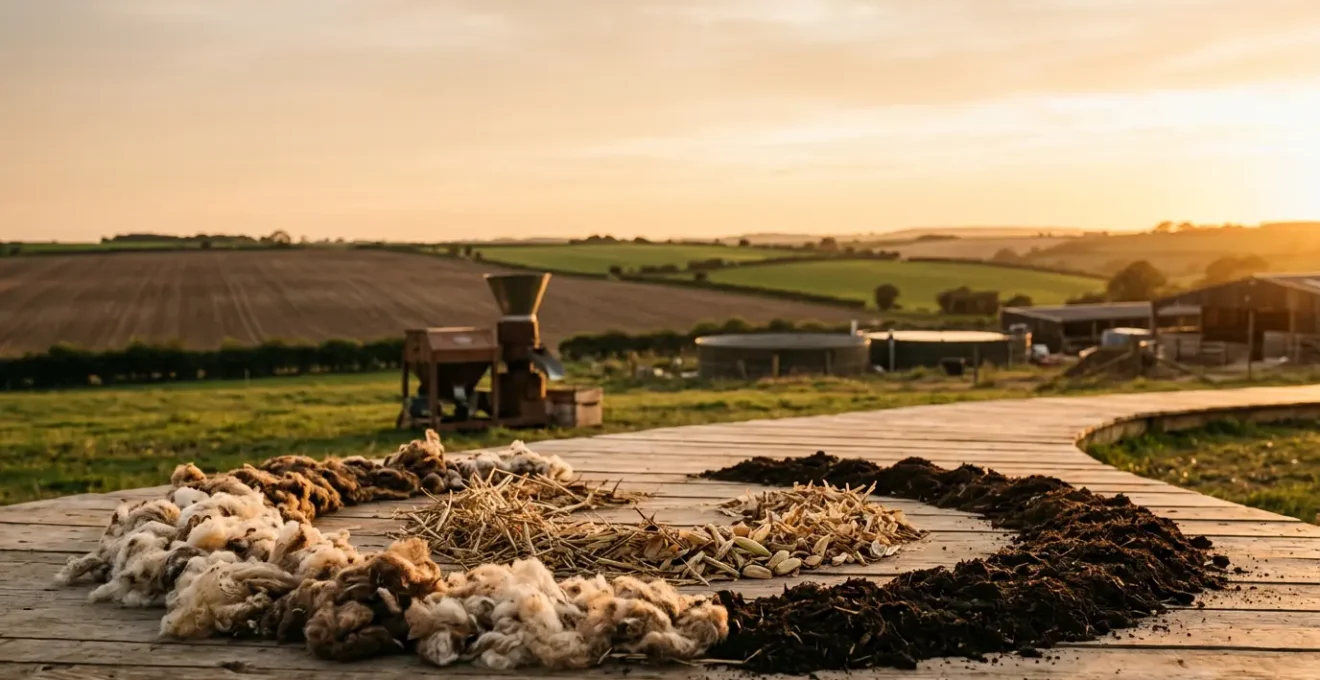
Your farm’s biggest cost could be its most valuable asset.
- By-products like ‘waste’ wool and manure can be engineered into high-value products like certified fertilisers and soil conditioners.
- Strategic decisions, like swapping machinery for processing tech, unlock capital to build these new revenue streams.
Recommendation: Start by auditing one ‘waste’ stream not as a disposal problem, but as a potential product line.
For the modern farmer, rising operational costs and tightening environmental regulations present a constant challenge. The disposal of agricultural by-products—from straw and manure to low-grade wool—often represents a significant line item on the balance sheet, viewed as a costly problem to be managed. Conventional wisdom suggests basic solutions like simple composting or spreading manure, but these approaches barely scratch the surface of the potential locked within these materials. They treat the symptom, not the underlying opportunity.
But what if the entire framework is wrong? What if these materials aren’t ‘waste’ at all, but undervalued assets waiting for the right business model? The shift from waste management to asset engineering is the single most powerful pivot a farm can make to diversify income and build resilience. This isn’t about simply being more sustainable; it’s an entrepreneurial strategy focused on productization, value chain integration, and smart capital reallocation. It’s about turning a cost centre into a profit centre.
This guide moves beyond the platitudes of « reducing waste. » Instead, we will deconstruct the process of transforming specific farm by-products into marketable, profitable revenue streams. We will explore how to create certified products, navigate regulatory landscapes to your advantage, and make the high-level capital decisions that fuel this circular transformation. It’s time to stop paying to get rid of your most valuable raw materials.
This article provides a strategic roadmap for implementing a circular economy on your farm. Each section tackles a different facet of turning by-products into profit, offering practical models and actionable insights to guide your decisions.
Summary: A Circular Management Guide to Farm Revenue Streams
- Why Your ‘Waste’ Wool Could Be Worth More as Garden Pellet Fertilizer?
- How to Use Anaerobic Digestion Digestate to Replace Bagged Nitrogen?
- Straw vs Sand vs Woodchip: Which Creates the Most Valuable Manure?
- The Waste Exemption Mistake That Leads to Environment Agency Fines
- Nutrient Cycling: How to Feed Crop Residues to Livestock Efficiently?
- Why Achieving PAS 100 Standard Adds Value to Your Compost?
- Contracting vs Owning: When to Sell the Combine to Save Capital?
- Composting Bio-Waste at Scale: How to Turn Municipal Green Waste into Gold?
Why Your ‘Waste’ Wool Could Be Worth More as Garden Pellet Fertilizer?
For many sheep farmers, low-grade or « waste » wool represents more of a disposal headache than a viable product. With market prices often failing to cover shearing costs, this natural fiber is frequently seen as a liability. However, this perspective overlooks wool’s intrinsic properties as a powerful soil amendment. The innovation lies in its productization—transforming raw, dirty wool into a standardized, high-margin product: garden pellets.
Wool pellets are a slow-release, natural fertilizer rich in nitrogen. Unlike synthetic alternatives, they offer secondary benefits that are highly valued in the horticultural market. They are known for their exceptional water retention, capable of holding several times their weight in water, which reduces irrigation needs and protects plants during dry spells. This transforms a simple fiber into a multi-functional garden product. The process of pelletizing creates a dense, easy-to-handle format that is perfect for both commercial growers and home gardeners, opening up entirely new markets beyond traditional textile industries.
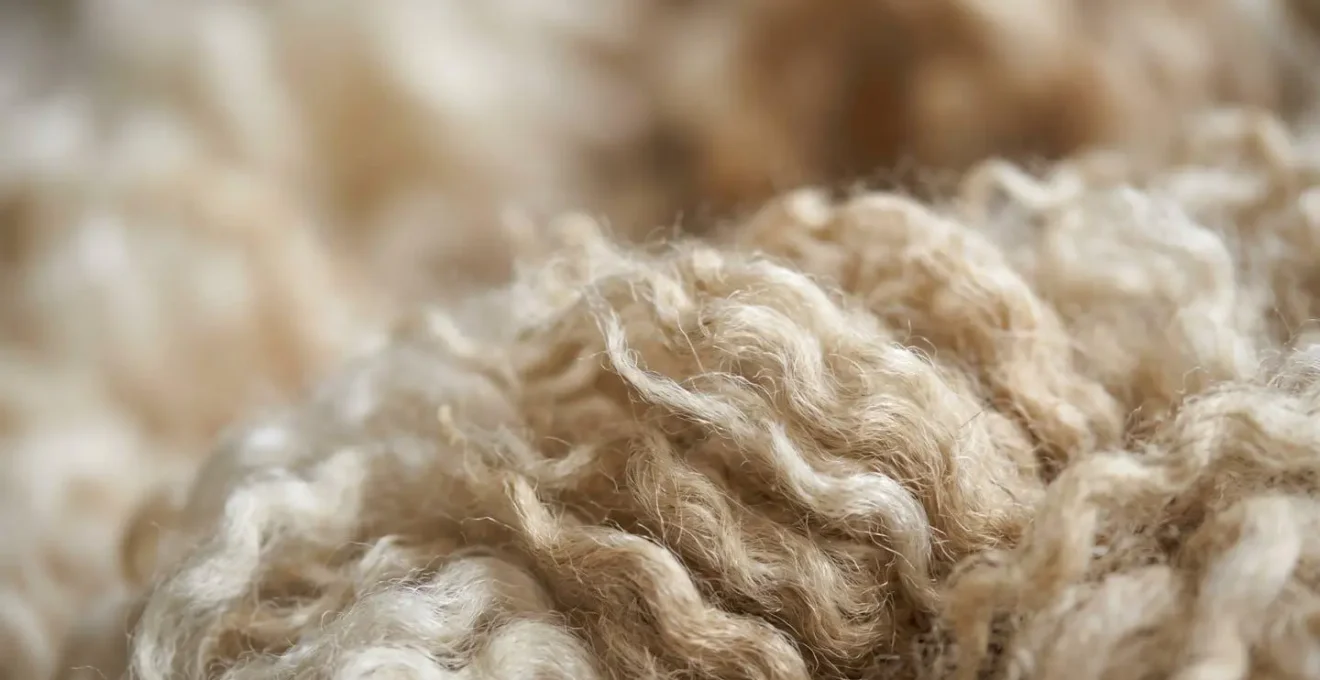
The economic potential is not theoretical. It’s a proven model of asset engineering. For instance, a practical field trial at West End Farms demonstrated tangible results: broccoli beds with wool pellets produced more heads that were heavier and larger than control beds. The same trial saw potato beds yield an additional 34 pounds, a significant increase from a minimal application rate. This evidence proves that by processing a low-value by-product, you can create a new revenue stream with a clear and demonstrable return on investment for the end-user.
This shift in thinking—from selling a raw commodity to manufacturing a value-added product—is the core of a successful circular strategy on the farm.
How to Use Anaerobic Digestion Digestate to Replace Bagged Nitrogen?
Anaerobic Digestion (AD) is often discussed in the context of renewable energy generation, but for a farmer-entrepreneur, its most immediate financial benefit may lie in the liquid output: digestate. This nutrient-rich bio-fertiliser is a direct substitute for expensive, synthetic bagged nitrogen. Viewing digestate not as a by-product but as an in-house fertilizer factory is a critical step in reducing operational expenditure and insulating your business from volatile commodity markets.
The key to this strategy is understanding the precise value of your digestate. It is not an inconsistent slurry; it is a quantifiable source of essential crop nutrients. According to biogas industry data, digestate typically contains 2.3–4.2 kg of nitrogen, 0.2–1.5 kg of phosphorus, and 1.3–5.2 kg of potassium per tonne. By regularly testing your digestate, you can create a tailored nutrient management plan that precisely matches crop needs, replacing synthetic inputs on a kilogram-for-kilogram basis. This data-driven approach moves you from guessing to knowing, allowing for accurate cost-benefit analysis.
The financial impact is straightforward. Every tonne of digestate applied correctly is a direct saving on purchased fertilizer. Over a full growing season, these savings accumulate, significantly boosting your profit margin. Furthermore, the organic matter in digestate improves soil health and structure over time, a long-term benefit that synthetic fertilizers cannot offer. This creates a virtuous cycle: the ‘waste’ from one part of the farm becomes a critical, cost-saving input for another, enhancing both profitability and ecological resilience.
This strategy of internal ‘revenue stacking’—where one process’s output saves costs for another—is a cornerstone of building a truly circular and economically robust farming operation.
Straw vs Sand vs Woodchip: Which Creates the Most Valuable Manure?
The choice of livestock bedding is often seen as a simple operational decision based on cost and animal comfort. However, from a circular economy perspective, it’s the first step in designing your most valuable by-product: manure. The bedding material you choose fundamentally dictates the quality, handling characteristics, and, most importantly, the end-market value of the resulting farmyard manure (FYM). This isn’t just a choice of comfort; it’s a product design decision.
Different materials create vastly different end-products. Straw, for example, is high in carbon and breaks down easily, making it an ideal component for creating high-quality, balanced compost. This compost is highly sought after by horticultural operations and even mushroom farms. Sand, while excellent for cow cleanliness and hoof health, is inert. It doesn’t compost and requires mechanical separation from the slurry, creating a different set of management challenges and opportunities. Woodchips offer a middle ground, excellent for deep litter systems and producing a final product suitable for landscaping mulches.
Choosing the right bedding means starting with the end in mind. Do you want to sell bagged compost to gardeners, supply bulk material to landscapers, or optimize a slurry system for easy field application? Answering this question first allows you to reverse-engineer your bedding choice. The following table, based on an analysis of bedding options, outlines these strategic trade-offs.
| Bedding Type | Compostability | Animal Health Impact | Manure Management | End-Product Value |
|---|---|---|---|---|
| Straw | Breaks down easily, reduces volume when composted | Provides warm comfortable bed; can harbor molds if wet | High fertilizer (FYM) value; ideal for composting systems | High-carbon compost ideal for mushroom farms and horticultural use |
| Sand | Inert material; does not compost | Better leg and hoof health; improves cow cleanliness | Requires mechanical separation; difficult with slatted floors | Easy separation for slurry systems; sand can be recycled after cleaning |
| Woodchip | Great for deep litter methods; composting material | Moisture level affects absorbency; chickens cannot kick away easily | Can be used in bedded pack systems requiring regular aeration | Excellent for horticultural mulches and landscaping products |
By viewing bedding as an ingredient rather than a disposable commodity, you transform a routine expense into a strategic investment in a future revenue stream. The goal is to create a manure product with a known, consistent quality that has a defined and profitable market.
This level of foresight is what separates basic waste management from sophisticated asset engineering.
The Waste Exemption Mistake That Leads to Environment Agency Fines
In the world of agricultural asset engineering, regulatory compliance is not just bureaucratic red tape; it is fundamental risk management. The UK’s system of waste exemptions allows farmers to handle and reuse certain types of waste without a full environmental permit, which is a key enabler for many circular activities. However, misunderstanding or exceeding the strict limits of these exemptions can turn a profitable side-venture into a financial disaster, with fines that can dwarf any income generated.
The most common mistake is assuming an exemption provides a blanket approval for waste-related activities. Each exemption has precise limits on the type of waste, quantity, storage duration, and use. A U1 exemption, for example, allows the use of a limited amount of clean soil and stone for construction, but it does not permit the use of mixed construction debris containing plastic or plasterboard. This is not a minor distinction; it’s a costly one. As a case involving an Essex farmer demonstrates, accepting 3,920 tonnes of waste under an exemption capped at 1,000 tonnes resulted in a fine of nearly £20,000—a catastrophic loss compared to the £4,800 received for taking the material.
Profitability in the circular economy is contingent on meticulous record-keeping and a deep understanding of the rules. Treating compliance as a core business function is non-negotiable. It protects your revenue, your reputation, and your right to operate. The following checklist provides a framework for building a robust compliance system on your farm.
Your Farm Waste Compliance Audit Checklist
- Document Streams: Meticulously record the type, quantity, source, and date of all waste materials entering or leaving your site.
- Verify Exemptions: Ensure all intended activities are covered by a correctly registered exemption and that renewals are completed every 3 years.
- Track Limits: Actively monitor quantities against the specific tonnage and time limits for each exemption you hold (e.g., U10 spreading limits per hectare).
- Maintain Records: Keep a complete, chronological log of all waste-related activities for a minimum of 2 years, ready for Environment Agency inspection.
- Check for Additional Permits: Identify if an activity, like flood defence works or changing land levels, requires separate planning permission beyond your waste exemption.
In this business model, what you don’t know can, and will, hurt you. Diligent compliance is the foundation upon which all other waste-to-revenue activities are built.
Nutrient Cycling: How to Feed Crop Residues to Livestock Efficiently?
In a linear agricultural model, crop residues like straw, stover, and husks are often seen as a problem to be cleared from the field. They might be burned, tilled under, or left to decompose. A circular, entrepreneurial mindset, however, sees these residues as a valuable feedstock. Efficiently cycling these nutrients back into your system by feeding them to livestock is a powerful strategy to reduce input costs and increase overall farm productivity. It’s the art of getting a second « harvest » from your primary crop.
The challenge is that many crop residues have low digestibility and nutritional value in their raw state. The key to unlocking their potential lies in pre-treatment. Simple, on-farm techniques can dramatically improve their value as feed. These can include:
- Physical processing: Chopping or grinding increases the surface area, making it easier for animals to digest.
- Chemical treatment: Ammoniation (treating with urea) can break down tough lignin and increase the protein content of straw.
- Biological methods: Ensiling residues with molasses or other additives can improve palatability and preserve nutrients.
These processes transform a low-grade bulk material into a calculated component of your livestock’s diet, directly offsetting the need to purchase expensive commercial feed.
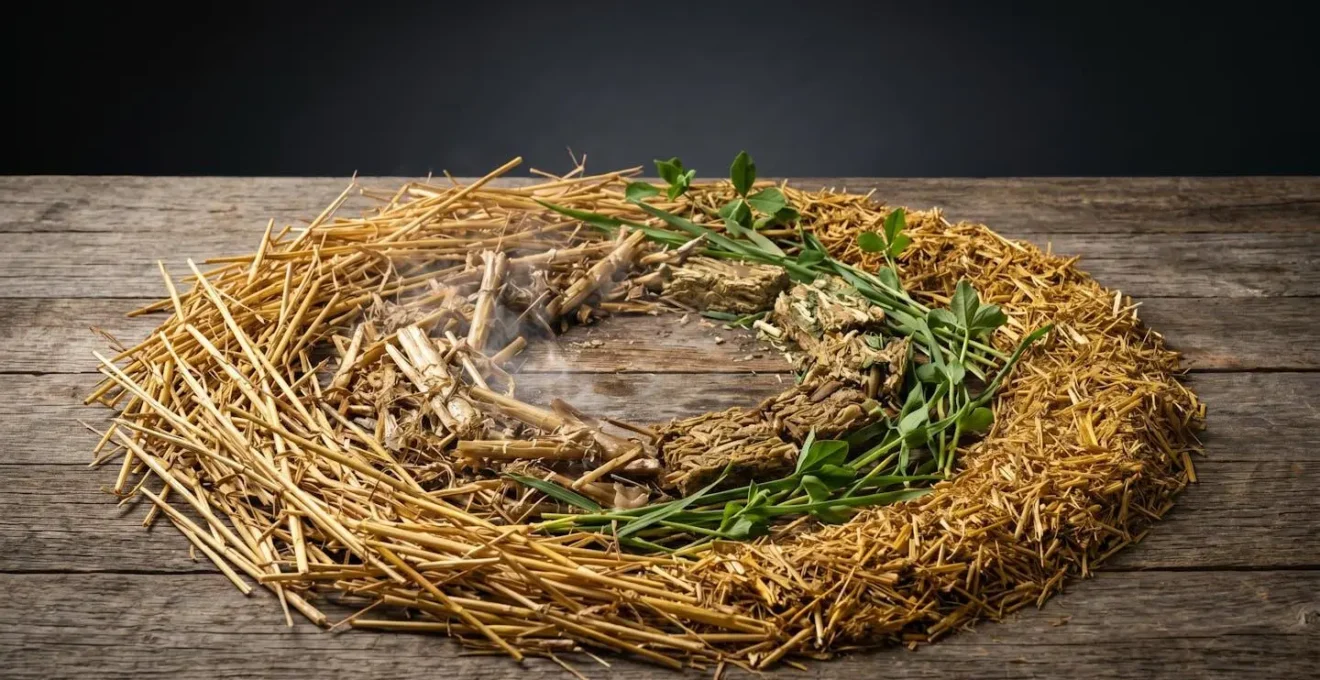
This approach epitomizes the efficiency of a closed-loop system. The nutrients harvested from the land are used to grow a crop, the crop’s residue feeds the animals, and the animals’ manure returns the nutrients to the land. As research on agricultural systems confirms, traditional circular agricultural production generates virtually no waste. Every output becomes an input for another part of the system. This integration dramatically reduces the farm’s reliance on external inputs, making the entire operation more self-sufficient, resilient, and profitable.
By closing the nutrient loop, you are not just managing waste; you are optimizing the flow of value through every corner of your enterprise.
Why Achieving PAS 100 Standard Adds Value to Your Compost?
Anyone can make compost. But not everyone can sell a certified, de-classified « product. » This is the crucial distinction that separates low-value bulk material from a high-margin commercial asset. For compost and digestate producers, achieving a recognized quality standard like PAS 100 (Publicly Available Specification) is the single most important step in unlocking true market value. It is the official stamp that transforms your by-product from ‘waste’ into a ‘product’ in the eyes of both regulators and customers.
PAS 100 is a quality benchmark for composted materials. It certifies that the product is safe, reliable, and of high quality by setting limits for contaminants like plastic and heavy metals, and defining standards for stability and nutrient content. This certification provides assurance to end-users—from large-scale farmers to commercial landscapers and retail garden centres—that they are buying a consistent and effective product. This trust is something that uncertified, variable compost can never command.
The commercial implications of this transformation are profound. As the Anaerobic Digestion Information Portal highlights in its guidance on quality standards, certification is a game-changer:
If an AD plant meets the standard, its digestate will be regarded as having been fully recovered and to have ceased to be waste, and it can be sold with the name ‘Bio-fertiliser’.
– Anaerobic Digestion Information Portal, Digestate Quality Standards
This legal reclassification allows you to market and sell your product freely, opening doors to premium markets that are inaccessible to uncertified materials. It justifies a higher price point and builds a reputable brand. With approximately 95% of digestate in the European Union already applied to farmland, a quality certification is the key differentiator that allows a producer to capture maximum value in a competitive space.
Achieving PAS 100 is not an expense; it is an investment in productization that delivers a significant and sustainable return.
Contracting vs Owning: When to Sell the Combine to Save Capital?
The entrepreneurial mindset required for a circular economy extends beyond by-products; it forces a radical re-evaluation of your entire capital structure. A classic example is the farm’s most iconic piece of depreciating machinery: the combine harvester. While ownership feels like a necessity, it ties up immense capital in an asset that is used for only a few weeks a year. The strategic question is: could that capital generate a better return if it were invested in waste-to-value technology instead?
This is the essence of capital reallocation. It involves a hard-nosed analysis of Total Cost of Ownership (TCO) versus the cost of contracting out services like harvesting. The TCO of a combine includes not just the purchase price but also depreciation, insurance, maintenance, storage, and skilled operator costs. When compared against competitive quotes from a reliable contractor, many farmers discover that ownership is a significant financial drain, especially for smaller or mid-sized operations.
Selling the combine frees up a substantial sum of capital. This capital can then be deployed into income-generating assets with a much higher ROI, such as:
- A pelletizer to turn waste wool into fertilizer.
- An anaerobic digester to produce energy and bio-fertiliser.
- A compost turner and screener to create PAS 100 certified product.
These technologies work year-round to convert a daily stream of by-products into a daily stream of revenue. They build a diversified, resilient business model that is less dependent on the single annual event of the harvest. This is a strategic pivot from relying on depreciating iron to investing in appreciating, productive systems.
Sometimes, the most innovative step is not to buy something new, but to sell something old to fund the future of your farm.
Key Takeaways
- Treat every farm by-product as a potential raw material for a new, marketable asset, not a disposal liability.
- Official certification, such as the PAS 100 standard, is the crucial step that legally transforms ‘waste’ into a ‘product,’ unlocking access to premium markets.
- Regulatory compliance is not just red tape; it is an essential risk management function that protects the profitability of your circular ventures.
Composting Bio-Waste at Scale: How to Turn Municipal Green Waste into Gold?
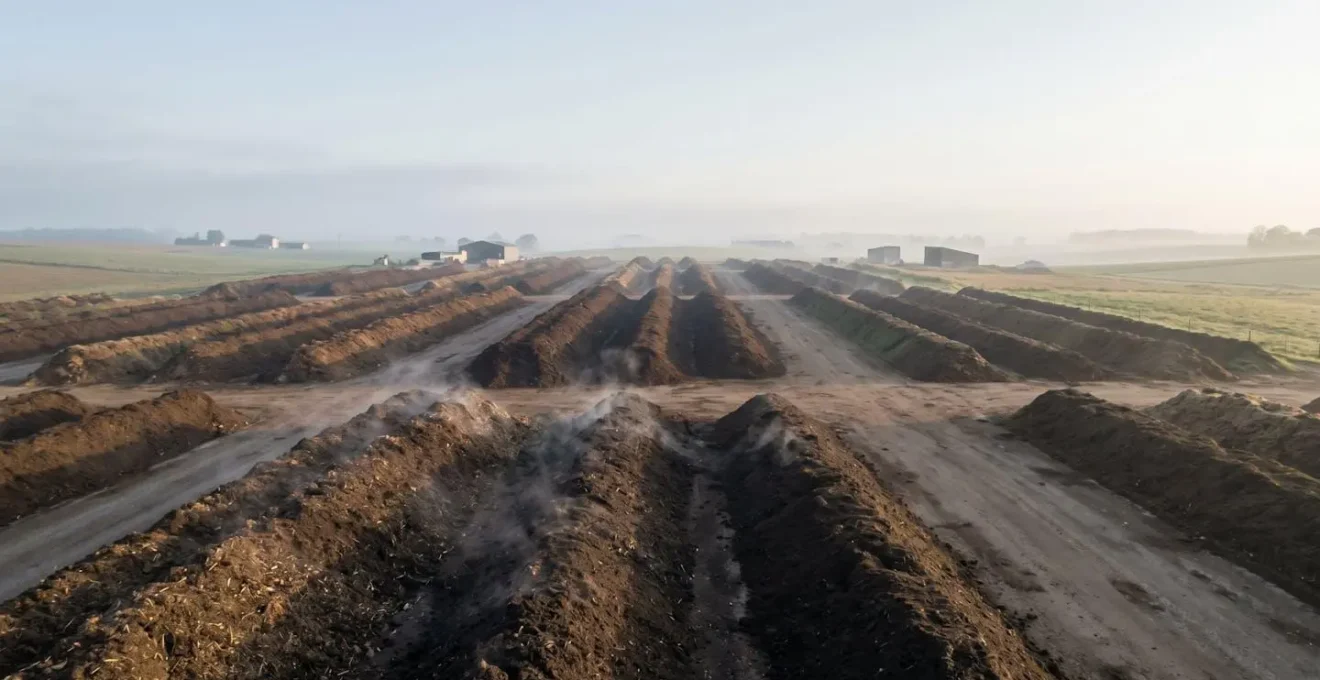
The principles of asset engineering are not limited to the materials produced within your farm gate. The ultimate expression of this entrepreneurial model is to become a regional hub for bio-waste processing, turning not just your own by-products but also municipal green waste into « gold. » By scaling up your composting or digestion operations, you can tap into a new and highly reliable revenue stream: tipping fees from local authorities and landscaping companies who need to dispose of their green waste.
This model creates a powerful, stacked enterprise. First, you generate income by accepting waste from others. Second, you process that waste, alongside your own, into a high-value, certified product like PAS 100 compost or bio-fertiliser. Third, you sell that finished product back into the market, potentially even to the same municipalities that paid you to take the raw materials. This creates multiple points of profit from a single integrated process, a hallmark of advanced value chain integration.
An innovative example of this is creating specialized products for municipal use. The Longway Homestead in Canada forged a groundbreaking partnership with their local city. They developed wool pellets as a sustainable alternative to synthetic fertilizers for city parks. As the farm’s research confirmed, ornamental parkland doesn’t require the precise nutrient ratios of food crops, making their pellets an ideal fit. The city agreed to a multi-year plan to potentially replace all its synthetic fertilizer with their product. This strategic move created a stable, large-volume, year-round contract, demonstrating a powerful model for turning a farm-based innovation into a municipal-scale solution.
Case Study: The Municipal Partnership Model
Longway Homestead in Canada developed an innovative municipal partnership model: the city agreed to potentially replace all synthetic municipal fertilizer with wool pellets within three years. Research conducted through the provincial agriculture department confirmed that city parks growing grass and ornamental plants don’t require the exact nutrient ratios of chemical fertilizers, making wool pellets an ideal sustainable replacement. This created a stable, year-round revenue stream for the farm through municipal contracts.
To begin this transformation, select one waste stream on your farm and start mapping its journey from by-product to a market-ready asset. By applying these principles of asset engineering, productization, and strategic capital allocation, you can build a more profitable, resilient, and truly circular agricultural business.