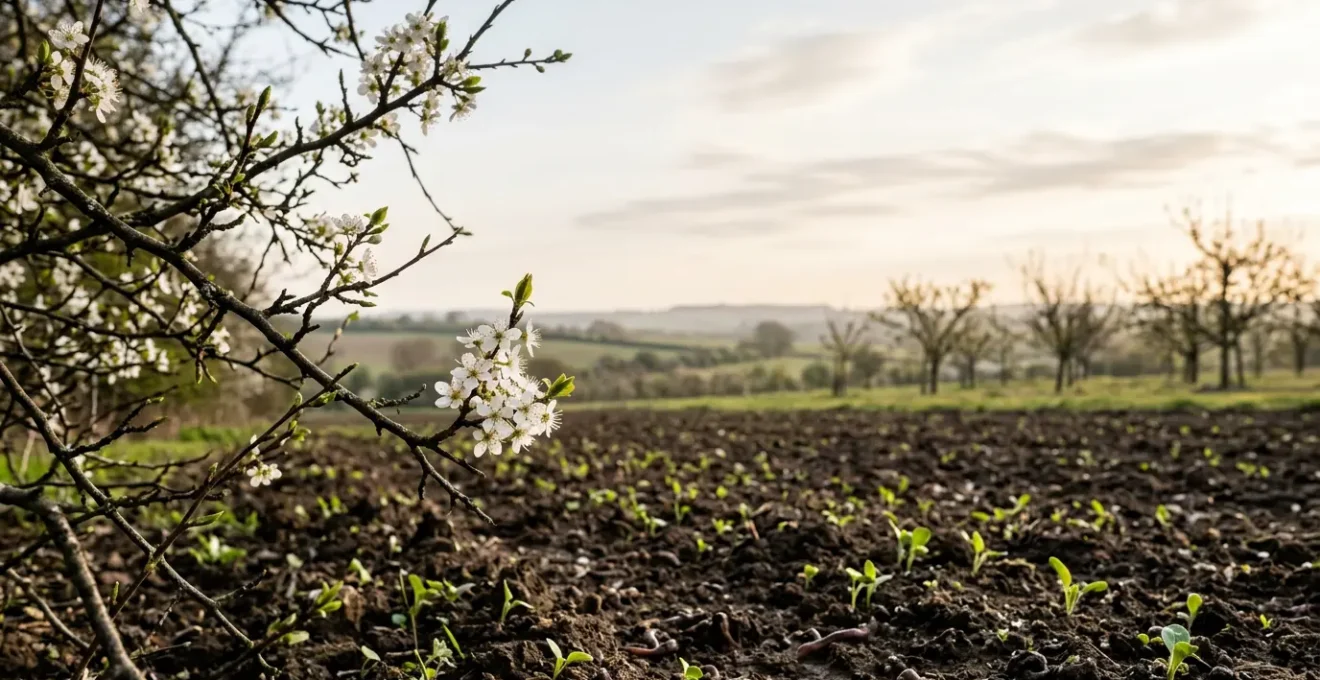
Relying on fixed calendar dates for farming is a losing strategy in a changing climate; phenology offers a responsive, living alternative.
- Nature provides precise bio-indicators (plant flowering, insect emergence) that signal ideal conditions for sowing, pest avoidance, and harvesting.
- Underlying factors like soil temperature, not calendar dates, are the true drivers of germination and biological activity.
Recommendation: Begin by observing and recording the timing of 3-5 key native indicator plants on your land to build a resilient, site-specific farming calendar.
For generations, the farmer’s almanac and the calendar on the wall have been trusted guides, dictating when to sow, tend, and harvest. But in an era of shifting seasons and unpredictable weather, these fixed-date systems are becoming increasingly unreliable. An unseasonably warm March can trick us into planting too early, only for a late April frost to decimate tender seedlings. The wisdom we need isn’t found on a printed page, but in the living world around us.
This is the essence of phenology: the art and science of reading nature’s clock. It’s an age-old practice of observing cyclical events in the biological world—the flowering of plants, the migration of birds, the emergence of insects—and using them as precise signals for agricultural activities. Many dismiss this as simple folklore, like planting corn when oak leaves are the size of a squirrel’s ear. While these adages hold truth, they are merely the surface of a much deeper system of ecological synchrony.
The real power of phenology lies in understanding the *why* behind these signals. A blackthorn bush doesn’t flower on a specific date; it flowers in response to an accumulation of warmth and daylight, the same environmental cues that tell a farmer the risk of a hard frost has likely passed. This article moves beyond folklore to explore phenology as a sophisticated risk management system. We will decode how observing these natural cues allows growers to align their actions with the real-time rhythm of the ecosystem, from the microbial life in the soil to the pest cycles in the air.
This guide provides a framework for observing and interpreting the patterns on your own land. By learning to read the seasons as they unfold, you can build a farming calendar that is resilient, responsive, and deeply attuned to the health of your specific environment.
Summary: Reading Nature’s Cues for Smarter Farming
- Why Sowing When Blackthorn Flowers Protects Crops from Late Frost?
- How to Predict Cabbage Stem Flea Beetle Migration Using Phenology?
- Fixed Dates vs Soil Temperature: Which Predicts Germination Better?
- The ‘False Spring’ Mistake That Kills Fruit Buds in April
- Grain Ripening: How to Read the Crop Instead of the Calendar?
- Why Soil Biology Goes Dormant Below 6°C and What It Means for Crops?
- Ensuring Continuous Nectar: How to Bridge the ‘June Gap’ with Angiosperms?
- How to Use Bio-Indicator Observation to Diagnose Soil Health Without Lab Tests?
Why Sowing When Blackthorn Flowers Protects Crops from Late Frost?
The sight of blackthorn (Prunus spinosa) erupting in a cloud of white blossom against a bare winter landscape is one of the first true heralds of spring. For the phenological observer, it’s more than just a beautiful sight; it’s a critical data point. Traditional wisdom holds that the period of cold, harsh weather that often accompanies its flowering—the « Blackthorn Winter »—marks the last gasp of the cold season. Sowing vulnerable crops after this event has passed provides a natural buffer against late frost damage.
The mechanism isn’t magic, but meteorology. Blackthorn, like many other plants, requires a certain accumulation of warmth, or « thermal time, » to break dormancy and flower. It typically flowers in March and April before its leaves emerge, acting as a living thermometer. Its bloom signifies that the soil and ambient air have absorbed enough consistent warmth to trigger a major biological event. This same accumulated warmth indicates that the probability of a deep, killing frost has significantly diminished. The plant is essentially a bio-indicator, integrating complex weather data (temperature, daylight hours, soil warmth) into one simple, observable signal: a flower.
This principle extends to many other plants, forming a web of natural timings. Farmers have long known to:
- Plant peas when the forsythia blooms.
- Plant potatoes when the first dandelions flower.
- Transplant tender tomatoes when the lily-of-the-valley is in full bloom.
- Plant beans and cucumbers when lilacs are in full flower.
By observing these native or well-established local plants, a grower can align their sowing schedule with the actual, on-the-ground conditions of the season, rather than a generic date on a calendar that knows nothing of the local microclimate.
How to Predict Cabbage Stem Flea Beetle Migration Using Phenology?
Phenology’s power extends beyond predicting environmental conditions like frost; it’s a crucial tool for anticipating and managing biological threats like pests. The life cycles of insects are inextricably linked to the same environmental cues that drive plant growth. By observing the right indicators, farmers can predict pest emergence and migration with remarkable accuracy, allowing for proactive, non-chemical management strategies.
The cabbage stem flea beetle (Psylliodes chrysocephala), a major pest of oilseed rape, provides a compelling example. Adult beetles migrate into new crops in late summer and autumn, with the timing of their arrival being critical for crop survival. A calendar-based approach to control is often a shot in the dark, but phenology offers a clearer target. The migration is triggered by specific temperature and moisture cues, which also trigger other events in the ecosystem. Observing the flowering of a specific late-summer wildflower or the change in behavior of another insect can signal the imminent arrival of the beetles.
Case Study: The 8-Year Cycle of the Cabbage Stem Flea Beetle in Sweden
This principle is backed by long-term data. A 50-year study of thousands of winter oilseed rape fields in Southern Sweden revealed that cabbage stem flea beetle populations don’t appear randomly. They follow predictable patterns, peaking approximately every eighth year. These cycles are driven by climate factors, particularly cold winters that reduce larval survival and warm autumns that favor adult activity. The study confirmed that field-specific variables, including the planting date, have a significant impact on pest density. This highlights how synchronizing planting with phenological signals to avoid peak pest activity is a data-backed strategy for risk reduction.
By understanding that the pest operates on the same natural clock as the rest of the environment, a farmer can shift from a reactive to a proactive stance. Instead of waiting for the pest to appear and then spraying, they can time their sowing so that the young, vulnerable plants emerge *after* the peak migration has passed, a strategy known as temporal avoidance.
Fixed Dates vs Soil Temperature: Which Predicts Germination Better?
As we move from observing cues above the ground to understanding the processes beneath our feet, the inadequacy of the calendar becomes even more apparent. For a seed, the date is meaningless. Its world is dictated by three things: moisture, oxygen, and, most critically, soil temperature. Air temperature can be misleadingly warm on a sunny spring day, but the cold, damp soil below tells a different story. Planting into soil that is too cold is a primary cause of germination failure.
As Lisa Johnson, a horticulture expert at the University of Wisconsin-Madison Extension, states, the calendar is an unreliable guide in our modern climate. In an article for Wisconsin Horticulture, she emphasizes:
In our rapidly changing climate, a calendar date is not the best predictor for an extra early onset of spring weather in March or an extremely late, cold and wet April. A better method to gauge when to put seeds in the ground is to test soil temperatures.
– Lisa Johnson, Wisconsin Horticulture, University of Wisconsin-Madison Extension
Each crop has a specific range of soil temperatures required for successful germination. Planting below the minimum temperature can cause seeds to rot, while planting near the maximum can inhibit growth or kill the seed. A simple soil thermometer, which costs very little, is one of the most valuable tools a grower can own. It provides the direct, quantitative data that phenological observations (like forsythia blooming) signal qualitatively. The table below, based on data from Oregon State University Extension, illustrates how critical this is.
| Crop | Minimum (°F) | Optimal Range (°F) | Maximum (°F) | Days to Germination at Optimal |
|---|---|---|---|---|
| Peas | 40 | 65-75 | 85 | 7-10 |
| Lettuce | 35 | 65-75 | 85 | 4-7 |
| Tomatoes | 50 | 70-85 | 95 | 6-8 |
| Beans | 60 | 70-85 | 95 | 6-10 |
| Corn | 50 | 75-85 | 105 | 7-10 |
This data reveals that while a bean and a pea seed can be planted on the same calendar day, their fates will be vastly different if the soil is 50°F. The pea will germinate slowly, but the bean, requiring a minimum of 60°F, will likely rot in the ground. Trusting the soil’s temperature over the calendar’s date is a fundamental shift toward phenological farming.
The ‘False Spring’ Mistake That Kills Fruit Buds in April
One of the greatest challenges in a changing climate is the ‘false spring’—a period of unseasonably warm weather in late winter or early spring that tricks perennial plants, especially fruit trees, into breaking dormancy too early. The buds begin to swell and open, losing their natural hardiness, only to be destroyed by a subsequent return to freezing temperatures. This is where a nuanced understanding of phenology becomes a vital tool for risk assessment.
A dormant fruit bud is a marvel of natural engineering, capable of withstanding deep winter cold. However, as it responds to accumulating warmth and begins to swell, its vulnerability to frost increases dramatically. The stage of bud development is a direct visual indicator of its hardiness. A grower who can read these stages is far better equipped to take protective measures (like irrigation or frost covers) than one who is caught by surprise.
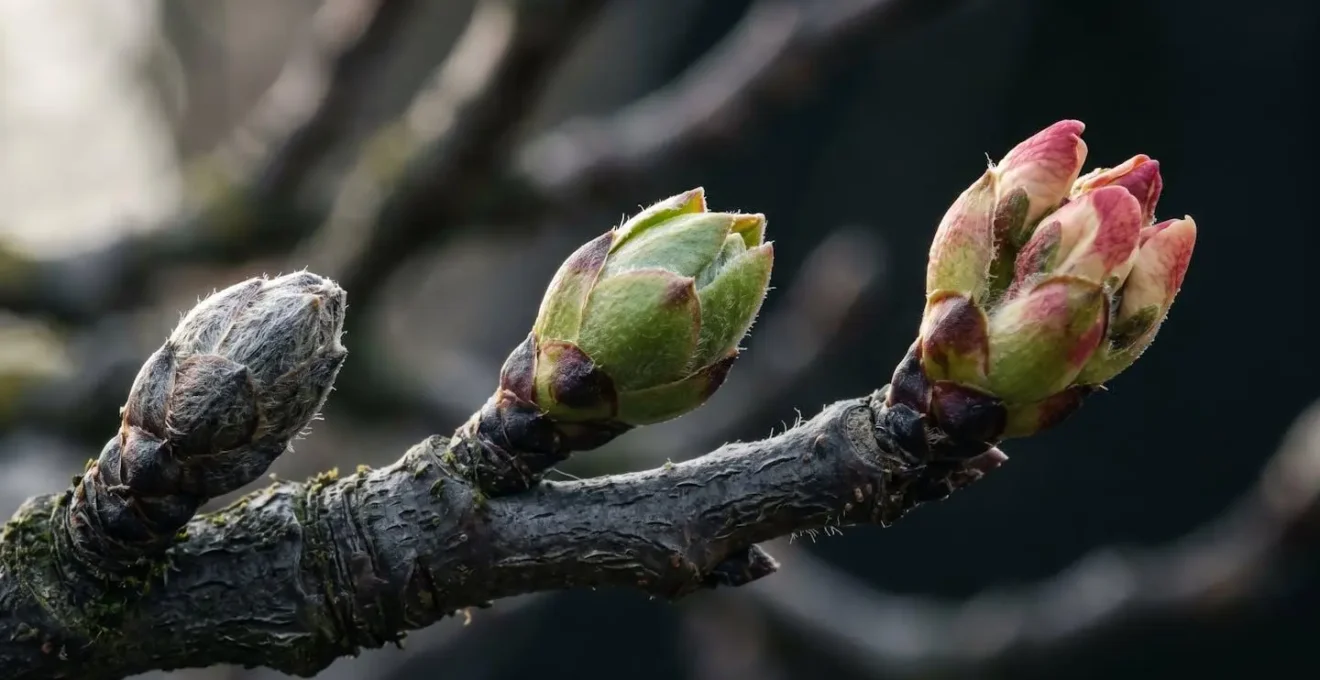
The stakes are incredibly high. As the illustration above shows, the transition from a tight, silvery bud to one showing petals is a journey from resilience to extreme vulnerability. Research from Michigan State University Extension quantifies this risk precisely: at the full bloom stage, temperatures don’t have to drop far to cause devastation. The data shows a 10% loss of blossoms at 28°F (-2.2°C) and a catastrophic 90% loss at 24°F (-4.4°C). This small four-degree window can be the difference between a full harvest and a total crop failure.
A phenological approach means not just celebrating the first warm day, but observing the state of the buds and cross-referencing it with long-range weather forecasts. It involves recognizing that an early bloom is not a gift, but a liability. It’s about understanding that the plant’s timeline has been dangerously accelerated, and that the risk of a killing frost remains high until other, later phenological indicators—like the full leaf-out of certain oak species—confirm that the season has truly turned.
Grain Ripening: How to Read the Crop Instead of the Calendar?
Phenology isn’t just for timing the start of the season; it’s equally crucial for managing its end. Determining the precise moment to harvest grain is a decision that directly impacts yield, quality, and storage life. Harvest too early, and the grains will be immature with low test weight. Harvest too late, and you risk losses from shattering, lodging (stems breaking), and predation by birds. The calendar might suggest a harvest window, but the crop itself tells the true story of its readiness.
A multi-sensory assessment is the most reliable method for determining grain maturity. This involves moving beyond a single visual check and engaging all senses to read the crop’s signals. The goal is to identify the « hard dough » stage, when the grain has reached maximum dry matter accumulation and is physiologically mature. At this point, it is hard, but can still be dented with a thumbnail. This is the optimal time for harvesting, especially if artificial drying is available. Relying on this direct feedback from the plant is far more accurate than relying on a predetermined date.
An experienced farmer or phenologist uses a combination of cues to make the final call. Each sense provides a layer of data that, when combined, creates a comprehensive picture of the crop’s status. This holistic observation ensures the harvest is timed for peak quality and yield, not for an arbitrary date on a calendar.
Your Action Plan: Multi-Sensory Grain Maturity Assessment
- Visual Check: Walk the field and observe the color. Look for a uniform change from green to the characteristic golden-brown or tan of the mature crop across the entire stand, including the stem and neck of the plant.
- Tactile Test: Randomly select several heads of grain from different parts of the field. Squeeze a kernel between your thumbnail and forefinger. It should be firm and you should not be able to squeeze out any milky fluid (the « hard dough » stage).
- Auditory Cue: Stand quietly in the field on a breezy day. Listen for the distinct, dry rattling sound of the wind moving through the brittle stems and grain heads. A silent field is often still too green.
- Olfactory Signal: Note the aroma of the field. Mature grain emits a sweet, dry, and slightly earthy smell, very different from the green, vegetative scent of a growing crop.
- Behavioral Indicator: Pay attention to wildlife. A sudden and significant increase in flocks of seed-eating birds (like finches or blackbirds) descending on the field is a strong behavioral indicator that the grain has become a prime food source and is ready for harvest.
Why Soil Biology Goes Dormant Below 6°C and What It Means for Crops?
The soil beneath our feet is a bustling, hidden metropolis, powered by billions of microorganisms. This soil biology—the bacteria, fungi, protozoa, and nematodes—is the engine of the farm. It is responsible for decomposing organic matter, cycling nutrients, and making them available to plant roots. However, this engine is not always running at full capacity. Its activity is profoundly dependent on temperature, and the 6°C (approximately 42°F) mark is a critical threshold.
Below this temperature, the metabolic activity of most key soil microbes slows dramatically, and many enter a state of dormancy. This has massive implications for crops. When a farmer applies fertilizer to cold soil, they are essentially feeding an empty room. The microbial workforce needed to process those nutrients and deliver them to the plant is asleep. The fertilizer may be washed away by spring rains or locked up in the soil, unavailable to the crop when it needs it most. Sowing seeds into this dormant soil means the young plant’s roots will emerge into a sterile, unsupportive environment, struggling to find the nutrition needed for vigorous early growth.
This is why phenological indicators for soil warmth, like the blooming of dandelions (whose deep taproots are excellent soil temperature sensors), are so vital. They signal that the soil has warmed enough to awaken this microbial life. Research from the Alabama Cooperative Extension System on greenhouse production confirms this principle applies universally: optimizing soil temperature is key to increasing plant emergence and growth rates. Field studies show that practical methods like selecting the right planting date, using plastic mulches to trap heat, or managing cover crops can effectively raise soil temperatures to the optimal zone, maximizing the contribution of the soil’s biological engine.
Understanding this 6°C threshold reframes the act of sowing. It is no longer about putting a seed in the ground on a specific date; it is about introducing that seed into a living, active, and supportive ecosystem. Waiting for the soil to « wake up » is a foundational principle of farming in synchrony with nature.
Ensuring Continuous Nectar: How to Bridge the ‘June Gap’ with Angiosperms?
A phenological approach encourages a farmer to see their land not as a monoculture factory, but as a complex, interconnected ecosystem. The health of a crop is directly linked to the health of its pollinators, and the health of pollinators depends on a continuous supply of food. A common problem for bees and other beneficial insects is the « June Gap »—a period in early summer after the spring blossoms have faded but before the main summer flowers have come into bloom.
Bridging this nectar dearth is critical for maintaining a robust population of pollinators on the farm, which in turn ensures good pollination for crops like beans, squash, and fruit trees later in the season. Here, phenology shifts from a tool for timing to a tool for ecological design. By observing the flowering times of various plants (angiosperms), a grower can intentionally cultivate a sequence of blooms that provides a non-stop nectar and pollen buffet from early spring to late autumn.
This strategy starts with the earliest bloomers. Our old friend the blackthorn, for example, is not just a frost indicator. It is a lifeline for early-emerging insects. Wildlife research documents that an incredible 260 species of insects and mites feed on Blackthorn, including many early pollinators. By preserving and planting such keystone species, a farmer is investing in the ecological infrastructure of their farm. The goal is to create a « floral relay, » where as one species’ bloom fades, another begins. This might involve planting a succession of angiosperms like comfrey, borage, phacelia, and clover in field margins, hedgerows, and beetle banks.
This practice creates a positive feedback loop. A healthy pollinator population leads to better crop yields, and a diverse planting of nectar-rich plants supports that population. It is a perfect example of ecological synchrony, where the needs of the crop and the needs of the wider ecosystem are met through thoughtful, observation-based design.
Key Takeaways
- Phenology uses natural events (flowering, insect emergence) as precise, real-time indicators for farming, outperforming rigid calendars.
- Soil temperature, not air temperature or date, is the primary driver of seed germination and microbial activity.
- Observing pest life cycles through phenological cues allows for proactive management and reduces reliance on chemical interventions.
How to Use Bio-Indicator Observation to Diagnose Soil Health Without Lab Tests?
The ultimate expression of phenological wisdom is learning to read the land itself as a diagnostic report. The community of plants growing in a field or at its edges—often dismissed as « weeds »—are in fact powerful bio-indicators. Their presence, absence, or relative abundance tells a detailed story about the soil’s structure, nutrient content, and overall health, often more quickly and holistically than a laboratory test.
This practice requires a shift in perspective: from seeing individual species to observing plant communities. A field dominated by shallow-rooted, annual weeds like chickweed and shepherd’s purse may indicate compacted soil or an imbalance in surface nutrients. Conversely, the presence of deep-rooted perennials like dandelion, chicory, or dock suggests that the soil has good structure at depth, but may also indicate compaction that these plants are working to alleviate with their powerful taproots.
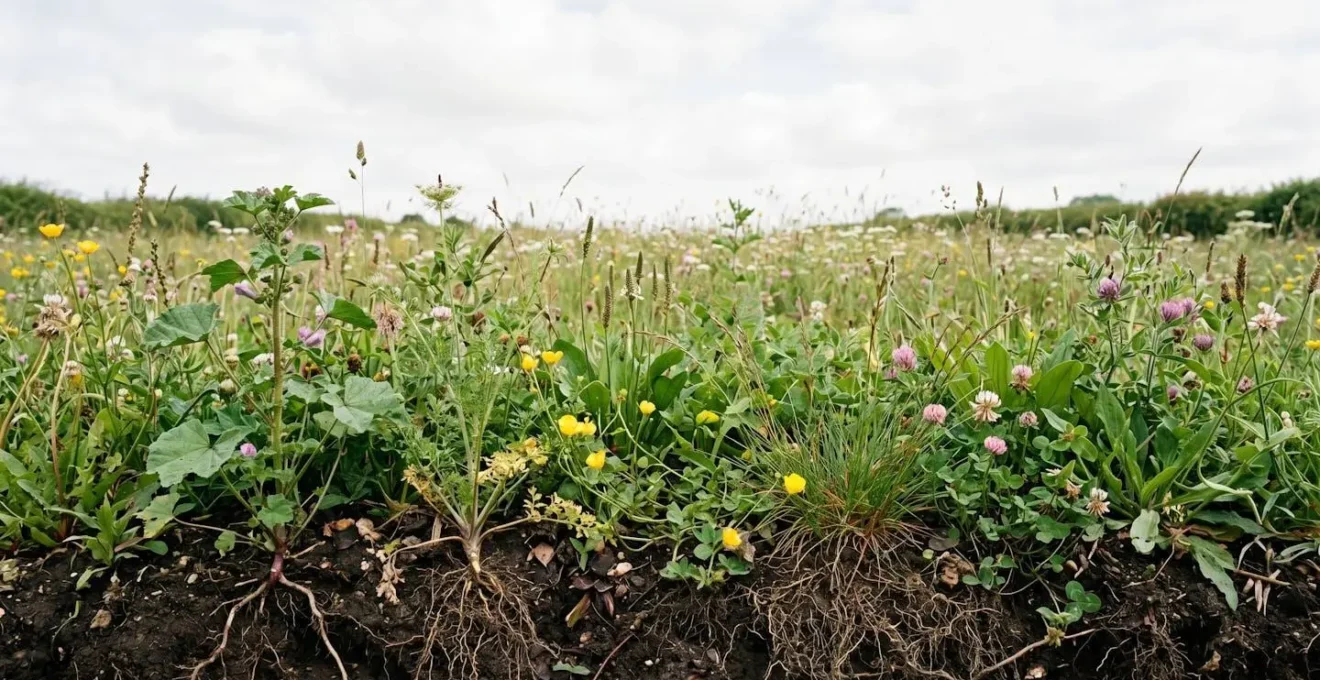
The process is one of systemic observation. Rather than just identifying a plant, the observer asks *why* it is thriving in that specific spot. A patch of stinging nettles often points to high levels of phosphate and nitrogen. An abundance of field horsetail can indicate acidic, waterlogged soil with low calcium. Observing these patterns over time allows a grower to build a dynamic map of their soil’s health. The following practices are a starting point for developing this skill:
- Identify 3-5 reliable indicator plants native to your specific area.
- Observe and record the complete plant community, noting diversity and density.
- Note the ratio between deep-rooted versus shallow-rooted species.
- Track the presence of different fungal types, like mushrooms, which indicate healthy decomposition.
- Analyze bare patches: what should be growing there but isn’t?
By cross-referencing these observations, a farmer can make informed decisions about soil management—such as targeted aeration, specific mineral amendments, or the use of cover crops—all guided by the direct feedback of the ecosystem itself. This is the pinnacle of ecological synchrony: a continuous conversation between the grower and their land.
The journey into phenology is a journey back to a deeper connection with the land. It begins with the simple act of paying attention. Start today by choosing one indicator plant on your property and a notebook. Record when it blooms, when it leafs out, and what else is happening around it. This simple practice is the first step in building a resilient, responsive, and truly sustainable farming system guided by the infallible wisdom of nature’s clock.