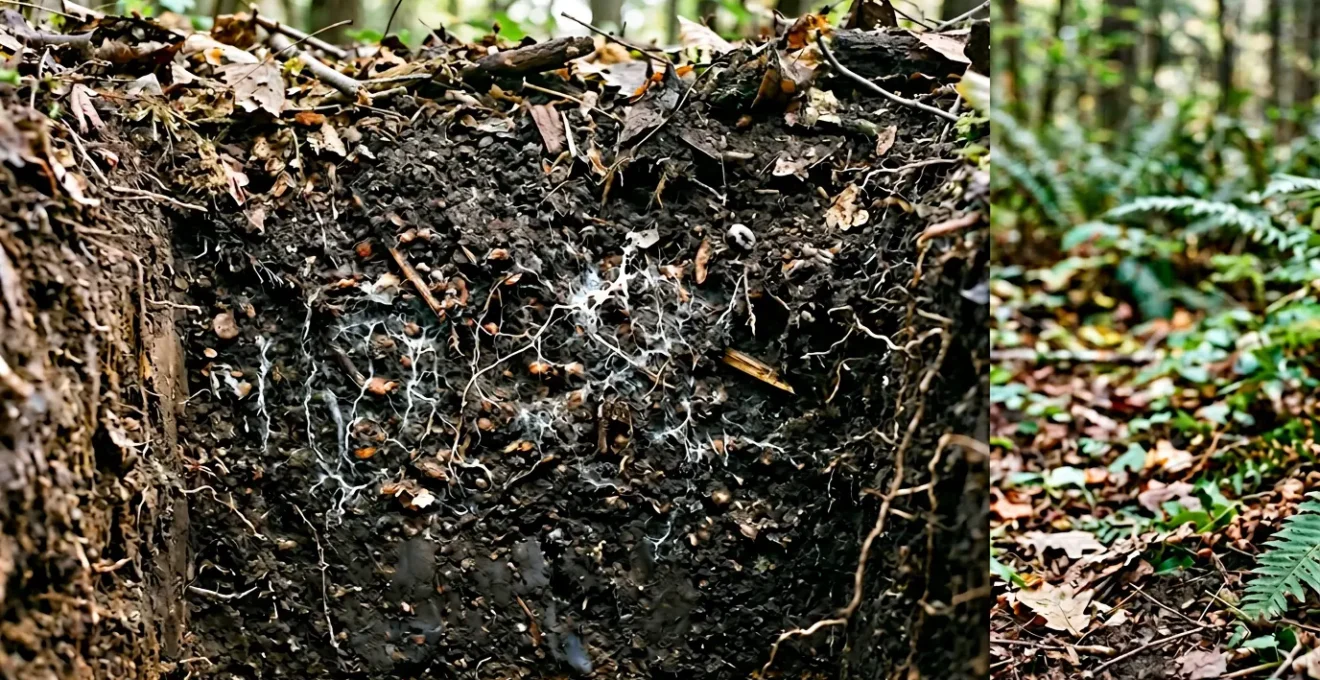
Building lasting soil fertility is not about adding more organic matter, but about transforming it into a stable carbon asset.
- Prioritize lignin-rich « browns » (straw, wood) over sugary « greens » for true humus creation.
- Manage aeration carefully; excessive turning or tillage oxidizes and « burns off » valuable carbon as CO2.
- Cultivate a fungal-dominant soil food web, as fungi are the primary architects of stable humus through compounds like glomalin.
Recommendation: Shift your strategy from adding short-term nutrients to deliberately cultivating the slow, fungal process of humification.
For many farmers, the soil organic matter (SOM) equation feels frustratingly unbalanced. You add compost, grow cover crops, and incorporate manure, yet the needle on your soil tests barely moves. Year after year, you pour resources into the soil, only to see the benefits dissipate, forcing you to repeat the cycle. This isn’t a failure of effort, but a misunderstanding of the underlying biological process.
The common approach focuses on adding « active carbon »—readily available nutrients that fuel a burst of bacterial activity and plant growth but are consumed just as quickly. While beneficial in the short term, this strategy does little to build the deep, resilient fertility that defines healthy soil. It’s the equivalent of spending your entire paycheck on fleeting luxuries instead of investing in a long-term asset.
But what if the true key to lasting fertility wasn’t the quantity of organic matter you add, but the quality of its transformation? The secret lies in shifting focus from rapid decomposition to slow, managed humification. This is the process of creating stable humus, a complex, recalcitrant form of carbon that acts as the foundational wealth of your soil, holding water and nutrients for decades.
This guide will deconstruct the humification nutrient cycle, moving beyond the platitudes of simply « adding compost. » We will explore how to select the right feedstocks, manage the process to minimize carbon loss, and cultivate the specific microbes that build, rather than just consume, your soil’s most valuable asset.
To provide a clear roadmap for building this long-term soil wealth, this article breaks down the core principles, practical steps, and critical mistakes to avoid in the process of humification. The following sections will guide you from theory to application.
Table of Contents: A Guide to the Humification Cycle
- Why Compost Adds Humus While Green Manure Adds Active Carbon?
- How to Create the Perfect C:N Ratio for Rapid Humification?
- Spread Compost vs Incorporated Straw: Which Builds Humus Faster?
- The Over-Aeration Mistake That Burns Off Humus as CO2
- Fungi’s Role: How to Encourage the Microbes That Build Humus?
- How to Raise Soil Organic Matter by 0.5% in 5 Years on Arable Land?
- Why Achieving PAS 100 Standard Adds Value to Your Compost?
- Composting Bio-Waste at Scale: How to Turn Municipal Green Waste into Gold?
Why Compost Adds Humus While Green Manure Adds Active Carbon?
Not all organic matter is created equal in the quest for soil fertility. The fundamental difference between building lasting humus and getting a temporary nutrient boost lies in the chemical structure of the inputs. Green manures, cover crops, and fresh grass clippings are rich in simple sugars and cellulose. They provide a quick feast for bacteria, rapidly releasing nutrients and CO2. This is active carbon—essential for immediate plant nutrition but fleeting, like a sugar rush for your soil.
In contrast, true humus formation follows a different, slower pathway. It relies on complex, hard-to-digest molecules, primarily lignin. This tough, woody substance is abundant in materials like straw, wood chips, and mature plant stalks. Instead of being rapidly consumed by bacteria, lignin is the primary precursor for stable humus. As soil science research demonstrates, up to 75% of lignin’s carbon can become stable humus, whereas less than 20% of the carbon from carbohydrates and cellulose does. This is why a well-made, mature compost contributes to long-term soil structure and fertility in a way that tilling in a lush green cover crop simply cannot.
Case Study: Lignin as the Engine of Humification
A 2022 study published in Frontiers in Environmental Science analyzed the composting of agricultural waste. It found that a treatment using straw (high in lignin) mixed with chicken manure resulted in a 137.98% increase in the absolute degradation of lignin and, crucially, a 281.76% increase in humic acid content compared to other treatments. This study confirmed that lignin content is the primary precursor for humic acid formation, providing clear evidence that prioritizing lignin-rich materials is the most effective strategy for creating stable humus.
This distinction is critical for long-term soil management. While active carbon is needed to feed the soil biology and crops, a strategy focused solely on it will leave you on a perpetual treadmill of inputs. To build a true carbon asset, your focus must shift to the lignin pathway, using finished compost to deliver pre-humified, stable organic matter to the soil.
How to Create the Perfect C:N Ratio for Rapid Humification?
The transformation of raw organic matter into stable humus is a biological process driven by microbes, and these microbes have a specific diet. The key to managing this process is controlling the Carbon-to-Nitrogen (C:N) ratio. This ratio dictates whether your compost pile will humify efficiently, putrefy into a slimy mess, or decompose so slowly it seems inert. For optimal humification, the target starting C:N ratio for a compost pile is around 25:1 to 30:1. This provides enough carbon (« browns ») for energy and structure, and enough nitrogen (« greens ») for microbial protein synthesis and reproduction.
If the ratio is too high (too much carbon), decomposition will be incredibly slow because the microbes lack the necessary nitrogen to build their populations. If the ratio is too low (too much nitrogen), the pile will become anaerobic, emitting ammonia and other foul odors as the excess nitrogen is lost to the atmosphere. Getting this balance right is the first practical step in managing for humus creation. « Browns » are carbon-rich materials like straw, dried leaves, cardboard, and sawdust. « Greens » are nitrogen-rich materials like grass clippings, vegetable scraps, coffee grounds, and manure. A simple rule of thumb is to layer two to three parts brown material for every one part green material by volume.
The following table, based on data from Cornell University’s comprehensive resources on composting, provides a clear guide to the C:N ratios of common materials, helping you create a balanced recipe for your compost. By understanding these values, you can move from guessing to strategically blending inputs to hit the ideal 30:1 ratio for efficient and rapid humification.
| Material Type | Carbon:Nitrogen Ratio | Classification |
|---|---|---|
| Grass clippings | 20:1 | Green (Nitrogen-rich) |
| Vegetable scraps | 25:1 | Green (Nitrogen-rich) |
| Coffee grounds | 20:1 | Green (Nitrogen-rich) |
| Manure | 15:1 | Green (Nitrogen-rich) |
| Straw | 75:1 | Brown (Carbon-rich) |
| Dried leaves | 60:1 | Brown (Carbon-rich) |
| Shredded newspaper | 175:1 | Brown (Carbon-rich) |
| Sawdust | 325:1 | Brown (Carbon-rich) |
Mastering this ratio is the difference between simply piling up waste and orchestrating a powerful biological process. It ensures the microbial workforce has precisely what it needs to build the complex, stable carbon structures that form the foundation of long-term soil health.
Spread Compost vs Incorporated Straw: Which Builds Humus Faster?
Once you have a high-quality, lignin-rich compost, the method of application becomes the next critical decision. A common practice is to incorporate raw organic matter, like straw, directly into the soil, assuming it will break down and build humus in place. However, this approach is far less efficient than applying finished compost to the surface. When raw straw is tilled in, the soil’s microbial community must perform the entire decomposition and humification process from scratch, a process that is often inefficient and can temporarily immobilize soil nitrogen.
Research from Washington State University highlights this inefficiency, showing that for raw biomass like cover crops, you can expect a 10-to-1 ratio of biomass to new organic matter. This means 10,000 pounds of dry biomass are needed to create just 1,000 pounds of soil organic matter, with much of the carbon lost as CO2. In contrast, applying finished compost is like delivering a pre-built, stable carbon asset directly to the soil ecosystem. The hard work of humification has already been done under ideal, controlled conditions.
The most effective strategy is to apply this finished compost as a mulch on the soil surface. This method mimics how natural ecosystems build soil: organic matter accumulates on top and is slowly incorporated by fungi, earthworms, and other soil life. This top-down approach feeds the fungal network that is essential for building stable soil aggregates.
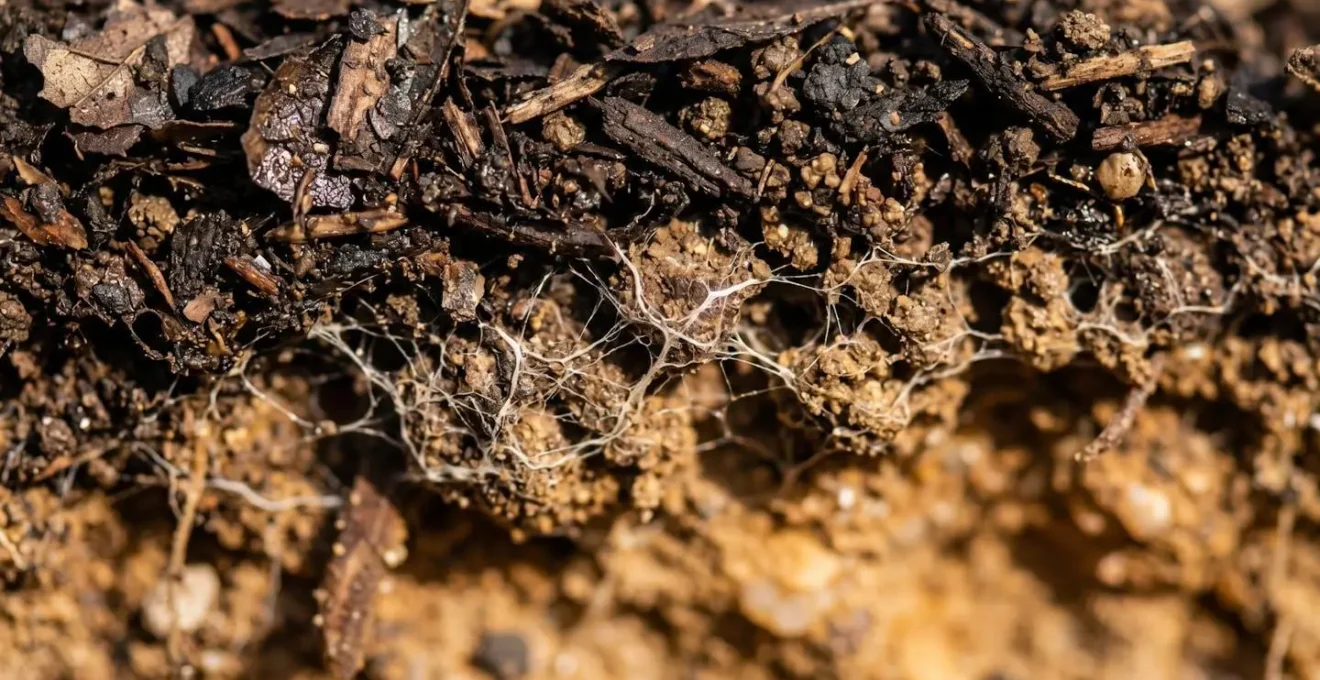
As this illustration shows, a surface layer of compost creates a protected, food-rich environment for the beneficial fungi that weave soil particles together. This undisturbed process is far more effective at building stable humus than the disruptive act of tillage, which breaks up these vital fungal networks and introduces excessive oxygen. Spreading finished compost on the surface is not just an application method; it is a strategy to feed and empower the soil’s natural humus-building machinery.
The Over-Aeration Mistake That Burns Off Humus as CO2
While composting is an aerobic process, one of the most common and costly mistakes is over-aeration. The goal is not to maximize decomposition speed, but to manage it for maximum humus retention. Aggressive turning of a compost pile or, more critically, intensive tillage of a field, injects a massive amount of oxygen into the system. This supercharges aerobic bacteria, which rapidly metabolize organic matter, « burning off » a huge portion of its carbon as carbon dioxide (CO2). You are essentially sending your future soil fertility up into the atmosphere.
This process of carbon loss through excessive oxidation is significant. According to composting research from Cornell University, up to two-thirds of the initial carbon in a compost pile is lost as CO2 during the active phase. While some loss is unavoidable, over-aeration dramatically accelerates it. This same principle applies directly to your fields. As the Noble Research Institute notes, « Tillage increases the aeration of the soil and causes a flush of microbial action that speeds up the decomposition of organic matter. » Every pass with a plow or disc is an act of forced aeration that oxidizes and depletes your soil’s carbon reserves.
The solution is controlled aeration. In composting, this means turning the pile just enough to maintain aerobic conditions (oxygen levels above 5%) but not so much that it becomes excessively hot (consistently above 70°C or 160°F), which is a sign of carbon burn-off. In the field, this translates directly to adopting no-till or minimum-tillage practices. By leaving the soil structure intact, you protect existing organic matter from rapid oxidation and create the stable, moderately-aerated conditions that favor the slow, humus-building work of fungi over the fast, carbon-burning work of bacteria.
Action Plan: Managing Aeration for Maximum Humus
- Monitor Oxygen Levels: Aim to keep oxygen concentrations above 5% to prevent anaerobic conditions, but understand that targeting levels far above 10% can accelerate carbon loss.
- Watch the Temperature: In a compost pile, temperatures consistently exceeding 70°C (160°F) are a red flag indicating you are burning carbon too quickly. Reduce aeration frequency.
- Minimize Tillage: Transition to no-till or strip-till practices. Avoid full-width, deep tillage which is the equivalent of aggressively turning your entire field into a rapid decomposition zone.
- Use Precision Systems (for composters): Consider aerated static pile (ASP) systems with timed blowers to deliver the precise minimum amount of oxygen needed, preventing burn-off.
- Protect the Soil Surface: Keep soil covered with mulch or living plants to buffer it from the atmospheric oxygen and prevent the « flush » of decomposition that follows a tillage event.
Managing oxygen is not about eliminating it, but about controlling it. It is the primary lever you have to shift the biological process from rapid carbon consumption to slow carbon stabilization.
Fungi’s Role: How to Encourage the Microbes That Build Humus?
If bacteria are the primary consumers of active carbon, then fungi are the primary architects of stable humus. A strategy for long-term fertility must be a strategy that favors a fungal-dominant soil food web. Fungi, particularly arbuscular mycorrhizal fungi (AMF), are master builders. Their vast networks of thread-like hyphae physically bind soil particles together, creating the stable aggregates that are the hallmark of healthy soil structure. This structure improves water infiltration, aeration, and root penetration.
More importantly, these fungi produce a powerful carbon-based « superglue » called glomalin. This glycoprotein is incredibly resistant to decomposition and is a major contributor to long-term carbon sequestration. Research from the USDA is clear on its impact: in undisturbed soils, it’s estimated that 15-20% of the carbon is locked up in glomalin. This is not fleeting, active carbon; this is a long-term deposit into your soil’s carbon bank.
Case Study: Glomalin, the Long-Term Carbon Store
Scientific studies on glomalin-related soil proteins (GRSP) reveal their extraordinary persistence. Research has shown that these compounds take anywhere from 7 to 42 years to biodegrade. Carbon dating has confirmed that glomalin’s turnover time is measured in years or even decades, far longer than the fungal hyphae that produce it. This demonstrates that encouraging mycorrhizal fungi is a direct pathway to sequestering carbon in a highly stable, long-lasting form, effectively building soil wealth that persists for generations.
So, how do you encourage these master builders?
- Minimize Soil Disturbance: Tillage is the arch-enemy of fungal networks, shredding the delicate hyphae. No-till is the single most important practice for fostering a fungal-dominant soil.
- Maintain Living Roots: Mycorrhizal fungi live in symbiosis with plants. Keeping a living root in the ground for as long as possible via cover crops or perennials provides a constant food source for them.
- Apply Lignin-Rich Compost: Fungi are specialists at breaking down the tough, woody lignin that bacteria struggle with. Applying a surface mulch of mature, woody compost directly feeds the fungal community.
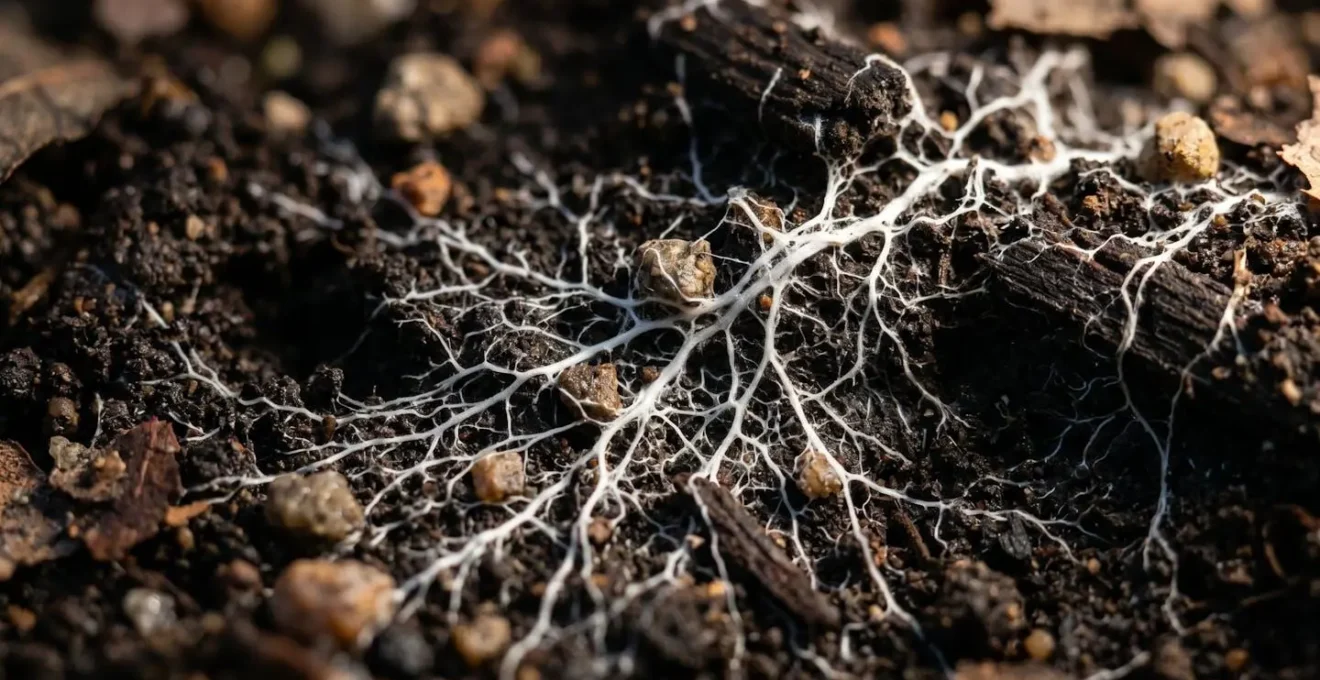
By shifting management practices to support fungi, you are no longer just adding organic matter; you are cultivating a workforce that actively builds the stable carbon structures your soil needs to thrive for the long term.
How to Raise Soil Organic Matter by 0.5% in 5 Years on Arable Land?
Building soil organic matter (SOM) is a marathon, not a sprint. While claims of rapid, dramatic increases are common, the scientific and practical reality is far more sobering. The sheer volume of material required is immense. According to agricultural research from the Noble Research Institute, raising stable SOM by just 1% on one acre requires the addition of approximately a staggering 200,000 pounds (100 tons) of organic material. This context is crucial: it reframes the goal from a simple fix to a long-term, strategic commitment.
This reality also challenges some common assumptions. For example, cover crops are often touted as a primary tool for building SOM. While they offer numerous benefits like erosion control and nutrient cycling, their ability to significantly *increase* SOM is limited by their relatively modest biomass production. As researchers at Washington State University have pointed out, « Although cover crops have many benefits…they have not been found to be highly effective in increasing soil organic matter levels. Given their modest biomass production, they are better at helping maintain SOM levels than increasing them. » They are a vital part of the system, but not a silver bullet for accumulation.
So, is raising SOM by 0.5% in five years an achievable goal? Yes, but it requires a dedicated, multi-faceted approach that goes beyond single practices. It demands a systems-level change focused on two things: drastically reducing carbon losses and consistently adding significant carbon inputs.
- Reduce or Eliminate Tillage: This is the most critical step. Tillage constantly burns off the carbon you’re trying to build. No-till practices are fundamental to allowing SOM to accumulate.
- Maximize Carbon Inputs: This means more than just cover crops. It requires consistent application of high-carbon amendments like high-quality compost and animal manures.
- Implement Crop Rotations: Including deep-rooted perennial forages like alfalfa or grass pastures in your rotation for several years can build carbon deep in the soil profile, where it is more protected from oxidation.
- Minimize Soil Erosion: Most SOM is concentrated in the topsoil. Every bit of soil that erodes is a direct loss of your most valuable carbon asset.
Achieving a 0.5% increase in five years is a realistic but ambitious goal. It requires abandoning the mindset of quick fixes and adopting a long-term, integrated strategy where every decision is weighed against its impact on the soil’s carbon balance.
Key takeaways
- Focus on Lignin, Not Just Biomass: Prioritize woody, carbon-rich « browns » as they are the primary precursors to stable humus, unlike the fleeting active carbon from « greens ».
- Control Aeration to Prevent Carbon Loss: Treat oxygen as a tool to be managed, not maximized. Excessive aeration from tillage or over-turning compost burns valuable carbon into atmospheric CO2.
- Cultivate Fungi as Your Workforce: Shift practices to favor a fungal-dominant soil food web. Fungi, not bacteria, are the primary architects of the stable, long-lasting carbon structures that define true soil fertility.
Why Achieving PAS 100 Standard Adds Value to Your Compost?
For farmers looking to invest in compost as a long-term soil asset, not all products are created equal. The market is filled with materials labeled « compost » that can range from raw, unstable organic waste to a fully mature, humified product. Using the wrong kind can introduce weed seeds, pathogens, or even immobilize nitrogen in your soil. This is where a quality standard like PAS 100 becomes an invaluable tool. PAS 100 is a widely recognized specification in the UK and Europe that certifies a compost product has been produced through a controlled process, ensuring it is a safe, stable, and effective soil improver.
Achieving this standard means the compost has passed a rigorous set of requirements, including reaching specific temperatures to eliminate pathogens and weed seeds, followed by a maturation or « curing » phase. It is this curing phase that is most critical for humification. This is where the initial, rapid decomposition slows down, and the microbial community shifts towards the fungal-driven processes that build complex, stable humus molecules. A PAS 100 certified compost is, therefore, a guarantee of stability.
Humified organic matter is desirable because it is relatively stable, so nutrients and simple organic compounds associated with decomposing organic matter are less prone to rapid loss. The humus test indicates the degree to which organic matter has become humified.
– Luebke CMC Compost Consulting, Controlled Microbial Composting and Humus Management manual
For a farmer, choosing a PAS 100 certified product (or an equivalent quality-assured product in their region) provides three key advantages. First, safety and consistency: you know you are applying a clean, reliable product. Second, nutrient availability: the nutrients are in a more stable, slow-release form. But most importantly, it provides an assurance of humification. You are buying a product that has completed the most difficult stages of transformation, delivering a concentrated dose of the stable, long-term carbon that is the true foundation of soil wealth.
Composting Bio-Waste at Scale: How to Turn Municipal Green Waste into Gold?
The principles of humification don’t just apply to the on-farm scale; they represent a massive opportunity to transform the vast streams of municipal and agricultural bio-waste into a valuable resource. The sheer volume of this « waste » is staggering. For instance, recent composting research highlighted that a single country like China produces around 900 million tons of straw waste and 3.8 billion tons of livestock manure annually. This isn’t waste; it’s feedstock for creating billions of tons of high-value, humified compost.
Scaling up the humification process requires moving beyond simple piles to sophisticated, controlled technologies designed for efficiency, consistency, and maximum humus retention. Each method has its own advantages and is suited to different applications, from rural farms to dense urban centers. The key is to match the technology to the feedstock and the desired quality of the end product. For large-scale operations focused on producing a stable, humified asset, precise control over the process variables—especially aeration—is paramount.
The following table provides a comparison of common large-scale composting technologies, highlighting their benefits in the context of humification. This demonstrates that scalable solutions exist to turn a massive waste problem into a cornerstone of a regenerative agricultural system.
| Technology | Primary Advantage | Humification Benefit | Best Application |
|---|---|---|---|
| Windrow Composting | Low cost, simple operation | Natural fungal colonization | Rural farms, large volumes |
| Aerated Static Piles (ASP) | Precise oxygen control | Prevents carbon burn-off, maximizes humus | Professional operations |
| In-vessel Systems | Speed and environmental control | Process optimization in urban areas | Municipal facilities |
| Vermicomposting (finishing stage) | Increased microbial diversity | Adds hormones, enhances biology | High-value product creation |
By applying the principles of humification at an industrial scale, municipalities and large agricultural operations can close the nutrient loop, create a valuable product, and supply farmers with the stable carbon needed to rebuild soil health. This transforms a costly disposal problem into a profitable and ecologically vital solution, turning green waste into black gold.
To begin building true, long-term fertility, start by evaluating your current organic matter strategy. Shift your focus from simply adding inputs to actively managing the humification process, and begin treating your soil’s carbon as the invaluable, enduring asset it is.