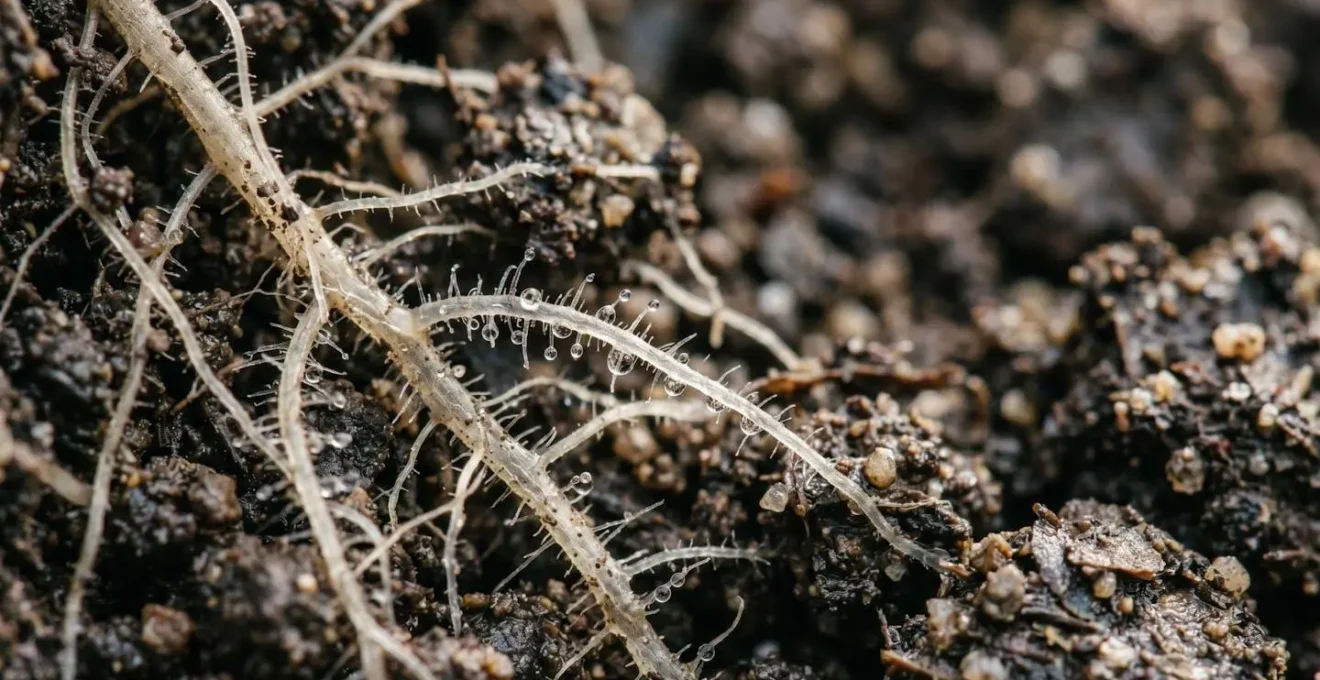
The key to vibrant soil biology isn’t what you add, but what you empower your plants to give.
- Plants strategically trade a significant portion of their photosynthetic sugar to feed beneficial microbes in the soil.
- Your daily management practices—from grazing height to variety selection and fertilization—directly control this « liquid carbon » flow.
Recommendation: Focus on maximizing photosynthesis and managing plant energy flow, and you will actively build your soil’s health and fertility, reducing the need for costly external inputs.
For farmers committed to building soil health, the market is flooded with biostimulants, microbial inoculants, and soil amendments, all promising to boost soil biology. While these products can be useful, they often represent a significant cost with inconsistent results. They treat the soil as a passive medium that needs to be fed from a bag. But what if the most powerful and cost-effective soil-building tool is already on your farm, working 24/7? It’s the plant itself, and its ability to convert sunlight into liquid carbon is the engine of the entire soil food web.
Many common practices focus on adding organic matter or reducing tillage, which are crucial pieces of the puzzle. However, they often overlook the active, dynamic role the living plant plays in feeding and shaping its own microbial community. The real leverage lies in understanding and managing the plant as a photosynthetic engine. This engine doesn’t just produce a harvestable crop; it actively pumps a stream of energy-rich compounds, known as root exudates, directly into the rhizosphere.
This article reframes soil building from a task of addition to one of masterful management. Instead of just asking how to feed the soil, we will ask: how do we empower the plant to do it for us? By focusing on the flow of energy from photosynthesis down into the roots, we can turn our crops into self-sufficient soil builders. We will explore the science behind this « liquid carbon pathway, » providing practical strategies to maximize exudate flow.
This guide provides a plant physiologist’s perspective on managing your farm’s unseen engine. We will delve into why plants give away their precious sugars, how to measure the quality of this energy transfer, and how your decisions on crop varieties, foliar sprays, and grazing can either supercharge or shut down this vital process. Let’s explore how to make your plants work smarter, not just harder, to build a resilient and productive farm from the ground up.
Summary: How to Maximize Plant Exudates to Feed Soil Biology
- Why Plants Give Away 30% of Their Sugar to Microbes?
- How to Measure Brix Levels to Assess Exudate Quality?
- Modern vs Heritage Wheat: Which Varieties Pump More Exudates?
- The Foliar Spray Mistake That Shuts Down Root Exudation
- Grazing Heights: How Short Can You Go Before Roots Stop Exuding?
- Selecting Hosts: How to Use Oats and Vetch to Build Fungi Over Winter?
- How to Use Photosynthesis to Pump Liquid Carbon into the Soil?
- Closing the Carbon Cycle: How to Become a Carbon-Negative Farm by 2030?
Why Plants Give Away 30% of Their Sugar to Microbes?
Root exudates serve as a bridge connecting plant roots and rhizosphere microbes, playing a key role in influencing the assembly and function of the rhizobiome.
– Feng Z., Liang Q., Yao Q. et al., Environmental Microbiome 2024
From a purely productive standpoint, it seems counterintuitive. Why would a plant, after working hard to convert sunlight into sugar, simply give a huge portion of it away? The answer lies in a powerful, symbiotic partnership. This isn’t a giveaway; it’s a strategic investment. Research reveals that plants allocate between 10% and 40% of their total photosynthetically fixed carbon to their root systems, releasing much of it as exudates. This « liquid carbon » is a carefully crafted cocktail of sugars, amino acids, and organic acids designed to attract and feed a specific community of bacteria and fungi in the soil immediately surrounding the roots—the rhizosphere.
This process creates a bustling underground economy. In exchange for this steady supply of energy, the microbial community works for the plant. Fungi, particularly mycorrhizal fungi, extend the plant’s root system by orders of magnitude, accessing water and nutrients like phosphorus that would otherwise be out of reach. Bacteria can fix atmospheric nitrogen, solubilize minerals, and produce plant-growth-promoting hormones. This microbial shield also protects the plant by outcompeting pathogenic organisms for space and resources. The plant isn’t just leaking sugar; it is outsourcing critical functions to a microscopic workforce, paying them with the most direct currency it has: solar energy converted into carbon.
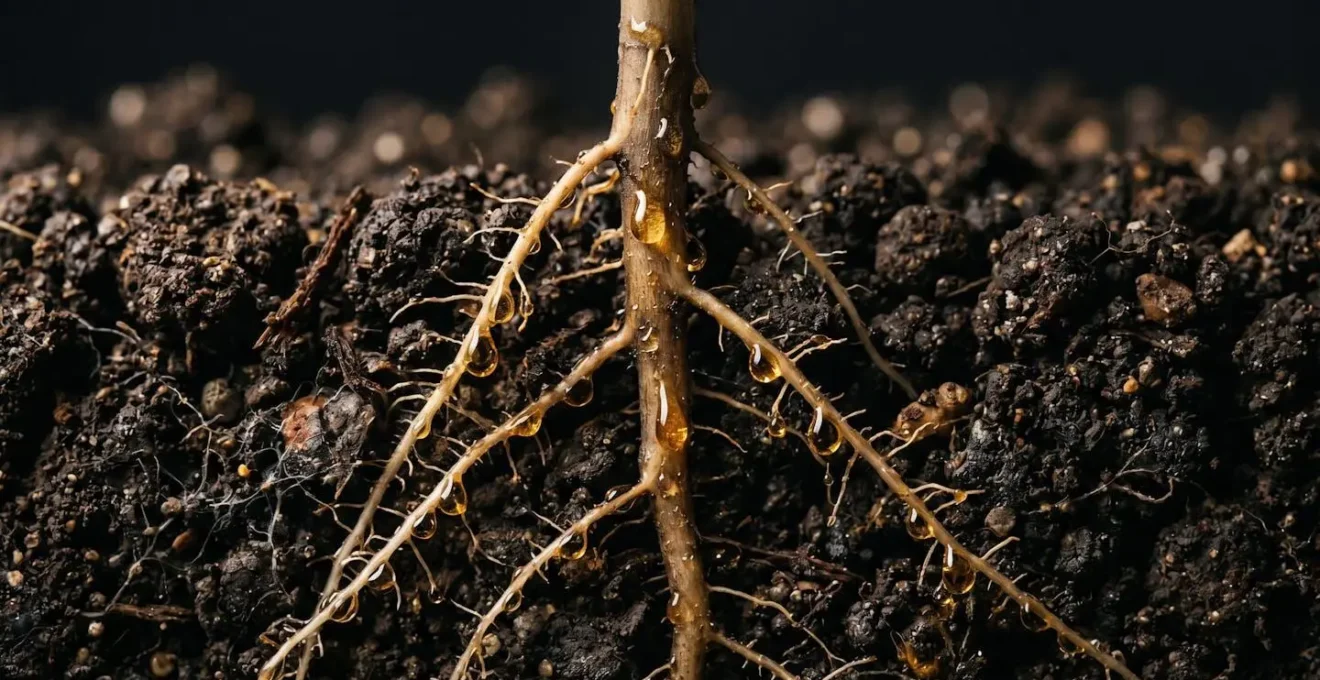
As this diagram illustrates, the flow of energy is a deliberate transaction. The plant actively cultivates the soil life it needs to thrive. Understanding this exchange is the first step toward managing it. When a plant is healthy and its photosynthetic engine is running at full capacity, it has a surplus of energy to invest in the soil. This investment pays dividends in the form of improved nutrient uptake, drought resilience, and disease resistance, creating a positive feedback loop of health and vitality for both the plant and the soil.
How to Measure Brix Levels to Assess Exudate Quality?
If plant exudates are the currency of the soil economy, then the sugar content in the plant’s sap is a direct indicator of its wealth. A plant with a high level of sugars has more energy to spare for its microbial partners. We can measure this « energy status » using a simple, inexpensive tool called a refractometer, which provides a reading in degrees Brix (°Bx). One degree Brix is equal to 1 gram of sucrose in 100 grams of solution. In essence, a Brix test measures the percentage of dissolved solids—primarily sugars—in a plant’s sap, giving us a powerful proxy for its photosynthetic efficiency and its capacity to produce quality exudates.
A higher Brix level indicates a more efficient photosynthetic engine. The plant is producing more sugar than it needs for its basic growth and respiration, leaving a surplus to send down to the roots. Research on forage quality provides useful benchmarks, showing that for many crops, quality intervals where 8-12% is good and anything above 13% is excellent are reliable indicators of plant health and nutritional value. For farmers, this isn’t just an academic number; it’s a real-time diagnostic tool. A consistently low Brix reading can be an early warning sign of nutrient deficiencies, water stress, or pest pressure, often before visible symptoms appear. By monitoring Brix, you can assess the impact of your management practices on the plant’s energy production and, by extension, its ability to feed the soil.
To get reliable and comparable data, it is crucial to follow a consistent protocol. Small variations in timing or sampling technique can skew the results. The following checklist provides a professional-grade process for accurate Brix testing, allowing you to build a valuable dataset for your farm.
Your Action Plan: Professional Brix Testing Protocol
- Timing is Key: Take readings at the same time each day, ideally after at least two hours of morning sunlight to ensure the photosynthetic engine is active.
- Consistent Sampling: Always sample from the same part of the plant, typically the first fully developed leaf, to ensure your readings are comparable over time.
- Sap Extraction: Extract the sap by rolling several leaves into a tight ball and crushing them with a clean garlic press or a dedicated sap press.
- Prism Application: Place 2-3 drops of the extracted sap onto the refractometer’s prism, close the cover, and ensure the sap spreads evenly without air bubbles.
- Reading and Recording: Point the refractometer toward a light source and focus the eyepiece. The reading is the sharp line between the light and dark areas. A fuzzier line often indicates higher mineral content and better overall quality.
Modern vs Heritage Wheat: Which Varieties Pump More Exudates?
Not all plants are created equal when it comes to feeding the soil. Decades of modern plant breeding have focused primarily on yield, uniformity, and response to synthetic fertilizers. While this approach has dramatically increased grain production, it has often come at an unseen cost: the weakening of the plant’s natural ability to partner with soil microbes. The selection for dwarf varieties that allocate more energy to grain development has inadvertently selected for plants with smaller, shallower root systems, fundamentally changing their relationship with the soil.
Heritage or landrace varieties, on the other hand, evolved under lower-input conditions. They had to be self-sufficient, developing robust and deep root systems to find their own water and nutrients. This required them to maintain active, thriving microbial partnerships. They are genetically programmed to invest a larger portion of their energy into their root architecture and, consequently, into the exudates that fuel the rhizosphere.
Case Study: The Root Architecture Advantage of Heritage Grains
Comparisons between heritage and modern grain varieties consistently reveal a stark difference below ground. Heritage grains typically develop significantly deeper and more extensive root systems than their modern dwarf counterparts. These large root networks allow them to draw moisture and nutrients from deep within the soil profile, making them more resilient to drought. These traditional landraces were often complex genetic mixtures, well-adapted to local conditions, and maintained active microbial partnerships even in poor soils. In contrast, many modern hybrids possess shallow roots, leaving them dependent on irrigation and synthetic inputs and lacking the genetic resilience to adapt to climate variability.
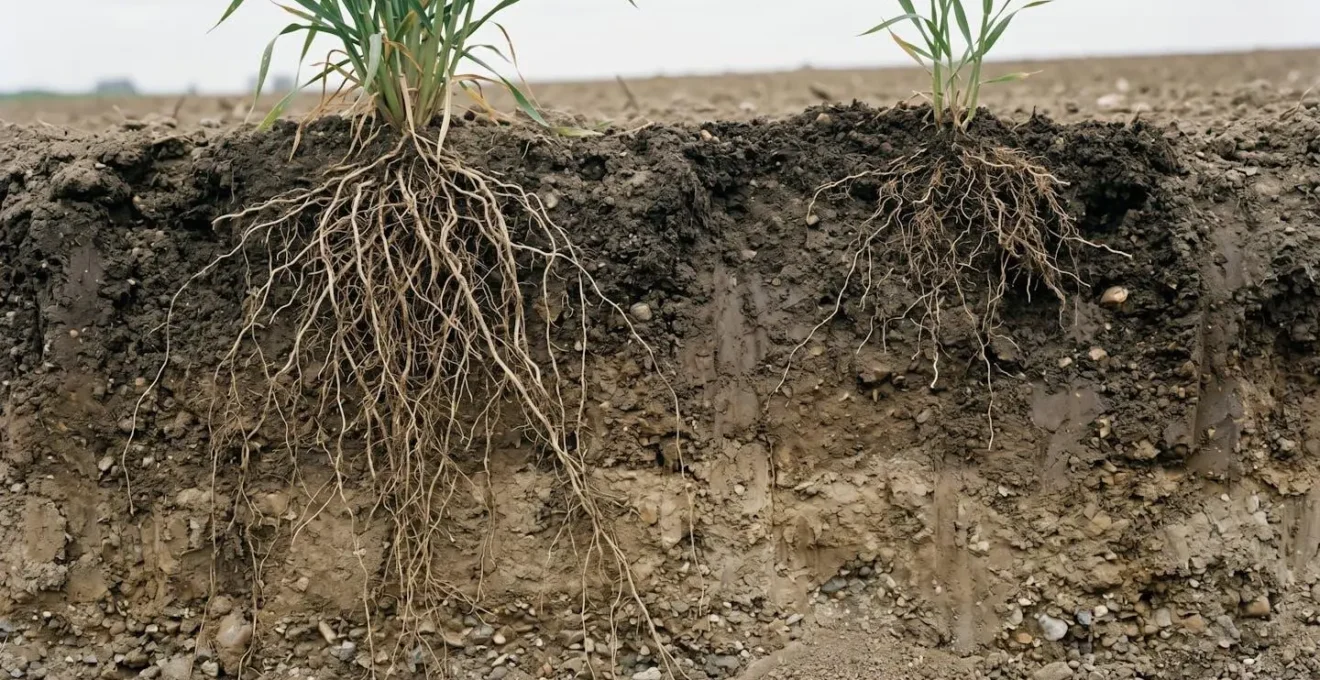
This difference in breeding philosophy has tangible consequences. The focus on yield at the expense of root development has led to a measurable decline in nutritional quality. A comprehensive study comparing historical and modern wheat varieties found a 20-30% decrease in mineral concentrations like zinc, iron, and magnesium. This suggests that modern varieties are less efficient at mining nutrients from the soil, a task largely facilitated by microbial partners. By choosing varieties with a genetic history of self-sufficiency, farmers can select for plants that are inherently better at investing in the soil biology that sustains them.
The Foliar Spray Mistake That Shuts Down Root Exudation
Foliar feeding, especially with soluble nitrogen, can feel like a powerful tool. It’s a quick fix that often results in a visible « greening up » of the crop, and its efficiency is undeniable. Under optimal conditions, research demonstrates that plants can absorb nutrients with up to 95-100% absorption efficiency for foliar sprays, compared to a much lower and more variable rate for soil-applied fertilizers. Seeing such a rapid and efficient response, it’s easy to believe you are doing the best thing for your plant. However, from the perspective of soil biology, you may be inadvertently short-circuiting a vital natural process.
Remember the underground economy: the plant trades carbon-rich sugars to microbes in exchange for nutrients like nitrogen. When you apply readily available nitrogen directly to the leaves, you are essentially giving the plant a free lunch. The plant’s internal energy-management system is incredibly sophisticated. If it can get nitrogen for free through its leaves, why would it spend precious sugar energy to « buy » it from soil microbes? As a result, the plant dramatically reduces the flow of exudates to the roots. The signal is clear: the microbial workforce is no longer needed for this task, and their payment is cut off.
This creates a dependency cycle. The soil’s microbial community, starved of its primary food source, begins to decline. The natural nitrogen-cycling and mineral-solubilizing functions of the soil food web weaken. The crop becomes more reliant on the farmer for its nutrition, requiring more and more synthetic inputs to maintain yield. While foliar sprays can be a valuable tool for correcting acute micronutrient deficiencies, their routine use as a primary nitrogen source can undermine the long-term goal of building a self-sustaining, biologically active soil. As experts in the field have noted, the application rate of nitrogen fertilizer has a direct and significant effect on root exudation and the composition of the rhizosphere microbiome. It’s a classic example of a short-term gain leading to a long-term cost in soil health.
Grazing Heights: How Short Can You Go Before Roots Stop Exuding?
For livestock operations, grazing management is one of the most powerful levers for influencing the liquid carbon pathway. The leaves of a plant are its solar panels, and the amount of leaf area directly determines the capacity of its photosynthetic engine. When an animal grazes a pasture, it removes a portion of these solar panels, temporarily reducing the plant’s ability to produce energy. The plant’s response to this event is critical, and it’s directly tied to grazing height.
If a plant is grazed too severely—with too much of its leaf area removed—it enters a state of emergency. Its top priority becomes survival and regrowing its solar panels. To conserve energy for this vital task, it makes a drastic cut: it shuts down the flow of exudates to the roots. The root system may even die back as the plant reallocates all available resources upward. This « stop-start » cycle of exudation is disruptive to the soil microbiome, which relies on a consistent food source. Field research on perennial grasses has shown that plant sugar levels, measured as Brix, fluctuate significantly based on grazing management. Proper timing and height management are directly correlated with maintaining consistent sugar levels in the plant sap, which is the fuel for root exudation.
The key is to practice rotational grazing that leaves enough residual leaf area for the plant to recover quickly. This « take half, leave half » principle is a good rule of thumb. By leaving sufficient solar panels, the plant can continue photosynthesizing efficiently, quickly replenish its energy reserves, and maintain a more stable flow of exudates to the soil. This approach not only builds soil biology but also leads to faster pasture regrowth and more resilient forage stands. The following table provides a general guide to how plant energy status, reflected in Brix levels, changes during a typical grazing rotation.
| Growth Stage | Brix Level Range | Plant Energy Status | Grazing Recommendation |
|---|---|---|---|
| Early Growth (Pre-grazing) | 8-12% | Good photosynthetic activity | Allow 2+ hours morning sunlight before grazing |
| Post-Grazing Recovery (Days 1-3) | 3-7% | Reduced sugar production | Extended rest period required |
| Active Regrowth (Days 4-7) | 6-10% | Increasing energy reserves | Monitor leaf development |
| Full Recovery (Day 8+) | 10-15% | Optimal exudation capacity | Ready for next grazing rotation |
Selecting Hosts: How to Use Oats and Vetch to Build Fungi Over Winter?
The period between cash crops, often left fallow, represents a massive missed opportunity to feed and build soil biology. Cover crops are the solution, acting as a living bridge that keeps the photosynthetic engine running and the liquid carbon pathway open. However, not all cover crops are equal. To maximize the benefit, especially for building a robust fungal network, it’s essential to select host plants that are excellent partners for mycorrhizal fungi and other beneficial microbes.
A classic and highly effective combination for this purpose is a mix of oats and a legume like vetch. This pairing provides a one-two punch for soil building. Oats are a grass with a dense, fibrous root system, making them an exceptional host for arbuscular mycorrhizal (AM) fungi. These fungi are critical architects of soil structure, binding soil particles together into stable aggregates with a protein called glomalin. This improves water infiltration, aeration, and resistance to erosion. The vast majority of plants in nature form partnerships with these fungi, and by planting a strong host like oats, you ensure this fungal network has a food source to thrive and expand through the winter.
Vetch, as a legume, brings another dimension to the partnership. Leguminous plants are famous for their ability to fix atmospheric nitrogen through a symbiotic relationship with Rhizobia bacteria, which form nodules on their roots. To initiate this relationship, vetch roots exude specific compounds, including phenolic acids, that act as chemical signals to attract these beneficial bacteria. This process not only adds free nitrogen to your soil system for the following crop but also stimulates a diverse microbial community. The combination of a strong fungal host (oats) and a nitrogen-fixing, bacteria-attracting legume (vetch) creates a diverse and active rhizosphere, building multiple aspects of soil health simultaneously.
How to Use Photosynthesis to Pump Liquid Carbon into the Soil?
The entire concept of using plants to build soil hinges on one fundamental process: photosynthesis. It is the mechanism that captures atmospheric carbon dioxide and converts it into the energy that fuels both the plant and the soil food web. Viewing your farm through this lens transforms your perspective. Every green leaf is a solar-powered pump, actively drawing carbon from the air and sending it down into the soil. This is the liquid carbon pathway, and managing your farm to maximize its efficiency is the most sustainable way to build soil organic matter.
Every management decision should be evaluated with a simple question: « Does this increase or decrease the total amount of photosynthesis happening on my farm throughout the year? » Keeping the ground covered with living plants for as many days as possible is the primary rule. This means minimizing fallow periods, integrating cover crops, and managing grazing to maintain active leaf area. The goal is to maximize the capture of solar energy. This energy, converted into sugars, is the fuel. A portion is used for plant growth, another for respiration, and the crucial remainder is invested into the soil via exudates.
However, recent science reveals an even deeper layer of complexity. It’s not just about the quantity of carbon pumped into the soil, but also the quality and composition. Groundbreaking research from Harvard has shown counterintuitive effects of root exudates on carbon storage. Scientists found that different compounds in the exudate cocktail had vastly different impacts. Simple sugars, while providing a quick energy source for microbes, led to higher turnover and no net increase in stable soil carbon. Conversely, more complex organic acids resulted in slower microbial activity but led to a net accumulation of carbon in a stable, mineral-associated form. This suggests that the type of plants grown and their unique exudate profiles can have a profound impact on long-term carbon sequestration, adding another layer to sophisticated soil management.
Key Takeaways
- Your plants are carbon pumps: Their primary role, beyond harvest, is to channel atmospheric carbon into the soil to feed microbes.
- Management is the control switch: Decisions on grazing, fertilization, and crop variety directly turn this carbon pump up or down.
- Measurement enables management: Using tools like a refractometer to check Brix levels gives you real-time feedback on your plant’s energy status and soil-feeding capacity.
Closing the Carbon Cycle: How to Become a Carbon-Negative Farm by 2030?
Shifting focus from simply feeding the crop to empowering the plant to feed the soil represents a fundamental paradigm shift. It’s a move away from a linear, input-dependent model toward a cyclical, self-sustaining ecosystem. By maximizing photosynthesis and the liquid carbon pathway, you are not just building soil organic matter; you are actively closing the carbon cycle on your farm. Carbon is drawn from the atmosphere, converted into plant biomass and soil life, and stabilized in the soil, turning your operation from a potential carbon source into a powerful carbon sink.
Becoming a carbon-negative farm by 2030 is an ambitious goal, but it’s grounded in these ecological principles. It requires a holistic approach where every decision is weighed against its impact on the farm’s total energy flow and carbon balance. This means integrating cover crops to keep the carbon pump running year-round, adopting rotational grazing to stimulate root growth and exudation, reducing or eliminating practices that disrupt soil biology like intensive tillage, and carefully managing nutrient inputs to avoid short-circuiting natural cycles. As a recent collaborative study in PLOS Biology notes, « Engineering these interactions in an agricultural setting would enable a reduction in fertilizer and pesticide input for a more sustainable agriculture. »
This journey transforms the farmer’s role from a simple producer to an ecosystem manager. The goal is to create a resilient system where the health of the soil, the plants, the animals, and the farm’s profitability are all interconnected. By focusing on the biological engine of photosynthesis, you are laying the foundation for a farm that is not only productive and profitable but also a key part of the solution to broader environmental challenges.
Begin today by choosing one practice outlined in this guide—whether it’s monitoring Brix levels, adjusting your grazing height, or planning an oat and vetch cover crop—and start managing your farm as the powerful, carbon-cycling ecosystem it is.