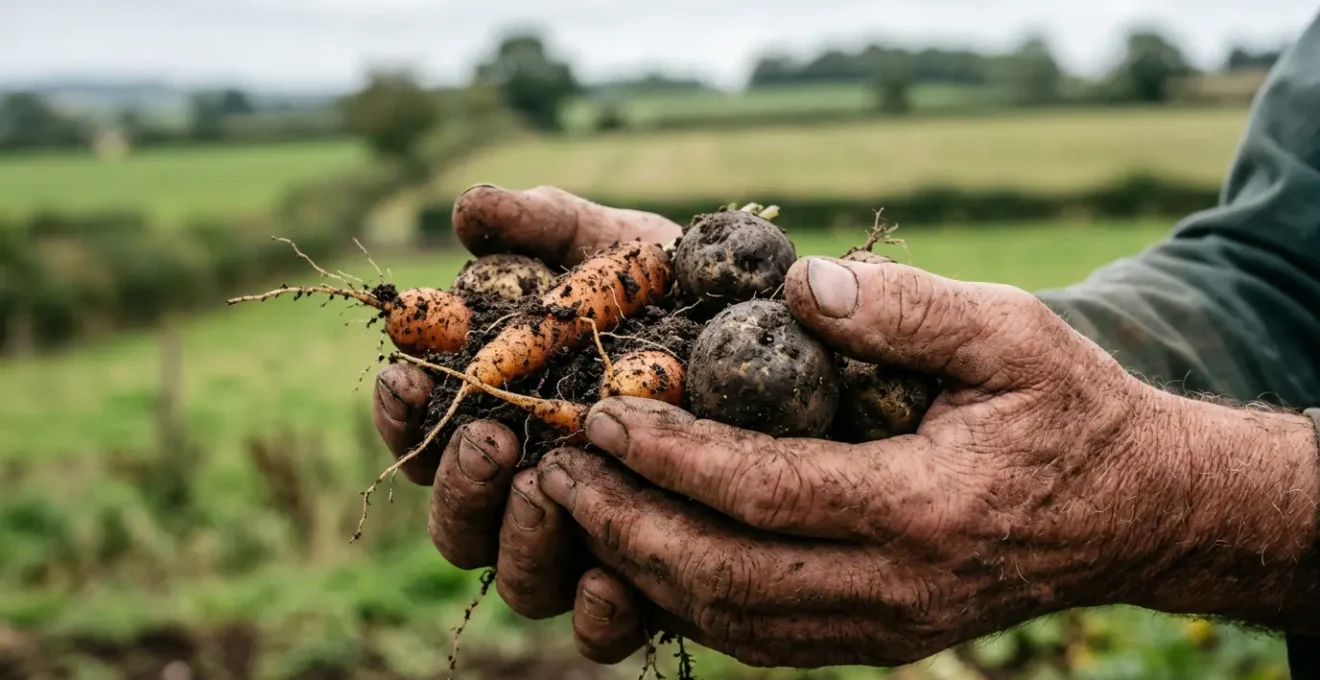
Building a Community Supported Agriculture (CSA) scheme is a political act of engineering a resilient, decentralized food system to challenge our dependency on fragile corporate supply chains.
- Success depends on designing robust operational systems for finance, logistics, and labour before planting a single seed.
- True food sovereignty is achieved not just by growing food, but by planning for year-round calorie needs and managing resources with ruthless efficiency.
Recommendation: Move beyond the ‘feel-good’ concept of local food and adopt an organizational mindset; this guide is your blueprint for building a viable, resilient, and sovereign food future for your community.
Have you ever stood in a supermarket aisle, staring at an empty shelf where essentials used to be, and felt a profound sense of vulnerability? This feeling isn’t an overreaction; it’s a rational response to the inherent fragility of our globalised, just-in-time food model. For community groups and farmers in the UK, this isn’t just a problem to be observed but a call to action. The common response is to talk about ‘supporting local’ or visiting farmers’ markets, which are positive but ultimately insufficient steps. They don’t fundamentally alter the power structure or build genuine, lasting resilience.
The conversation often stops at the simple, romantic ideal of a farm-to-fork connection. But what if the real work of building food sovereignty isn’t just about growing vegetables, but about becoming engineers of a new kind of local system? This article rejects the shallow narrative. It argues that creating a successful CSA is an act of strategic design. It requires a political and organizational mindset focused on building operational viability across every facet of the enterprise: finance, logistics, labour management, and production planning. This is not a guide to simply starting a farm; it is a blueprint for engineering a robust, decentralized food system capable of withstanding the shocks that cause supermarket shelves to go bare.
This guide will walk you through the critical systems you need to design and implement. We will dissect the weaknesses of the current model to understand the opportunity, then move into the practical mechanics of calculating share prices, choosing a distribution model, structuring your labour legally, and planning your crops for genuine year-round security. Finally, we’ll explore powerful efficiency principles that can save your project from the burnout that plagues so many well-intentioned initiatives.
Contents: A Blueprint for UK Food Sovereignty Through CSA
- Why Just-in-Time Supermarket Chains Are Vulnerable to Disruption?
- How to Calculate Share Prices for a Viable Community Supported Agriculture Scheme?
- Farmers Markets vs Food Hubs: Which Reach More People efficiently?
- The Volunteer Mistake: Relying on Free Labor Without Proper Structure
- Feeding the Village: How to Plan Planting for Year-Round Calorie Staples?
- Open Farm Sunday: How to Host an Event That Builds Loyal Customers?
- Why High-Maintenance Crops Must Be Visible from Your Kitchen Window?
- Applying Permaculture Zoning Principles to Save 10 Hours of Farm Labor Weekly?
Why Just-in-Time Supermarket Chains Are Vulnerable to Disruption?
The modern supermarket is a marvel of global logistics, but its efficiency is also its greatest weakness. The entire system is built on a « just-in-time » (JIT) model, where food travels thousands of miles, passing through numerous choke points, with minimal stock held in reserve. This creates a supply chain that is incredibly brittle and susceptible to shocks. We don’t have to look far for proof; during the 2021 supply chain crisis, 17% of UK adults experienced shortages of essential food items. This wasn’t a random event; it was a predictable outcome of a fragile system.
The causes are systemic and varied. Political events, like Brexit, have a direct impact. For instance, the Food Standards Agency documented the consequences of a 15.6% shrinkage in the UK HGV driver workforce compared to pre-pandemic levels, partly due to new restrictions on EU drivers. This labour shortage rippled through the system, leaving produce rotting in fields and gaps on shelves. The vacancy rate in the food and drink sector hit a staggering 6.3% in 2022, creating persistent disruptions.
This is where the political power of Community Supported Agriculture becomes clear. A CSA is, by its very design, an antidote to this systemic fragility. It operates on a « just-in-case » model, with a radically shortened supply chain that often measures in meters, not miles. The producer and consumer are directly connected, bypassing the vulnerable network of international shipping, centralised distribution centres, and driver shortages. By building these local food systems, we are not just getting fresher food; we are actively divesting from a brittle infrastructure and creating a resilient alternative that functions independently of global turmoil. It is a strategic hedge against a future of predictable disruptions.
Case Study: The Post-Brexit Labour Shock
The Food Standards Agency’s analysis of the post-Brexit food system provides a stark illustration of JIT vulnerability. The problem was not a lack of food, but a lack of people to move it. With 15,000-19,000 fewer EU drivers in UK haulage, the entire chain from farm to depot to store faltered. The result was widespread disruption that locally-embedded CSAs, with their direct producer-to-consumer relationships, simply did not experience. Their resilience was a direct function of their decentralized structure.
How to Calculate Share Prices for a Viable Community Supported Agriculture Scheme?
A CSA is a community project, but it must be run with financial discipline to be sustainable. The most common point of failure for new schemes is not poor harvests, but a poorly designed business model. Guessing at a share price or simply copying a neighbouring farm is a recipe for disaster. A viable share price is not based on what you think people will pay; it is calculated directly from the total operational cost of the farm. This is the first and most critical act of system engineering you will undertake.
The fundamental principle is that the members’ shares collectively cover 100% of the farm’s annual budget. This de-commodifies the food; members are not buying vegetables, they are investing in the farm’s existence—the land, the equipment, the seeds, and, crucially, the farmer’s livelihood. Calculating this requires a thorough and honest accounting of all projected expenses. This includes capital expenses (equipment, irrigation), operating expenses (seeds, fuel, soil amendments), and, most importantly, labour expenses. Paying the farmer a fair, living wage with benefits is a non-negotiable part of a resilient system.
Once you have a total budget, you can determine the share price by dividing it by your target number of members. For example, a farm with a £65,000 annual budget and 100 members would set a base share price of £650. However, a truly resilient model also engineers for social equity. This is where tiered pricing or a « solidarity fund » comes in. By offering shares at different price points (e.g., a « Supporter » share at a higher price), you can subsidise a number of lower-cost « Solidarity » shares for households on lower incomes. This ensures the CSA is accessible to the whole community, not just the affluent, fulfilling the true promise of food sovereignty.
Farmers Markets vs Food Hubs: Which Reach More People efficiently?
Once you have a financial model, the next system to engineer is distribution. How do you get food from the farm to your members’ kitchens with maximum efficiency and minimum waste? The traditional image is the farmer’s market stall: a direct, tangible connection point. Markets are excellent for visibility and community engagement, but they can be incredibly inefficient as a primary distribution model for a CSA. They demand a huge amount of farmer time—in packing, transport, setup, and sales—for a limited, weather-dependent, and geographically-focused audience.
A far more scalable and resilient model is the local food hub. A food hub acts as a central point for aggregation, distribution, and marketing for multiple local producers. For a CSA, this can take the form of a network of collection points. Instead of one farmer driving to one market, the produce is delivered in bulk to several convenient locations—a village hall, a school car park, a member’s garage—where members can pick up their shares at a set time. This model drastically reduces the farmer’s « time-on-the-road » and carbon footprint while offering greater convenience to members spread across a wider geographical area.
The most advanced food hubs leverage digital platforms to become even more efficient. Networks like the Open Food Network UK provide the software infrastructure for producers to manage orders and for communities to create online markets and collection point logistics. The impact is significant; data shows that over £7 million in local food sales has been facilitated through the Open Food Network UK platform since 2014. This demonstrates the power of a coordinated, technology-enabled hub model to reach more people more efficiently than isolated market stalls ever could, creating a truly networked and resilient local food economy.
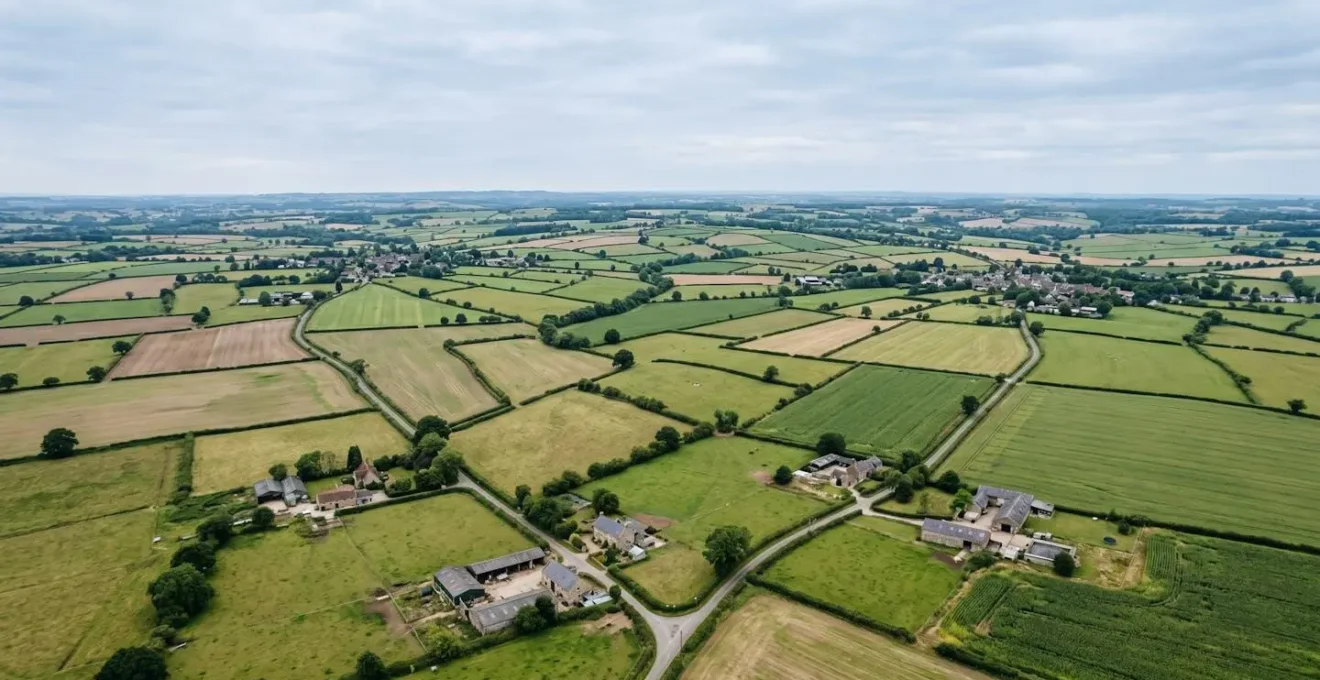
As the visual above suggests, the goal is to create an interconnected web, not a single point of failure. By moving from a market-centric to a hub-centric model, a CSA can scale its impact, improve its efficiency, and better serve its community, building a system that is both convenient and robust.
The Volunteer Mistake: Relying on Free Labor Without Proper Structure
Volunteers are the lifeblood of many community projects, but relying on their goodwill without a formal structure is a critical mistake that can lead to burnout, unreliability, and even legal trouble. In the UK, the line between a ‘volunteer’ and an ’employee’ is defined by specific legal tests, and inadvertently crossing it can have serious consequences. A resilient CSA engineers its labour system with the same care it applies to its finances, creating a clear, fair, and legally compliant framework for all contributors.
The core principle, as guided by organizations like the National Council for Voluntary Organisations (NCVO), is to avoid creating anything that could be interpreted as an employment contract. This means being meticulous with your language: you offer a ‘role’ not a ‘job’; you have ‘expectations’ not ‘obligations’. You must only reimburse actual out-of-pocket expenses, never provide flat-rate payments or ‘benefits in kind’ that could be seen as wages. As the NCVO clarifies, the legal distinction is paramount:
Volunteers are not included in the definition of employment in the Equality Act 2010: ‘Employment’ means employment under a contract of employment, a contract of apprenticeship or a contract personally to do work.
– National Council for Voluntary Organisations (NCVO), Volunteers and employment rights guidance
Beyond the legalities, a structured approach builds a more reliable and engaged team. This includes creating a formal volunteer agreement outlining the role and expectations, providing proper safety training, and ensuring you have the correct insurance (Public and Employer’s Liability). A well-run « work-share » membership, where members contribute a set number of hours in exchange for a discounted share, is an excellent way to formalize this contribution. It transforms labour from a vague hope into a predictable, integrated part of the farm’s operational plan, ensuring the work gets done and everyone feels valued and protected.
Feeding the Village: How to Plan Planting for Year-Round Calorie Staples?
A CSA that only provides salad leaves in the summer and is empty during the winter is not building food sovereignty; it’s a seasonal hobby. True resilience means planning for year-round food security, with a strategic focus on calorie staples. This requires a shift in mindset from simply growing what’s easy to engineering a crop plan that can feed the community through all 52 weeks of the year, especially during the notorious « hungry gap » in late spring.
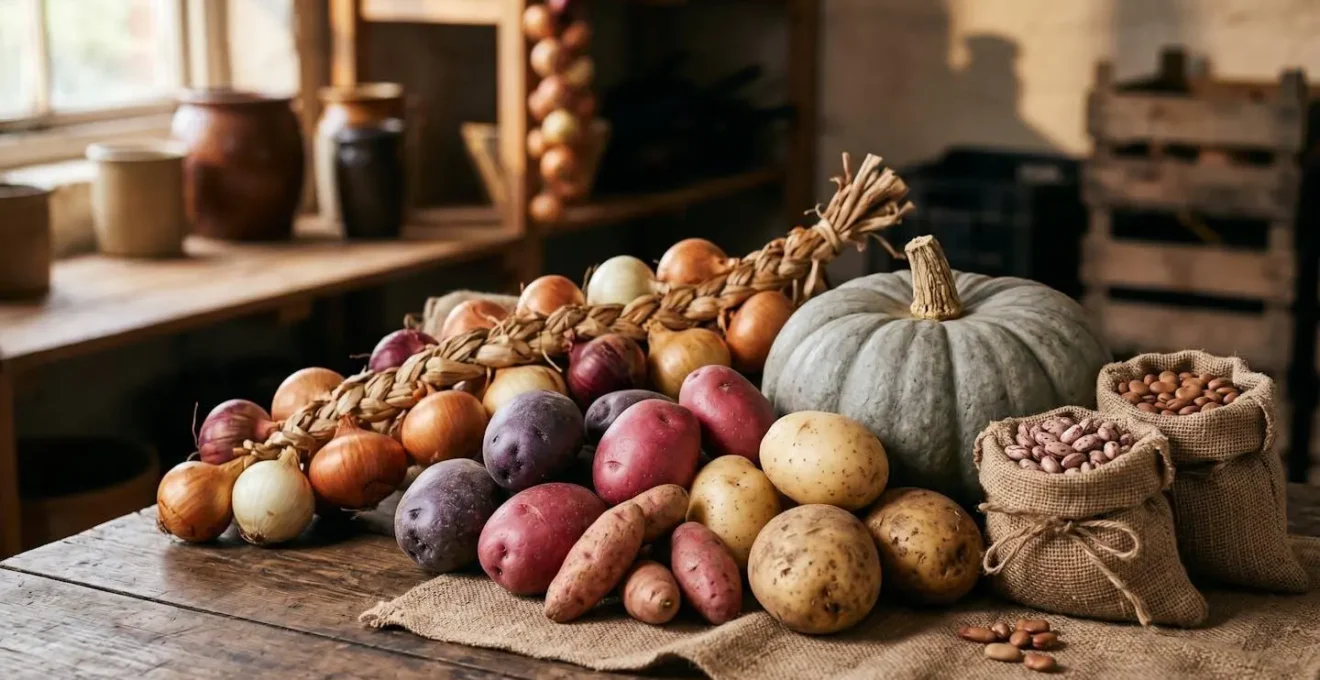
This is where agricultural system design becomes paramount. The foundation of a year-round plan is storable crops. As research from the CSA Network UK highlights, successful climate-resilient farms in the UK prioritize crops that can be harvested in autumn and stored for months. This includes a diverse range of potatoes, winter squash, onions, garlic, carrots, and dried beans. These are the calorie-dense workhorses of the food system that provide sustenance when fresh greens are scarce. A resilient crop plan allocates a significant portion of its growing space to these staples, calculating yields needed to last the entire membership through winter and spring.
Furthermore, a resilient production plan integrates food preservation into its very fabric. It’s not enough to just harvest; you must plan to transform. The CSA becomes a centre for teaching and practicing skills like pickling, canning, drying, and fermenting. Workshops on making sauerkraut from a glut of cabbage or canning tomatoes in late summer turn potential waste into valuable winter assets. Organizations like the CSA Network UK provide specific crop planning tools to help UK farms manage this process, pairing planting schedules with preservation strategies to ensure the ‘hungry gap’ is a challenge to be managed, not a crisis to be endured.
Open Farm Sunday: How to Host an Event That Builds Loyal Customers?
A CSA cannot exist without a community. Building that community requires more than just a social media page; it requires creating tangible, memorable experiences that connect people to the land and the mission. In the UK, one of the most powerful tools for this is participating in the national LEAF Open Farm Sunday. This annual event is a prime opportunity to move beyond passive interest and convert visitors into committed, long-term members. However, a successful event is not an accident; it is a carefully designed conversion funnel.
The first step is strategic. By officially registering with the national program, you tap into a recognized brand, accessing marketing materials and guidance that amplify your reach far beyond what a single farm could achieve. The event itself must be designed to communicate the « Why » of the CSA, not just the « What. » Instead of a simple farm tour, create interactive stations. A ‘build a veg box’ game teaches seasonality. A ‘meet your soil’ station with microscopes reveals the hidden life that corporate agriculture ignores. Blind taste tests comparing your carrots to supermarket ones provide undeniable proof of quality. These experiences build an emotional connection and a deep understanding of the value you offer.
The most crucial part is capturing commitment. The goal of the day is not just to entertain, but to sign up new members. A dedicated sign-up station offering an exclusive, time-limited ‘taster box’ discount for attendees creates a sense of urgency and immediate reward. This must be followed by a structured post-event follow-up campaign:
- Days 1-3: Send a personalized email to all attendees with photos from the day, creating a warm memory and reinforcing the connection. Include a recipe for a seasonal vegetable they saw or tasted.
- Days 7-14: Re-engage those who haven’t signed up by inviting them to a more intimate ‘behind-the-scenes’ volunteer morning or weekday visit. This deepens the relationship and provides another opportunity to join.
By engineering the event as a multi-stage experience—from pre-event marketing to post-event follow-up—you transform a one-day open house into a powerful engine for building a loyal, long-term membership base.
Why High-Maintenance Crops Must Be Visible from Your Kitchen Window?
Efficiency on a small, intensive farm is not about bigger tractors; it’s about smarter design. One of the most powerful, yet simple, principles for saving labour comes from permaculture zoning theory: place the elements you need to visit most frequently closest to your centre of activity. In practical terms, this means your highest-maintenance crops—the ones that need daily watering, pest-checking, and harvesting like salad greens, tender herbs, and seedlings in a greenhouse—should be visible from your kitchen window or be on the direct path from your house to the main barn.
This isn’t just about saving steps; it’s a principle grounded in behavioural psychology. The « Kitchen Window » principle creates a system of constant, low-effort observation. If you can see the wilting lettuce while making a cup of tea, you are infinitely more likely to act on that information immediately. It removes the friction of « I must remember to walk all the way to the far polytunnel to check the seedlings. » Out of sight is truly out of mind on a busy farm, and this forgetfulness leads to small problems (a dry seed tray) escalating into big problems (a total crop failure).
The ‘Kitchen Window’ principle leverages constant visual cues to combat procrastination on critical farming tasks, a concept grounded in behavioral psychology where environmental design shapes action.
– Permaculture Zoning Theory, Applied permaculture design principles for small-scale agriculture
By consciously designing your farm layout based on the frequency of interaction, you embed efficiency into the physical landscape. The daily, critical tasks become almost effortless to monitor, while the less frequent tasks, like mending a fence in a far pasture, are located further away. This simple design choice eliminates wasted time and mental energy, preventing crises before they begin and forming the foundation of a more streamlined, less stressful, and ultimately more productive farming system.
Key Takeaways
- Food sovereignty is an act of system engineering; a viable CSA requires robust financial, logistical, and legal frameworks, not just good intentions.
- Resilience is built on planning for year-round calorie staples and integrating food preservation, actively designing against the « hungry gap. »
- Farm efficiency is achieved through intelligent design, like permaculture zoning, which can save more labour than any piece of equipment.
Applying Permaculture Zoning Principles to Save 10 Hours of Farm Labor Weekly?
The « Kitchen Window » principle is the beginning of a much larger strategy for radical labour efficiency: permaculture zoning. This is a design system that organizes a farm into zones based on the frequency of human use, with the goal of minimizing travel time and energy expenditure. Applying this systemically can reclaim hundreds of hours of labour per year—time that can be reinvested into improving the farm or simply providing the farmer with a more sustainable work-life balance. This is not about working harder; it’s about designing a workflow that eliminates wasted effort.
The process begins with a rigorous audit of your current labour patterns. You cannot optimize what you do not measure. A one-week labour tracking exercise, where all workers log their tasks, locations, and trips, will reveal stunning inefficiencies. You might discover that 20 minutes a day is spent simply walking back and forth to a distant polytunnel, or that countless trips are made to the main shed to retrieve a forgotten tool. This data allows you to create a « heat map » of your farm’s workflow, identifying the time-sinks that are draining your energy.
With this data, you can redesign the farm layout according to the five permaculture zones. Zone 1 is the area right outside the farmhouse for daily-visit crops. Zone 2 contains elements visited every couple of days, like chicken coops or main greenhouses. Zone 3 is for the main field crops visited weekly for weeding or harvesting. Zones 4 and 5 are for extensive grazing or wild harvesting, visited infrequently. By reassigning crops and infrastructure to their correct zones, and by strategically placing duplicate toolsets in each active zone, you can drastically cut down on wasted movement. The results can be transformative, often saving a small farm over 10 hours of labour per week.
Your Action Plan: Farm Labour & Zoning Audit
- Week 1 – Labour Tracking: All farm workers log every task for 7 days, noting location, duration, and number of trips between zones (e.g., ‘walked to Zone 3 polytunnel 4 times today = 20 minutes travel’).
- Week 2 – Workflow Mapping: Create a farm map marking all key infrastructure (tool sheds, packing stations, water sources) and overlay it with a task frequency heat map to identify time-sink patterns.
- Week 3 – Zone Redesign: Reassign crops and infrastructure using the 5 Permaculture Zones, moving high-frequency elements like salad harvesting and propagation into Zone 1.
- Week 4 – Tool Placement Strategy: Position duplicate, essential tool sets (trowels, secateurs, harvest baskets) in each active zone to eliminate ‘forgotten tool’ trips back to the main shed.
- Week 5 – Measure Impact: Re-track labour for 7 days post-redesign. Calculate the time savings and refine the layout based on your findings, acknowledging how seasonal patterns in the UK will alter workflows.
You now have the blueprint. You understand the systemic fragility you’re fighting against and the key systems—financial, logistical, legal, and agricultural—you need to engineer for success. The journey to food sovereignty is not easy, but it is achievable through deliberate, intelligent design. The next step is to move from reading to doing. Start by auditing your current resources and community, and begin designing the resilient local food system your community deserves.