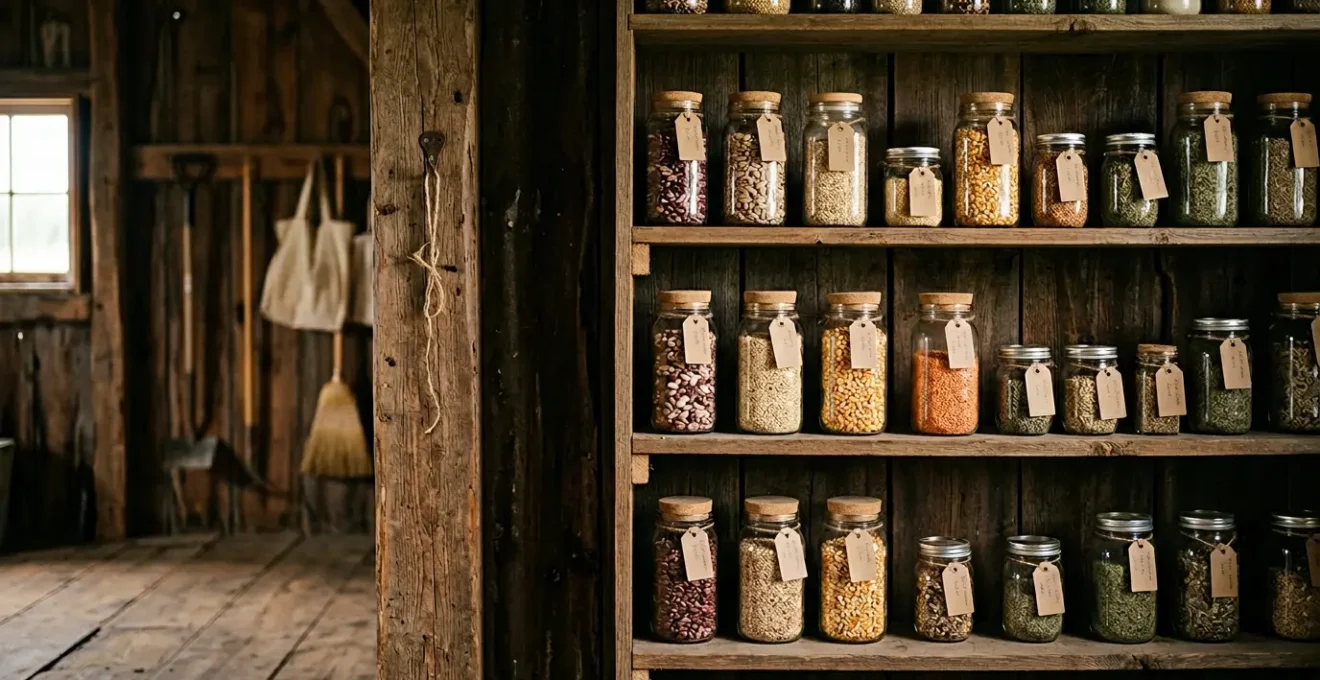
Relying on fragile, corporate-controlled seed supply chains is a significant risk for any farm. The solution is not just saving seeds, but building a legally sound and genetically resilient on-farm seed bank. This requires a professional approach, combining a clear understanding of intellectual property laws with robust scientific principles for seed preservation and genetic maintenance. This guide provides the strategic framework to transform seed saving from a simple practice into a cornerstone of true farm independence and long-term security.
The empty shelf in the supermarket is a powerful image, a stark reminder of systemic fragility. For farmers and growers, the equivalent fear is an email announcing a seed variety is « out of stock, » a delivery is delayed, or a price has inexplicably doubled. This vulnerability is the direct result of a highly consolidated and complex global seed supply chain. In this context, the idea of saving your own seeds feels like a radical act of independence, a way to reclaim control over the very foundation of your operation.
However, the common advice to « just save seeds from your best plants » dangerously oversimplifies the reality. Navigating this path without a clear strategy can lead to two critical failures: legal trouble and genetic breakdown. The world of seeds is governed by a complex web of intellectual property rights, including patents and protections that can make saving certain seeds illegal. Ignoring these rules isn’t rebellion; it’s a business risk. Simultaneously, without understanding the basic principles of plant genetics, a well-intentioned seed-saving program can inadvertently lead to weak, unproductive crops through inbreeding depression.
But what if the true path to seed sovereignty wasn’t about simply rejecting the system, but about mastering the rules to build a better, more resilient one for your own farm? The key is to approach on-farm seed banking not as a hobby, but as a professional risk management strategy. It requires a dual focus: establishing a rigorous legal compliance framework to know what you can and cannot save, and implementing scientific best practices to ensure the long-term viability and genetic integrity of what you do save. This guide is built to provide that strategic foundation, moving you from dependence to true resilience.
This article provides a comprehensive roadmap for establishing a robust on-farm seed bank. You will find detailed information organized to help you navigate the legal landscape, master storage techniques, and understand the critical genetic principles for long-term success.
Summary: A Farmer’s Guide to Legally Saving Open-Pollinated Seeds
- Why You Can Save Seed for Yourself But Can’t Always Sell It?
- How to Dry and Store Seeds to Maintain Viability for 5 Years?
- F1 Hybrid vs Open-Pollinated: Which Is Better for Farm Independence?
- The Population Size Mistake That Leads to Inbreeding Depression
- Germination Tests: How to Check Your Bank Before Spring Sowing?
- Why Landraces Have Better Disease Resistance Than Monocultures?
- Why Just-in-Time Supermarket Chains Are Vulnerable to Disruption?
- Why Heirloom Diversity Preservation Protects Your Farm Against New Disease Strains?
Why You Can Save Seed for Yourself But Can’t Always Sell It?
The right to save seed is not absolute; it is governed by intellectual property (IP) law designed to protect the investment of plant breeders. Failing to understand these rules can lead to significant legal and financial penalties. The core issue is whether a seed variety is protected by a Utility Patent or the Plant Variety Protection Act (PVPA). Utility patents are the most restrictive, completely prohibiting growers from saving, replanting, or selling the seed for any purpose. These protections are ironclad and last for 20 years. They are the legal mechanism that underpins the business model of many large seed corporations.
The PVPA offers a slightly different, though still restrictive, model. For varieties covered by PVPA, farmers are generally permitted to save seed for the sole purpose of replanting it on their own farm holdings. However, selling, trading, or transferring this saved seed to another farmer for planting purposes—a practice known as « brown-bagging »—is illegal. This unauthorized trade undermines the system designed to fund new crop development, and according to USDA statistics, the U.S. wheat seed industry loses an estimated $677 million per year to this practice. Some PVP certificates include a Title V restriction, which further mandates that the variety can only be sold as a class of certified seed, reinforcing the sales prohibition.
The alternative to this restrictive landscape is the growing « protected commons » of public domain, heirloom, and open-source seeds. These varieties are not subject to IP restrictions, granting farmers the complete freedom to save, replant, share, and even breed new varieties from them. Establishing a legal compliance framework is the first, most crucial step in building a sustainable on-farm seed bank.
Your 5-Point Legal Compliance Check: Seed Saving Status
- Seed Identification: Check the seed tag, bag, or original container for any statements like ‘U.S. Protected Variety – PVPA’, ‘Patent Number’, or ‘Patent Pending’. This is your first clue.
- Utility Patent Check: If the seed is protected by a Utility Patent, all saving and replanting is prohibited. There are no exceptions. This is a hard stop.
- PVP Status: If the seed is under Plant Variety Protection (PVP), you may save seed for replanting ONLY on your own farm. Any sale or transfer to others for planting is forbidden.
- Title V Restriction: If the PVP notice includes ‘Title V’, the seed must be sold as a certified class. This reinforces the prohibition on farmer-to-farmer sales for planting purposes.
- Open Domain Assessment: If no protections are listed and the variety is known to be an heirloom, in the public domain, or OSSI-Pledged, you are free to save, sell, and breed without restriction.
Case Study: The OSSI Pledge Model
The Open Source Seed Initiative (OSSI) offers a powerful alternative to proprietary seed systems. By creating a « protected commons, » OSSI uses a pledge to ensure seeds remain free from restrictive IP. Plant breeders can commit their varieties to the OSSI Pledge, which grants users four key freedoms: the freedom to save or grow the seed for any purpose, to share or sell the seed, to trial and study it, and to use it for breeding new varieties. The only rule is that any subsequent user or breeder cannot restrict others’ use of the seed or its derivatives. By 2017, this innovative copyleft model had already brought over 375 varieties from 36 breeders into the open-source domain, creating an expanding pool of genetic resources for unrestricted farm use and innovation.
How to Dry and Store Seeds to Maintain Viability for 5 Years?
Once you’ve legally secured your seed, preserving its life force—its viability—becomes the next critical task. Seeds are living organisms in a state of suspended animation. Their lifespan is finite and is dictated almost entirely by two factors: moisture content and storage temperature. The goal is to reduce their metabolic rate to the lowest possible level without killing them. High moisture and high temperatures encourage respiration and fungal growth, rapidly depleting the seed’s stored energy and rendering it useless. For professional-grade storage, many experts use « The 100 Rule » as a guiding principle.
This simple but effective guideline states that for long-term storage, the sum of the storage temperature (in °F) and the relative humidity percentage should be less than 100. For example, a seed stored at 40°F should be in an environment with less than 60% relative humidity. Achieving this starts with proper drying. The target moisture content for most seeds intended for long-term storage is between 6-10%. This is far drier than air-dry conditions in many climates, requiring specific techniques tailored to the crop type.
After drying, storage containers are your next line of defense. They must be airtight to prevent the carefully dried seeds from reabsorbing atmospheric moisture. Glass jars with rubber-sealed lids, metal cans, or foil pouches are excellent choices. Plastic bags are generally not suitable for long-term storage as they are permeable to moisture and oxygen. Store these sealed containers in a location that is consistently cool, dark, and dry. A root cellar, a dedicated refrigerator, or a cool basement are often ideal. Avoid garages or sheds where temperature fluctuations are extreme. Proper drying and storage are what separate a pile of dead seeds from a living, resilient seed bank.
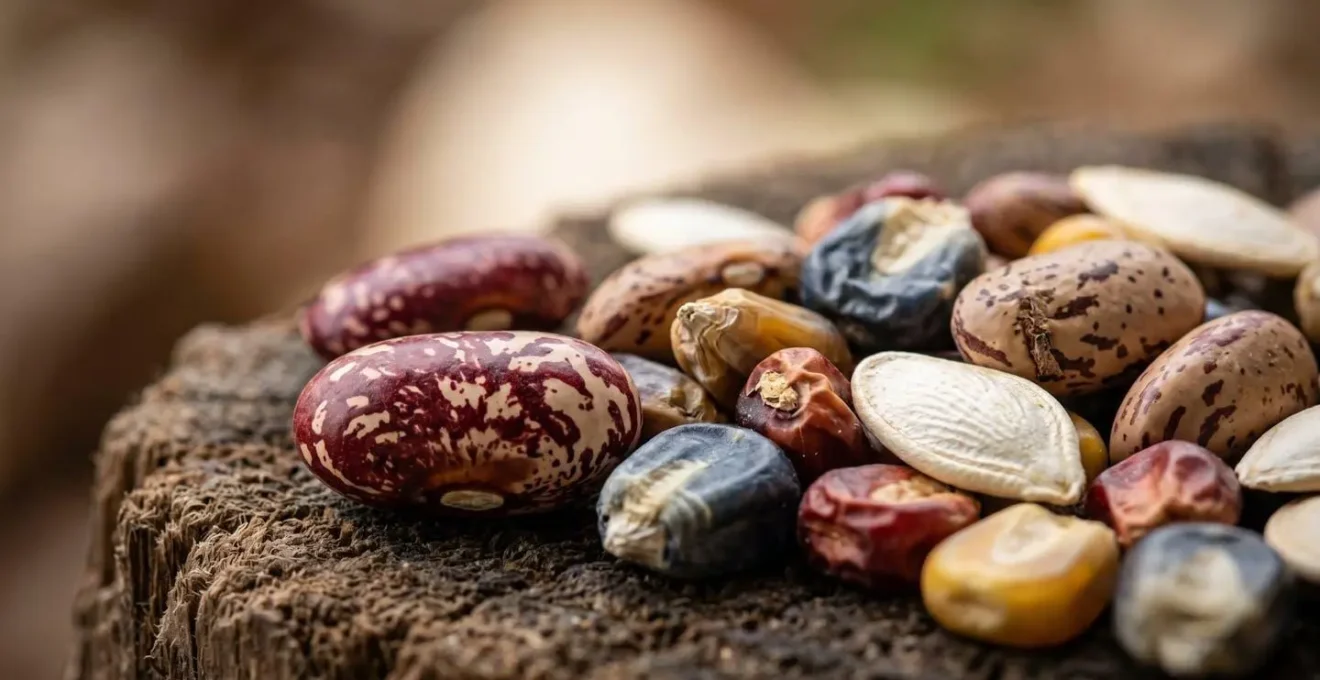
The table below outlines common processing methods to achieve the optimal dryness for different seed types. Each method is designed to reduce moisture without damaging the delicate embryo within.
| Processing Type | Seed Examples | Drying Method | Key Requirements |
|---|---|---|---|
| Wet Processing (After-Ripening Required) | Tomatoes, Cucumbers, Squash, Melons | Fermentation then drying | Extract seeds from fleshy fruit, ferment 2-4 days to remove gel coating, rinse, then dry on screens away from direct sunlight |
| Dry Processing (Dry on Plant) | Beans, Grains, Lettuce, Brassicas | Air-dry on plant or post-harvest | Allow seed to mature fully on plant, harvest when pods/heads are dry and brittle, thresh to remove chaff, spread in single layer with good air circulation |
| Semi-Dry Processing | Peppers, Eggplants | Fruit drying then seed extraction | Allow fruit to fully ripen, extract seeds, rinse if needed, dry thoroughly on screens for 1-2 weeks until seeds snap when bent |
| Target moisture content for all types: 6-10% for long-term storage. Test: bean seeds should shatter when struck with hammer; flat seeds should snap cleanly when bent. | |||
F1 Hybrid vs Open-Pollinated: Which Is Better for Farm Independence?
The choice between F1 hybrid and open-pollinated (OP) varieties is a fundamental strategic decision for any farmer aiming for independence. An F1 hybrid is the first-generation offspring of a cross between two distinct and often inbred parent lines. This process can produce a phenomenon known as « hybrid vigor » or heterosis, resulting in plants that are exceptionally uniform, vigorous, and high-yielding. This uniformity is a major advantage for commercial mechanical harvesting and shipping. However, this advantage comes with a critical string attached: the seeds saved from an F1 hybrid plant will not grow « true-to-type. »
The second generation (F2) will exhibit a wide, unpredictable range of traits due to genetic segregation, with many plants resembling one of the less desirable grandparent lines. This genetic lottery makes F1 hybrids a technological dead-end for seed saving, ensuring farmers must return to the seed company each year. This is not an accident; it is the cornerstone of the hybrid seed business model.
In stark contrast, Open-Pollinated (OP) varieties are much more genetically stable. These are varieties whose flowers are pollinated by natural means, such as wind or insects. Within a population of the same OP variety, plants are genetically similar enough to produce offspring that are reliably true-to-type, generation after generation, provided they are not cross-pollinated by another variety. This includes heirlooms, which are OP varieties passed down through families or communities, and modern OP varieties bred for specific traits. For a farmer seeking to build a self-sustaining seed bank, the choice is clear: only open-pollinated varieties provide the genetic stability required for a reliable, independent seed supply.
The Population Size Mistake That Leads to Inbreeding Depression
Successfully saving open-pollinated seeds requires more than just choosing the right variety; it requires maintaining its genetic health. The most common and damaging mistake a new seed saver can make is saving seed from too few individual plants. This seemingly minor oversight can lead to a severe long-term problem known as inbreeding depression. Every plant population carries a certain number of deleterious recessive genes. In a large, diverse population, these harmful genes are usually masked by dominant, healthy genes and rarely cause problems.
However, when you save seed from only a handful of parent plants, you drastically narrow the genetic base of the next generation. This genetic bottleneck significantly increases the chances that two recessive, harmful genes will pair up in the offspring. Over several generations of saving from a small population, this effect compounds. The result is inbreeding depression: a gradual loss of vigor, reduced yield, smaller fruits, increased susceptibility to disease, and lower germination rates. The variety effectively weakens and fades away, not from disease, but from a lack of genetic diversity.
To avoid this, you must maintain a minimum population size when saving seeds, especially for cross-pollinating species. While specific numbers vary, general guidelines exist. For self-pollinating plants like tomatoes or beans, saving from 20+ plants is often sufficient. For cross-pollinating species like corn, squash, or brassicas, which rely on exchanging pollen between plants, a much larger population of 100+ plants is recommended to capture the necessary genetic diversity. Treating your seed-saving plot as a vibrant genetic community, not just a collection of individuals, is the key to preventing its slow decline.
Germination Tests: How to Check Your Bank Before Spring Sowing?
A seed bank is only as valuable as the seeds that will actually grow. After months or years in storage, you cannot simply assume your seeds are still viable. Conducting a germination test before spring sowing is an essential quality control step. It’s a simple, low-cost procedure that provides a clear, quantitative measure of your seed bank’s health, allowing you to adjust your sowing rates accordingly or decide if it’s time to replace old stock. A low germination rate means you’ll need to sow more densely to achieve your desired plant stand, while a failed test prevents you from wasting valuable time and field space on seeds that will never sprout.
The « paper towel method » is a reliable and easy way to test most seed types. It provides a controlled environment to accurately assess viability. The goal is to determine the germination rate as a percentage, which directly informs your planting strategy. For example, if a test reveals a 90% germination rate, you have a high-quality seed lot. If it’s only 50%, you know you need to double your seeding rate to get the same number of plants. If it’s below 50%, the seed may not have enough vigor to produce strong seedlings, even if it does sprout, and should likely be replaced.
To perform the test, follow these steps:
- Sample and Count: Count out a specific number of seeds—20, 50, or 100 are good numbers for easy calculation.
- Prepare the Medium: Moisten a paper towel so it is damp but not dripping wet. Place the counted seeds in a single layer on one half of the towel.
- Create the Chamber: Fold the other half of the towel over the seeds. Gently roll or fold the towel and slide it into a plastic zip-top bag. Leave the bag partially unsealed to allow for some air exchange.
- Incubate: Place the bag in a consistently warm spot, out of direct sunlight. The top of a refrigerator is often a good location.
- Monitor and Count: Check the seeds after a few days. Refer to the original seed packet or online resources for the typical germination time for your specific crop. Once germination begins, count and record the number of sprouted seeds every day or two until no new seeds have sprouted for several days. Sum the total number of germinated seeds.
- Calculate the Rate: Divide the number of germinated seeds by the total number of seeds tested, then multiply by 100 to get your germination percentage.
Regularly testing your seed stock is a core practice of professional seed banking. It transforms your stored seeds from a box of hope into a reliable, quantifiable farm asset.
Why Landraces Have Better Disease Resistance Than Monocultures?
The structure of modern agriculture, built on vast fields of genetically identical plants known as monocultures, is a marvel of efficiency. It is also a system of profound fragility. When every plant in a field has the exact same genetic makeup, they all share the exact same vulnerabilities. If a new strain of disease or a pest emerges that can overcome that specific genetic defense, the entire crop can be wiped out. This is the inherent risk of putting all your genetic eggs in one basket. The Irish Potato Famine of the 1840s remains the most tragic and famous example of this principle in action.
Landraces represent the opposite philosophy. A landrace is a domesticated plant variety that has been developed and adapted over a long period to its specific, local agricultural environment by the farmers who grow it. Unlike a uniform modern variety, a landrace is not a single genetic entity but rather a diverse population of related genotypes. This intra-variety diversity is its greatest strength. Within that population, some individual plants may be susceptible to a particular disease, but others, by random chance, will carry genes that confer resistance.
This built-in genetic diversity acts as a natural buffer. When a disease sweeps through, it may kill the susceptible plants, but the resistant ones survive to produce the next generation of seed. The landrace as a whole persists. It is a living, evolving system that co-adapts with local pressures. This is the essence of genetic resilience. While a monoculture is optimized for high performance under ideal conditions, a landrace is optimized for survival and reliable production across a range of unpredictable conditions. It is a biological insurance policy, written into the DNA of the crop itself.
Why Just-in-Time Supermarket Chains Are Vulnerable to Disruption?
The modern food system, from the supermarket shelf all the way back to the seed company, is largely built on a logistical model called « Just-in-Time » (JIT). This system is designed for maximum efficiency and minimum cost by eliminating the need for large, expensive inventories. Goods arrive at the warehouse or store just as they are needed, creating a smooth, continuous flow. When it works, it’s an economic marvel. However, JIT systems are optimized for efficiency, not for resilience. Their very design makes them exquisitely vulnerable to disruption.
Because there are no significant buffers or stockpiles in the system, any shock can break the chain and lead to empty shelves within days. A transportation strike, a spike in fuel prices, a natural disaster that closes a processing plant, or a pandemic that disrupts labor can have immediate and dramatic effects. We have all witnessed this firsthand. This vulnerability isn’t limited to finished products; it applies directly to agricultural inputs, including seeds. The majority of farmers are reliant on a handful of large corporations for their seeds, which are often delivered just before the critical planting season begins.
This places farmers in the same precarious position as the supermarket manager waiting on a truck. A disruption at the seed producer, in the shipping network, or in the financial markets can delay or prevent the delivery of the single most important input for their season. An on-farm seed bank is the ultimate antidote to this systemic fragility. It is a deliberate move away from the JIT model toward a « Just-in-Case » strategy. By holding a multi-year supply of locally adapted seed, a farmer insulates their operation from the vulnerabilities of a global supply chain they cannot control. It is the foundational step in building a truly resilient and sovereign farm enterprise.
Key takeaways
- Legal Compliance is First: Before saving any seed, you must verify its IP status. Following a clear legal framework prevents costly mistakes and ensures your seed bank is built on a solid foundation.
- Viability is a Science: The longevity of your seeds depends directly on controlling moisture and temperature. Proper drying to 6-10% moisture content and cold, airtight storage are non-negotiable.
- Diversity is Your Insurance: Genetic resilience comes from diversity. Maintaining adequate population sizes prevents inbreeding depression, and preserving a range of heirloom varieties banks solutions for future, unknown challenges.
Why Heirloom Diversity Preservation Protects Your Farm Against New Disease Strains?
Preserving heirloom seeds is often framed as an act of historical curation, a way of keeping stories and flavors from the past alive. While this is true and valuable, it overlooks the most critical function of this work from a practical farming perspective. An on-farm bank of diverse heirloom seeds is not a museum; it is a living library of genetic solutions to future problems. Every heirloom variety contains a unique combination of genes—a potential answer to a question that has not yet been asked.
A modern, high-yielding hybrid variety is an optimized solution for a very specific set of known challenges and growing conditions. It performs exceptionally well within that narrow window. However, when a new disease strain appears or the climate shifts, its uniform genetics can become a uniform liability. In contrast, a diverse collection of heirlooms represents a vast portfolio of traits. A trait that seems minor today—a slightly different root structure, a thicker leaf cuticle, the presence of a specific chemical compound—could be the very key to resisting a new fungal blight or surviving a prolonged drought five years from now.
By maintaining this genetic diversity on your farm, you are actively banking resilience. You are holding a collection of adaptations that have allowed these plants to survive for generations in varied environments, often with minimal inputs. This is the ultimate form of farm security. When the next new disease strain inevitably arrives, the solution may not come from a corporate catalog, but from the forgotten corner of your own seed bank, within an heirloom variety you preserved. This is the profound, practical power of preserving biodiversity.
Begin today by auditing your current seed sources. Assess which are open-pollinated and which are F1 hybrids. This first step is the start of taking back control and building a farm that is not just productive, but truly resilient and independent.