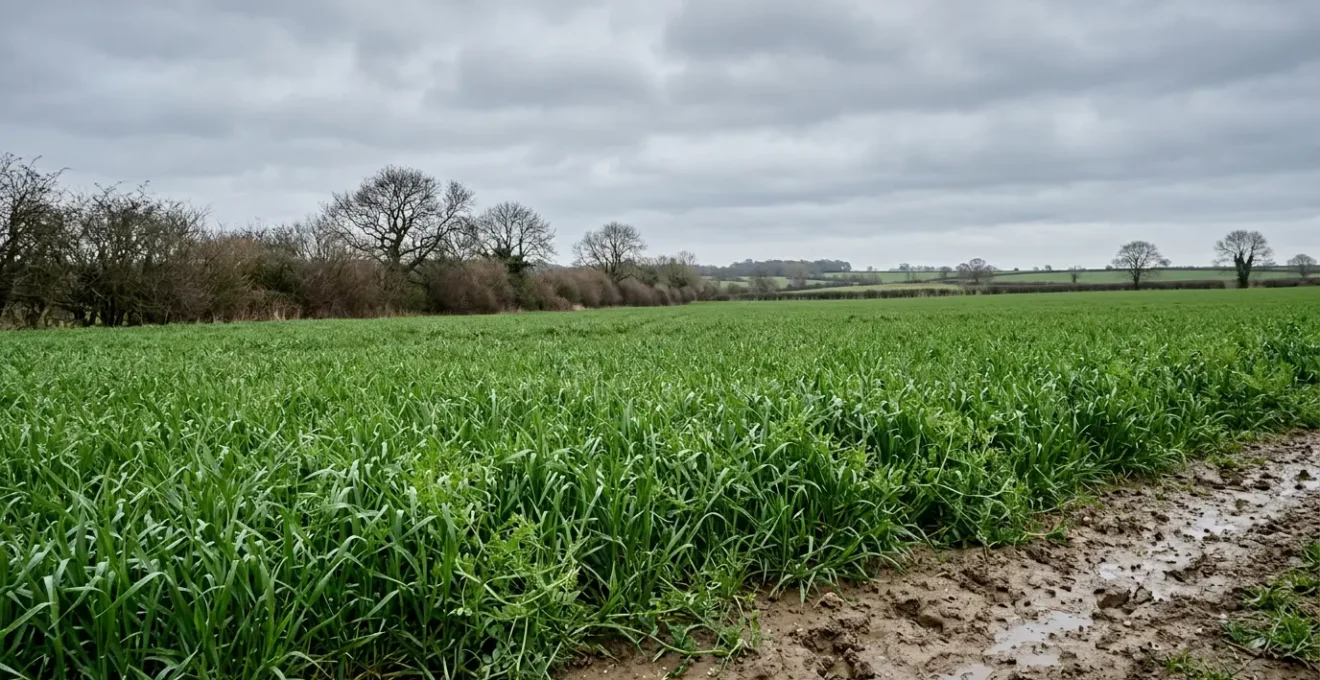
For farmers on heavy clay, the familiar sight of a winter cover crop rotting into a slimy mess is a costly frustration. The solution isn’t a single magic plant, but understanding a critical trade-off: the toughest, most resilient green manures like rye and vetch survive the wet but create a dense, fibrous mat that’s challenging to terminate in spring. Success depends on mastering the timing of sowing and incorporation, choosing the right mix for your specific goals, and accepting there is no one-size-fits-all answer.
For any farmer or grower working with heavy clay soils in the UK, the winter months present a relentless challenge. The goal is simple: protect and improve the soil. The reality is often a waterlogged, compacted field and the disheartening sight of a failed cover crop. Standard advice often suggests a wide range of green manures, but many of these—like mustard or phacelia—simply can’t withstand the combination of persistent wet, low oxygen, and occasional hard frosts that define a UK winter on heavy land. They collapse, rot, and contribute little more than a slimy layer on the soil surface.
This leads to a cycle of frustration. You invest in seed, time, and fuel, only to find the soil in spring is no better, and in some cases, worse. But what if the conventional approach is flawed? What if the key isn’t just about choosing a « good » green manure, but about fundamentally understanding the dynamics of heavy soil? The real secret lies in mastering the trade-offs between winter survival, biomass production, and, most critically, the practicalities of termination and incorporation in spring. This is not about finding a single perfect plant, but about making strategic, realistic choices.
This article moves beyond generic lists to provide a specialist’s view on what truly works. We will dissect why certain mixes thrive where others fail, explore the non-negotiable importance of sowing dates, and detail practical, glyphosate-free termination strategies that won’t ruin your soil structure. We’ll also examine the science of nutrient release and how to avoid common mistakes that can turn your beneficial cover crop into a liability for the following cash crop. It’s time to manage heavy clay with strategy, not just hope.
Contents: Surviving Winter on Heavy Clay
- Why Rye and Vetch Are the Heavy Land Workhorses?
- How to Destroy Green Manure Without Glyphosate on Clay Soils?
- Drilling Date: Why Two Weeks in September Makes a 50% Biomass Difference?
- The Green Bridge Mistake That Carries Aphids into Spring Crops
- C:N Ratio: When to Incorporate Green Manure for Maximum Nitrogen Release?
- Why Slaking Happens and How It Seals Your Soil Surface?
- Vetch vs Crimson Clover: Which Fixes More N Over Winter?
- How to Fix Atmospheric Nitrogen to Replace Bag Fertilizer on Arable Farms?
Why Rye and Vetch Are the Heavy Land Workhorses?
When it comes to sheer survivability on cold, wet clay, one combination consistently outperforms the rest: grazing rye (Secale cereale) and winter vetch (Vicia sativa), also known as tares. This isn’t an accident; their success is built on a synergistic relationship that makes them uniquely suited to challenging conditions. The rye provides a strong, fibrous root system that helps maintain some structure in the soil, while its upright growth acts as a physical support, or scaffold, for the less hardy vetch seedlings.
As the experts at Budget Seeds UK note, this partnership is dynamic and adapts to the environment. This is a key advantage on variable heavy soils where residual nutrients can differ patch to patch. Their analysis explains:
Rye helps protect the less hardy vetch seedlings through winter. This mixture adjusts to residual soil nitrogen levels. If there’s plenty of N, rye tends to do better; if there is insufficient N, the legume component grows better.
– Budget Seeds UK, Rye and Vetch Green Manure Mix product information
However, this toughness comes with a significant trade-off in the spring. The very characteristics that ensure winter survival—a high-biomass, fibrous root mat from the rye—make it difficult to incorporate. A multi-location UK trial by Garden Organic highlighted this exact point, noting the mix established very dependably but proved tough to manage, especially for no-dig systems. The results showed that while mixes with less rye were easier to handle, they were also far less frost-hardy in colder UK regions. This is the central dilemma for heavy land farmers: do you prioritize guaranteed winter cover or easier spring cultivation?
How to Destroy Green Manure Without Glyphosate on Clay Soils?
Terminating a dense mat of rye and vetch on heavy clay without resorting to glyphosate is one of the biggest practical hurdles. The primary challenge isn’t the method itself, but the soil’s condition. Clay soil, when wet, is incredibly prone to compaction and smearing, destroying the very structure you’re trying to build. Attempting to incorporate a green manure with heavy machinery when conditions are wrong can set your soil health back for years. The ideal termination window is often narrow: the soil surface must be dry enough to bear weight, but the soil body not yet baked hard by the spring sun.
Understanding the physical nature of your soil is paramount. The classic « ribbon test » demonstrates why clay is so problematic. When moist clay is squeezed between the thumb and forefinger, it forms a long, smooth, pliable ribbon, showing its high plasticity and tiny particle size. This is what makes it so easily compacted and impermeable when wet.

Given these constraints, the choice of termination method must be timed perfectly. While no single technique is foolproof, several non-chemical options exist. The key is to select the one most appropriate for your scale and the specific conditions on the day. Waiting for that dry, breezy day in March or April is often more critical than the tool you use.
Action Plan: Non-Chemical Termination Methods for Clay Soils
- Flailing and Crimping: For larger areas, a flail mower shreds the top growth. A roller-crimper can then be used to break the stems, speeding up decomposition. This is often the most practical farm-scale option, leaving a mulch on the surface.
- Light Cultivation: Use a disc or tine cultivator on a dry day to shallowly incorporate the chopped residue. Avoid the plough, which can create a smeared pan and bury the organic matter too deeply in an anaerobic layer.
- Covering/Occultation: On a smaller, garden scale, the green manure can be cut down and covered with a light-excluding silage tarp. This ‘solarization’ or ‘occultation’ effectively kills the plants and encourages worm activity to begin incorporation.
- Flame Weeding: While more effective on young weeds, a powerful flame gun can be used to desiccate the green manure, causing it to die back. This is energy-intensive and requires careful use, but avoids soil disturbance.
- Grazing: If feasible, controlled grazing by sheep can terminate the cover crop effectively, converting the biomass into readily available nutrients via manure. This requires appropriate fencing and management to avoid over-grazing and compaction.
Drilling Date: Why Two Weeks in September Makes a 50% Biomass Difference?
On heavy land, the window for establishing a successful winter cover crop is unforgivingly short. While it might seem like a minor detail, the difference between sowing in early September versus late September can be the difference between success and total failure. As soil temperatures drop and daylight hours decrease, the rate of plant growth slows exponentially. An early start is non-negotiable for building enough root structure and top growth to survive the winter wet.
The impact on biomass is not marginal; it’s massive. A robust canopy is essential for intercepting heavy winter rain, preventing soil slaking, and suppressing weeds. Without sufficient growth before winter sets in, the young plants are easily overwhelmed by waterlogging. Quantifying this is stark: a UK trial comparing three planting dates demonstrated that cover crops sown in mid-August produced approximately 14,000 kg/ha of biomass, a figure that drops precipitously with each passing week into September. By the time you reach late September or early October, the potential biomass production can be less than half, which is often insufficient to provide meaningful soil protection.
This reality is now formally recognized in UK agricultural policy. The guidance for environmental schemes reflects the critical nature of this establishment window, particularly for farmers on difficult soils. As Defra’s guidance on the Sustainable Farming Incentive (SFI) pilot states:
For the intermediate and advanced level of the standard, establish green cover by the end of September. On heavy soils it’s not possible to establish a cover crop or green manure after a late-harvested cash crop.
– Defra, Sustainable Farming Incentive pilot guidance on cover crops
The practical implication is clear. For farmers harvesting main crops like maize or potatoes late in the season, a winter-hardy green manure is often not a viable option on heavy clay. The ground is cleared too late to achieve the necessary growth. Planning must therefore start with the crop rotation, ensuring a window opens up by early September at the latest. To ignore this rule is to gamble against the season, a bet that is rarely won on heavy land.
The Green Bridge Mistake That Carries Aphids into Spring Crops
While green manures offer a host of benefits, they are not without risks. One of the most significant, yet often overlooked, is the concept of the « green bridge. » This occurs when the cover crop acts as a host for pests or diseases, allowing them to overwinter and then move directly onto the subsequent spring-sown cash crop. Cereal rye, for example, can host grain aphids, which can then migrate to a following spring barley crop, carrying viruses like Barley Yellow Dwarf Virus (BYDV).
To break this bridge, a clean gap is required between the destruction of the green manure and the drilling of the next crop. This « fallow » period, even if just for two to four weeks, ensures that any pests remaining on the dying cover crop residue cannot immediately find a new host. On heavy clay, achieving this gap can be difficult due to the narrow termination and drilling windows, but it’s crucial for integrated pest management.
The negative interactions aren’t limited to pests. Some green manures exhibit allelopathy—the release of biochemicals that inhibit the growth of other plants. Winter tares (vetch) is a prime example. While it is an excellent nitrogen fixer, its residues can suppress the germination of small-seeded crops. This is a critical management detail highlighted by seed suppliers:
Winter Tares releases a chemical that inhibits the growth of small seeds (particularly carrots, parsnips & spinach) so a month should be left after digging it in before sowing the next crop.
– Sow Seeds Ltd, Winter Tares (Vetch) Green Manure product guidance
This reinforces the need for a well-planned gap. Mistiming the incorporation or drilling too soon after termination can lead to a poor or failed cash crop, not because of pests, but because of the chemical legacy of the green manure itself. Managing a green manure is therefore a balancing act: maximizing its benefits while actively mitigating the risks of creating a green bridge for pests, diseases, or negative chemical interactions.
C:N Ratio: When to Incorporate Green Manure for Maximum Nitrogen Release?
One of the primary goals of a leguminous green manure is to supply nitrogen (N) to the following crop. However, simply growing vetch is not enough; the timing of its incorporation is crucial for determining when—and if—that nitrogen becomes available. The entire process is governed by soil microbes and their dietary needs, which are best understood through the Carbon-to-Nitrogen (C:N) ratio of the plant material being incorporated.
Think of it like a microbial diet. Soil organisms need carbon (C) for energy and nitrogen (N) for building proteins. Young, leafy, succulent green manure has a low C:N ratio (e.g., 15:1), meaning it’s rich in nitrogen. When incorporated, microbes have more than enough N for their own needs, so the excess is quickly released into the soil (mineralized) for the next crop to use. Conversely, mature, woody, or stemmy material like rye that has gone to seed has a very high C:N ratio (e.g., 80:1). To break down all that carbon, microbes must scavenge available nitrogen from the soil, temporarily « locking it up » in their own bodies. This process, called immobilization, can starve the following cash crop of nitrogen precisely when it needs it most.
The goal, therefore, is to incorporate the green manure at the sweet spot, where there is enough biomass to add organic matter but before the plants become too woody and carbon-rich. This ensures a net release of nitrogen. Extensive research points to an ideal target for this process. It has been found that terminating cover crops at an optimum C:N ratio of around 24:1 facilitates the greatest nitrogen availability to the following crop. At this ratio, the microbial population has just enough carbon for energy and nitrogen for protein, allowing for a steady release of nutrients without causing a nitrogen deficit.
In practical terms, this means incorporating the green manure mix when the vetch is in full flower but before the rye begins to form seed heads. Waiting too long turns your nitrogen-supplying cover crop into a nitrogen-robbing liability. The visual cues of the plants’ life stage are the best guide to hitting this critical C:N ratio window.
Why Slaking Happens and How It Seals Your Soil Surface?
Anyone who has walked on wet clay soil has felt its unique, sticky plasticity. This same property is responsible for a destructive process known as slaking, which leads to surface sealing or « capping. » Slaking occurs when the aggregates, or clumps, that give soil its structure collapse when they become saturated. On heavy clay, this process is particularly severe and is a primary cause of poor aeration, waterlogging, and inhibited seedling emergence.
The mechanism is rooted in the physics of clay particles. Unlike sand or silt, clay particles are microscopic and carry an electrical charge, causing them to bind together powerfully. A guide from The Garden Patch explains this phenomenon clearly:
Clay particles are microscopically fine – many times smaller than sand or silt particles. Tiny particles pack tightly together, leaving minimal pore space for water and air to move through. Because clay particles carry surface electrical charges, they bind powerfully together when compressed – which is exactly why walking on wet clay destroys its structure so completely and so lastingly.
– The Garden Patch, How to Improve Clay Soil in the UK – Practical Garden Guide
When heavy winter rain hammers down on bare soil, the force of the raindrops shatters these fragile aggregates. The individual clay particles are suspended in the water and, as the water slowly drains or evaporates, they settle into a dense, non-permeable crust. This sealed surface prevents water from infiltrating, leading to surface runoff and erosion. It also forms an impenetrable barrier that young seedlings struggle to break through in the spring.
Case Study: Green Manures as a Shield Against Slaking
The protective power of a winter green manure against slaking was demonstrated in Garden Organic’s 2022-2023 trial. The research specifically examined how a dense canopy of green manure intercepts the energy of heavy rainfall. By absorbing the impact of raindrops before they can hit the soil surface, the plants protect the integrity of soil aggregates. The study concluded that this action is critical for UK clay soils, as it significantly reduces the chance of developing hard crusts, thus maintaining soil permeability and ensuring better conditions for spring drilling.
Ultimately, a key function of a winter cover crop is to act as a living shield. By maintaining a canopy throughout the wettest months, it provides a simple but highly effective defence against the physical force of rain, preserving the soil’s fragile structure until spring.
Vetch vs Crimson Clover: Which Fixes More N Over Winter?
For growers looking to maximize biological nitrogen fixation over winter, legumes are the obvious choice. Both winter vetch (tares) and crimson clover are popular options, but they offer different advantages and perform differently in the challenging conditions of a wet UK winter on heavy soil. There is no single « better » option; the choice depends on a trade-off between total nitrogen fixation, winter hardiness, and ease of management in the spring.
The potential prize is significant. Legumes, through their symbiotic relationship with Rhizobia bacteria, can be incredibly effective at converting atmospheric nitrogen into a plant-available form. Under good conditions, research from Cotswold Seeds indicates that leguminous crops sown by the September deadline can fix up to 200kg of nitrogen per hectare, a quantity that can dramatically reduce the need for synthetic fertilizers on the following crop.
Winter Vetch (Vicia sativa) is generally the more aggressive and winter-hardy of the two. It continues to grow at lower temperatures than crimson clover, meaning it can fix more nitrogen during the colder months. Its sprawling, vine-like growth habit creates a dense, weed-suppressing mat. However, this same vigorous growth can make it difficult to manage, as it can tangle around machinery during incorporation. It is the superior choice for maximizing N fixation in colder northern regions or when sown slightly later in the window.
Crimson Clover (Trifolium incarnatum), on the other hand, is less vigorous in the cold. It establishes a good root system but tends to produce less top growth (biomass) over the winter compared to vetch. Its primary growth phase occurs as temperatures rise in the spring. While it may fix slightly less nitrogen overall during the winter period, its upright growth habit and more brittle stems make it significantly easier to manage and incorporate in the spring. It is an excellent choice for southern UK regions or on farms where ease of termination is a top priority.
Key Takeaways
- Rye & Vetch is the Reliable Choice: This combination offers the best winter survival on wet clay, but be prepared for a tough, fibrous mat that is challenging to incorporate in spring.
- Early September Sowing is Non-Negotiable: The difference of two weeks in drilling date can cut potential biomass by 50% or more, compromising the effectiveness of the cover crop.
- Termination is About Timing, Not Tools: The success of glyphosate-free termination on clay depends on waiting for a narrow window of dry surface conditions to avoid catastrophic soil compaction.
How to Fix Atmospheric Nitrogen to Replace Bag Fertilizer on Arable Farms?
The ability of leguminous green manures to fix atmospheric nitrogen is more than a soil health benefit; it’s a powerful economic tool for arable farms seeking to reduce their reliance on costly synthetic fertilizers. By integrating high-biomass legumes into the rotation, it’s possible to supply a significant portion, or even all, of the nitrogen required by the following cash crop. The process is a testament to the power of soil biology, where Rhizobia bacteria in root nodules convert inert nitrogen gas from the air into a form plants can use.
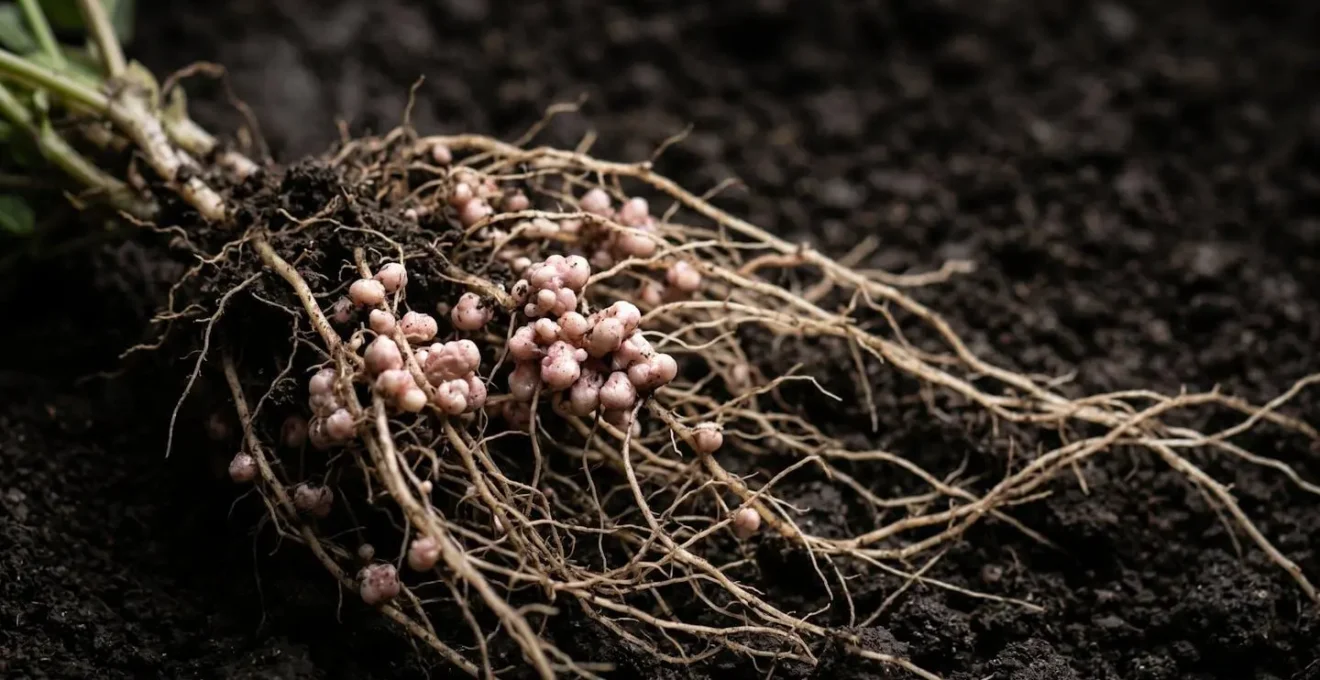
The quantities involved are substantial. According to analysis by ATTRA Sustainable Agriculture, the potential is enough to make a real impact on farm inputs.
High-biomass legume green manures, grown prior to a vegetable crop, return as much as 100 to 200 pounds per acre of nitrogen to the soil, potentially offsetting the need for nitrogen application requirements altogether.
– ATTRA Sustainable Agriculture, Overview of Cover Crops and Green Manures
In the UK, this practice is actively encouraged through financial incentives, making it an even more attractive proposition. For example, farmers can access financial support, with the SAM2 multi-species winter cover crop action attracting a payment of £129 per hectare under the Sustainable Farming Incentive (SFI) scheme. This payment helps to de-risk the practice and provides a direct income stream for an environmentally beneficial action. Furthermore, growing a cover crop is incredibly effective at preventing nutrient loss, with research by Garden Organic showing that it can reduce the loss of nitrogen from the soil by up to 97% compared to leaving soil bare over winter.
Case Study: SFI Drives Widespread Adoption in the UK
The success of these incentives is evident in their uptake. According to official Defra statistics, as of April 2024, there were 124,000 hectares of multi-species winter cover crops under SFI agreements across England. This significant adoption demonstrates that farmers are successfully integrating these practices, using them to generate income while building soil fertility and reducing their reliance on bag fertilizer. It marks a successful fusion of financial incentives with sustainable nitrogen management.
By leveraging the power of legumes and capitalizing on available financial schemes, fixing atmospheric nitrogen becomes a cornerstone of a more resilient, profitable, and sustainable arable system.
By integrating these principles—choosing the right battle-tested mixes, respecting the critical sowing window, and mastering the art of termination—you can transform your green manure strategy from a gamble into a reliable pillar of your farm’s soil health and economic resilience. Explore the options within the Sustainable Farming Incentive to see how these practices can be financially supported on your holding.