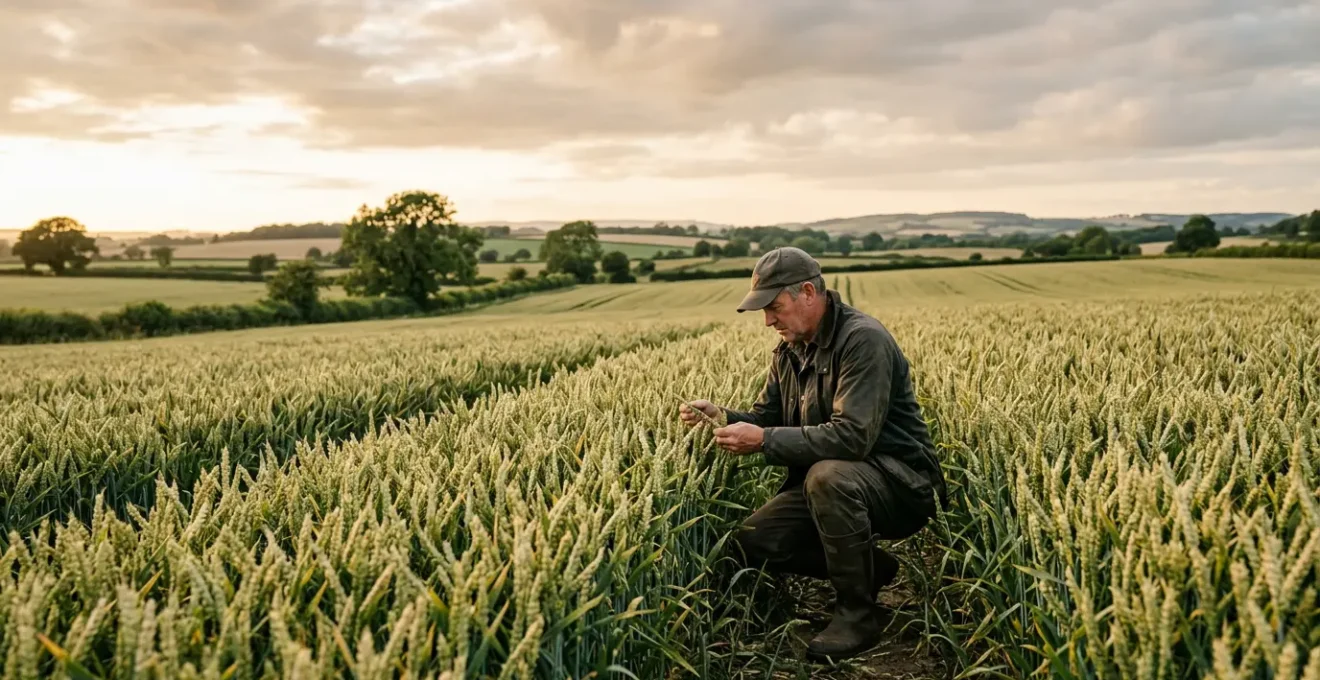
Implementing Integrated Pest Management (IPM) for Red Tractor is not a compliance cost, but a systematic process for reducing variable costs and de-risking production.
- Adopting formal pest thresholds eliminates unnecessary « insurance » sprays and provides a clear audit trail for your decisions.
- Strategic crop rotation and support for beneficial insects disrupt pest lifecycles, reducing reliance on chemical interventions.
- Leveraging the Sustainable Farming Incentive (SFI) can turn your documented IPM plan into a direct income stream, offsetting costs and boosting profitability.
Recommendation: Begin by creating a formal, documented IPM plan. This not only ensures Red Tractor compliance but also unlocks access to SFI payments, turning a regulatory requirement into a financial asset.
For many commercial farmers in the UK, the Red Tractor assurance audit can feel like a recurring administrative burden. The requirement to have an Integrated Pest Management (IPM) plan is often seen as another box to tick, a document to be filed away until the next inspection. The prevailing wisdom suggests simply reducing sprays or considering biological alternatives, but this advice often lacks a strategic framework, leaving farmers questioning the real-world impact on their yields and bottom line. This approach misses the fundamental point of IPM.
The true power of IPM is not in simply substituting one product for another; it lies in a complete mindset shift. It’s about moving from a reactive, chemistry-dependent model to a proactive, data-driven system of risk management. When implemented correctly, IPM is not an expense; it is a powerful business tool that provides a clear framework for decision-making. This system helps to justify every input, satisfy any auditor, and, most importantly, improve the financial and ecological resilience of your farm.
But what if the key to unlocking this potential wasn’t about finding new, expensive « green » products, but about systematically leveraging what you already have: your land, your data, and your professional judgment? This guide is designed for the commercial farmer who needs to meet compliance standards without sacrificing productivity. We will deconstruct the IPM process into a series of systematic, documented steps that transform the Red Tractor requirement from a cost centre into a competitive advantage.
This article will guide you through the essential strategies for building a robust, audit-proof IPM system. We will explore how to use data to make spraying decisions, design rotations that break pest cycles, and leverage financial incentives to make your compliance efforts profitable. Let’s delve into the components of a truly integrated approach.
Summary: A Systematic Approach to IPM for Red Tractor Compliance
- Why Seeing a Pest Doesn’t Mean You Should Spray Immediately?
- How to Set Up Pheromone Traps for Accurate Pest Forecasting?
- Biologicals vs Chemicals: Cost-Benefit Analysis for Oilseed Rape?
- The Single-Mode-of-Action Mistake That Breeds Super-Pests
- Rotation Design: How to Break Pest Lifecycles Without Chemistry?
- Broad-Spectrum Sprays vs Targeted Biology: Which Protects Yields Better?
- How to Cut Insecticide Use by 50% Using Threshold Monitoring?
- Strategies for Input Reduction: Cutting Variable Costs by 15% Without Losing Yield?
Why Seeing a Pest Doesn’t Mean You Should Spray Immediately?
The most fundamental shift in moving to a true IPM system is abandoning the practice of « insurance spraying. » The mere presence of a pest in a field does not automatically equate to economic loss. A compliant, cost-effective pest management strategy is built on the concept of economic thresholds. This is the specific pest population level at which the potential cost of crop damage outweighs the cost of a chemical application. Spraying below this threshold means you are spending money on inputs and labour to control a pest that was never going to cause a significant financial loss.
Adopting thresholds requires a move from casual observation to systematic monitoring. It involves regular, structured crop walking and recording pest numbers in a consistent way. This data forms the backbone of your audit trail. For a Red Tractor auditor, a spray decision backed by dated monitoring records showing a pest count exceeding a recognised threshold is undeniable proof of a compliant and justified application. Conversely, a record showing a decision *not* to spray because the threshold was not met is equally powerful evidence of a functioning IPM plan. This documented restraint is a hallmark of professional pest management.
Thresholds are the number of pests per plant, or unit area, above which there is sufficient risk that the level of crop damage caused will result in economic yield loss.
– D. J. Leybourne et al., Agronomy for Sustainable Development journal
Implementing this requires collaboration with your agronomist to identify and agree upon the correct thresholds for key pests in your specific crops and region. Resources from organisations like the AHDB provide guidance on these figures. The goal is to make every spray application a calculated, data-backed decision, not a gut reaction. This systematic approach is the first step in transforming your pest management from a routine expense into a strategic, documented process.
How to Set Up Pheromone Traps for Accurate Pest Forecasting?
Threshold-based decisions depend on accurate data, and for many flying insect pests, pheromone traps are an indispensable tool for gathering it. These traps are not a control method themselves; they are a monitoring and forecasting system. They use a synthetic version of the pheromone a female insect releases to attract males. By counting the number of male pests captured over a specific period, you can build a clear picture of when a pest population is arriving, building, and reaching its peak in your fields.
This data is invaluable for two reasons. Firstly, it provides the precise timing for any necessary interventions. Spraying is most effective when targeted at a specific, vulnerable lifecycle stage, and trap data tells you exactly when that stage is occurring. Secondly, it provides the quantitative evidence needed to justify a spray application to an auditor. A logbook showing a steady rise in trap captures that crosses a pre-defined action threshold is a robust piece of evidence. This turns a subjective decision into an objective, data-led one.
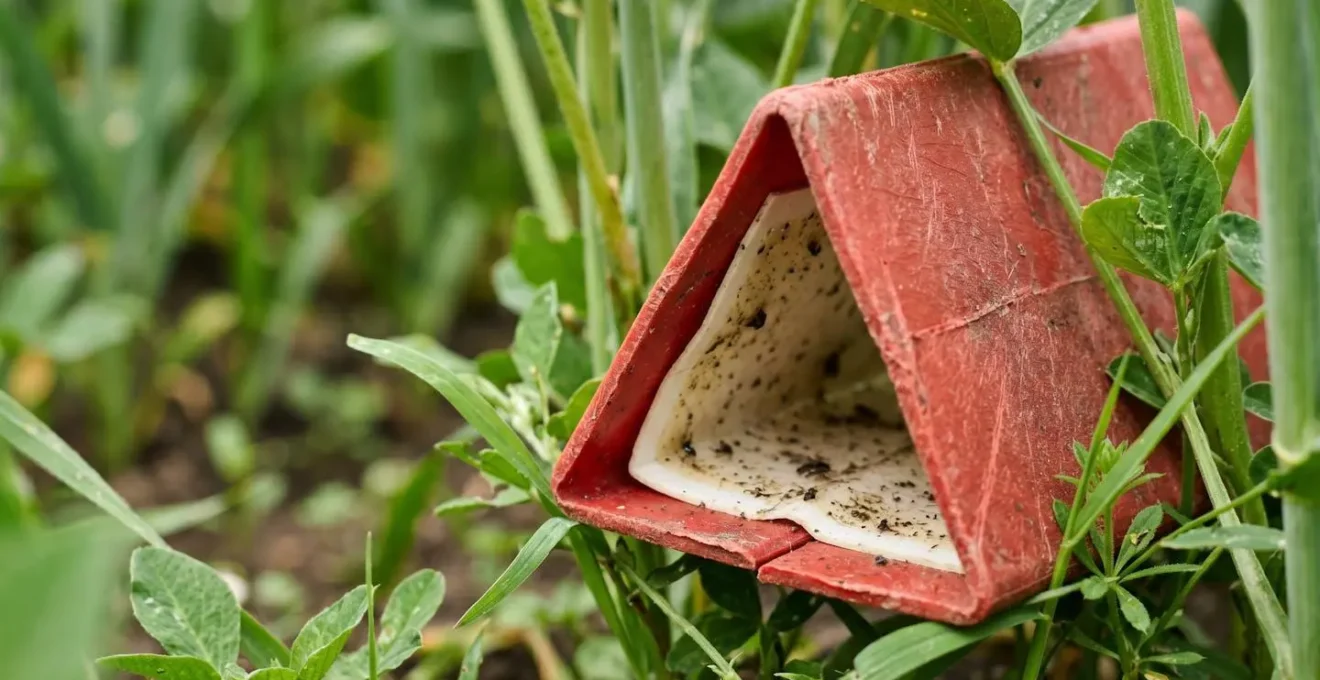
As the image shows, correct placement is critical. Traps must be set up at the right height and time to be effective. For example, traps for codling moth in orchards are placed at a different height than those used to monitor pests in arable crops. Following a systematic process for placement, checking, and recording ensures the data you collect is reliable and actionable, forming a critical component of your farm’s intelligence-gathering operation.
Your Action Plan: Best Practice for Pheromone Trap Use
- Place traps within the crop before the pest is expected to be present, typically at crop height.
- Check traps regularly (at least weekly) and record the number of caught insects in a logbook.
- Replace pheromone lures according to manufacturer guidelines for UK climate conditions; expired lures give false negative readings.
- Link your recorded trap catches directly to established action thresholds to guide when pest management steps are required.
- Use the data to create a trapping grid, identifying pest hotspots within fields for targeted spot-spraying rather than blanket applications.
Biologicals vs Chemicals: Cost-Benefit Analysis for Oilseed Rape?
Oilseed rape (OSR) production in the UK provides a stark example of the economic calculations at the heart of IPM. The challenge of controlling pests like Cabbage Stem Flea Beetle (CSFB) post-neonicotinoid ban has forced a re-evaluation of control strategies. The decision is no longer simply « which chemical to use? » but a complex cost-benefit analysis between biological treatments, alternative chemistries, and cultural controls.
This analysis must be documented for Red Tractor compliance, showing that you have considered non-chemical methods. For example, a 2017 UK-wide expert survey published in PLOS One highlighted the economic stakes, finding that without any insecticide, an average 20% yield loss in OSR was expected. The same study noted the emergence of biological seed treatments containing *Bacillus amyloquefaciens* costing around £4-£5 per hectare, which showed promise in reducing CSFB damage. This compares to an alternative chemical seed treatment at £20-£25 per hectare, whose efficacy could be variable, potentially requiring further foliar sprays. Documenting this kind of cost comparison in your IPM plan demonstrates a considered, strategic approach.
The analysis extends beyond just one pest. Slugs, for instance, are a persistent threat. Without effective control, the cost to the UK OSR industry can be enormous. Research has shown that the financial impact is significant, forcing farmers to factor in the cost of molluscicides versus the potential for catastrophic crop loss. According to AHDB research, slug damage in OSR could cost the UK industry up to £18 million per year if left unchecked. A robust IPM plan weighs the cost of slug pellets against cultural controls like seedbed preparation and the real, quantified risk of yield loss.
Ultimately, your IPM plan must be a living financial document. It should detail the costs per hectare of different options (biological, chemical, cultural) against the site-specific risk of pest pressure and the agreed economic threshold for action. This demonstrates to an auditor that your decisions are based not on habit, but on a rational assessment of risk and return on investment.
The Single-Mode-of-Action Mistake That Breeds Super-Pests
One of the greatest long-term risks to farm profitability and sustainability is the development of insecticide resistance. This occurs when a pest population is repeatedly exposed to chemicals with the same mode of action (MoA), a process which selectively kills susceptible individuals and leaves the resistant ones to breed. Over time, the entire pest population can become immune to a whole group of chemistry, rendering it useless. The over-reliance on pyrethroids to control pests like Cabbage Stem Flea Beetle in the UK is a textbook example of this selection pressure in action.
A 2023 study in *Pest Management Science* documented the alarming spread of pyrethroid resistance in European CSFB populations. It confirmed that relying on a single MoA is a primary driver of this trend. Earlier UK monitoring had already shown pyrethroid-resistant populations of Sitobion avenae aphids spreading across Scotland and England between 2015 and 2016. This is not a theoretical problem; it’s a clear and present danger to the chemical toolkit available to UK farmers.
For your Red Tractor audit, your IPM plan must explicitly demonstrate how you are managing resistance. This means going beyond simply listing the products you use. You must show an understanding of their MoA groups (e.g., as defined by the Insecticide Resistance Action Committee – IRAC). Your spray records should demonstrate a planned rotation of different MoA groups throughout the season to avoid repeated selection pressure on any one pest population. This proactive management is a crucial part of protecting the long-term viability of the chemicals that remain effective.
As experts like Alan M. Dewar noted in a comprehensive AHDB review, the pipeline for new active ingredients is slow. He stated, « Control of pests of cereals and oilseed rape in the future is likely to require a much more integrated approach in view of the lack of new active ingredients coming through the development mill. » This makes protecting the chemistry we have not just good practice, but an economic necessity.
Rotation Design: How to Break Pest Lifecycles Without Chemistry?
While thresholds and chemical rotation are about managing interventions, the most powerful IPM tool is often preventative and entirely non-chemical: strategic crop rotation. Many of the UK’s most challenging arable pests and diseases are host-specific, meaning their lifecycle is intrinsically linked to a particular crop. By extending the time between susceptible crops, you can cause pest and disease populations in the soil to crash, significantly reducing the pressure on the following crop before a single seed is even planted.
This is not simply about alternating crops; it’s about designing a rotation that actively targets the lifecycle weaknesses of your specific problem pests. For example, the Cabbage Stem Flea Beetle is dependent on brassicas. Extending the rotation to have OSR only one year in five, and avoiding other brassica break crops in between, can dramatically reduce CSFB populations. Similarly, a two-year break with a non-cereal crop is a proven method for controlling soil-borne Take-all in wheat. This level of planning, documented in your IPM strategy, is precisely what an auditor looks for as evidence of a « prevention-first » approach.
Furthermore, the UK government now financially rewards this level of planning through the Sustainable Farming Incentive (SFI). The action CIPM1 offers a payment for creating and maintaining a detailed IPM plan. This payment can be significant, with the 2024 guidance showing a farmer can receive an SFI payment of £1,129 per year for assessing IPM and producing a plan. This transforms the audit requirement into a direct income stream.
| Pest/Disease | Affected UK Crops | Lifecycle Weakness | Rotation Solution |
|---|---|---|---|
| Cabbage Stem Flea Beetle (CSFB) | Oilseed rape | Host-specific to brassicas | Extend rotation to 1 in 5 years; avoid sequential brassica crops |
| Potato Cyst Nematode (PCN) | Potatoes | Population crashes without host | Two-year break with non-host crops; use biofumigant mustard before resistant variety |
| Take-all (Gaeumannomyces graminis) | Wheat, barley | Soil-borne, builds up with continuous cereals | Break with non-cereal crop (OSR, legumes) or two-year grass ley |
| Wireworm | Cereals, potatoes, OSR | Larvae starve without suitable roots | Two-year grass ley to starve larvae; avoid following permanent pasture |
| Slugs | OSR, wheat, potatoes | Eggs/juveniles vulnerable to cultivation | Improved seedbed preparation; consider spring cropping in high-risk fields |
Broad-Spectrum Sprays vs Targeted Biology: Which Protects Yields Better?
A common fear when reducing insecticide use is the potential impact on yield. However, a key tenet of advanced IPM is that not all insects are pests. In fact, a healthy crop ecosystem is teeming with beneficial predators like ladybirds, lacewings, hoverflies, and spiders that actively hunt and consume pest species. Broad-spectrum insecticides are indiscriminate; they kill these beneficials just as effectively as the target pest, often leading to a resurgence of secondary pests later in the season, a problem known as « flaring. »
A targeted approach, in contrast, aims to preserve and enhance these natural allies. This is achieved by using more selective chemistries when necessary, but more importantly, by creating habitats that support beneficials. This is where IPM intersects with stewardship schemes, through the creation of flower-rich margins, beetle banks, and pollinator strips. These features provide food and shelter for predator populations, creating a standing army of natural pest control right on your farm’s doorstep.
The experience of David Blacker, who runs an AHDB Strategic Cereal Farm in North Yorkshire, demonstrates this principle in action. He states, « Our philosophy with pesticides is to use as little as possible, and only as much as is necessary… we haven’t used an insecticide for many years. » His farm combines wide margins and frequent crop monitoring to great effect, resulting in visible increases in beneficials while maintaining economic yields. This approach is backed by wider expert opinion; a survey of 90 UK agronomists and entomologists found that « wide spectrum foliar insecticide sprays were perceived to have significantly greater negative impacts » on everything from user health to natural enemies and pollinators.
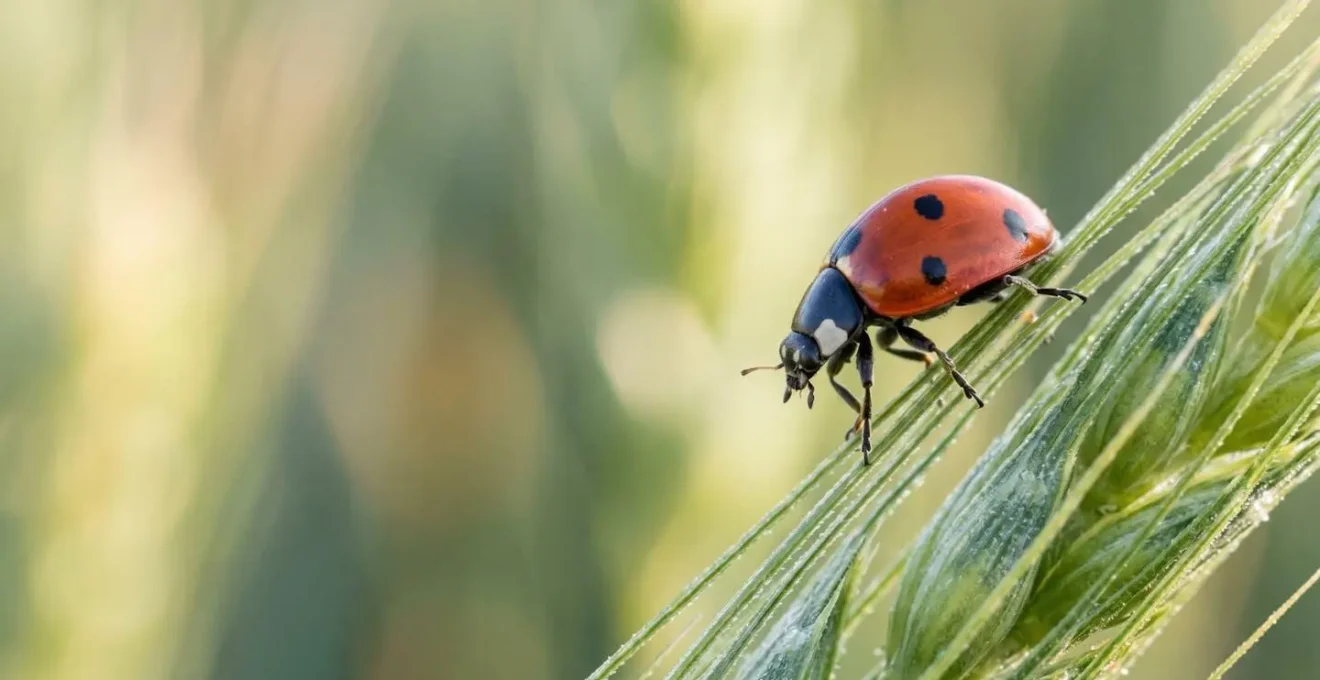
Protecting and encouraging these beneficial predators, like the seven-spot ladybird pictured, is not just an ecological goal; it’s a core component of a resilient and cost-effective pest control strategy. It reduces the need for chemical intervention and builds a more stable, self-regulating system that is less prone to boom-and-bust pest cycles.
How to Cut Insecticide Use by 50% Using Threshold Monitoring?
Reducing insecticide use is no longer just a goal for the environmentally-minded; it is a national strategic objective. The UK’s commitment to sustainable agriculture is underpinned by ambitious targets that will shape farming practices for the decade to come. A central part of this is a drive to lower the reliance on chemical plant protection products, with IPM positioned as the primary mechanism to achieve this.
This move is formalized within government policy. As part of its environmental commitments, the UK has set a clear direction of travel for pesticide use. The National Action Plan for the Sustainable Use of Pesticides is the framework that guides this, and its goals are explicit. Farmers are now working towards a 50% reduction target in the risks posed by pesticides by 2030, with a strong focus on increasing the uptake of IPM techniques. This is not a voluntary aspiration; it is the stated intent of national policy and will inevitably be reflected in future assurance standards and support payments.
So how can a farm realistically achieve such a significant reduction without risking yields? The answer lies in the systematic application of the principles we’ve discussed, with threshold monitoring at its core. By moving away from routine, calendar-based spraying and only applying insecticides when pest populations cross a documented economic threshold, many farms can immediately eliminate a significant number of applications. These are the « insurance » sprays that add cost and selection pressure but provide little to no economic return.
Achieving a 50% reduction is not about taking 50% of the product out of the can; it’s about eliminating 100% of the unnecessary applications. This requires confidence in your monitoring data, a solid understanding of your economic thresholds, and the discipline to record your decisions. For a Red Tractor auditor, a farm that can demonstrate it is on a clear trajectory towards this national target, with the data to back it up, is a model of compliance and best practice.
Key Takeaways
- Thresholds Over Reaction: Base every spray decision on documented pest counts exceeding pre-defined economic thresholds, not on habit or the mere presence of a pest.
- Data-Driven Decisions: Use systematic monitoring tools like pheromone traps to generate an audit-ready trail of evidence for every action taken, or not taken.
- Design Out the Problem: Leverage strategic crop rotation and habitat creation to disrupt pest lifecycles and support beneficial predators, reducing the need for chemical intervention from the outset.
Strategies for Input Reduction: Cutting Variable Costs by 15% Without Losing Yield?
The culmination of a successful IPM strategy is the transition from a mindset of compliance to one of competitive advantage. When implemented systematically, IPM is not a drain on resources but a powerful driver of efficiency and profitability. By reducing reliance on expensive chemical inputs and leveraging new income streams, IPM directly contributes to a healthier bottom line. The goal is to move from Stage 1 (meeting minimum standards) to Stage 3 (market leadership), where your advanced IPM practices become a marketable asset.
This journey is exemplified by leading UK farmers. Jonathan Boaz in Worcestershire combines flower-rich margins with threshold-based interventions, a strategy that also earned him recognition for soil management. David Bell, UK Chair of the Voluntary Initiative, puts it succinctly: « Prevention is always more effective than cure. » His farm in East Fife combines disease-resistant varieties, improved soil health, and frequent monitoring to minimise the need for Plant Protection Products. Both demonstrate that reducing inputs can go hand-in-hand with excellent farming.
The financial case is compelling. By eliminating unnecessary sprays, farms can significantly cut their variable costs, often by 10-15%, without a corresponding drop in yield. Furthermore, a well-documented IPM plan is the key to unlocking a portfolio of SFI payments. By « stacking » actions like CIPM1 (IPM plan), IPM2 (flower-rich margins), and NUM2 (winter cover crops), farms can create multiple income streams that directly reward good environmental practice. This transforms the cost of compliance into a net financial positive.
The table below outlines this journey, showing how a farm can progress from simply securing market access to achieving improved margins and, ultimately, a preferred supplier status based on the strength and resilience of its production system.
| Stage | Primary Focus | Key Actions | Financial Outcome | Market Position |
|---|---|---|---|---|
| Stage 1: Compliance | Meeting Red Tractor minimum standards | Document IPM plan; record monitoring; demonstrate consideration of non-chemical methods | Baseline costs maintained; avoid non-compliance penalties | Market access secured |
| Stage 2: Efficiency | Using IPM to reduce input costs | Implement threshold monitoring; reduce insurance spraying; stack SFI payments; precision application | 10-15% variable cost reduction; new SFI income streams | Improved margins per hectare |
| Stage 3: Market Leader | Advanced IPM as brand asset | Biodiversity metrics tracking; zero insecticide zones; landscape-scale collaboration; premium contract negotiation | Premium payments from retailers; enhanced resilience; reduced risk exposure | Preferred supplier status; marketing differentiation |
To begin transforming your compliance obligations into a competitive advantage, the first step is to formalise your IPM strategy and secure your SFI payment. Evaluate your current practices against these principles today to build a more resilient and profitable farming enterprise.