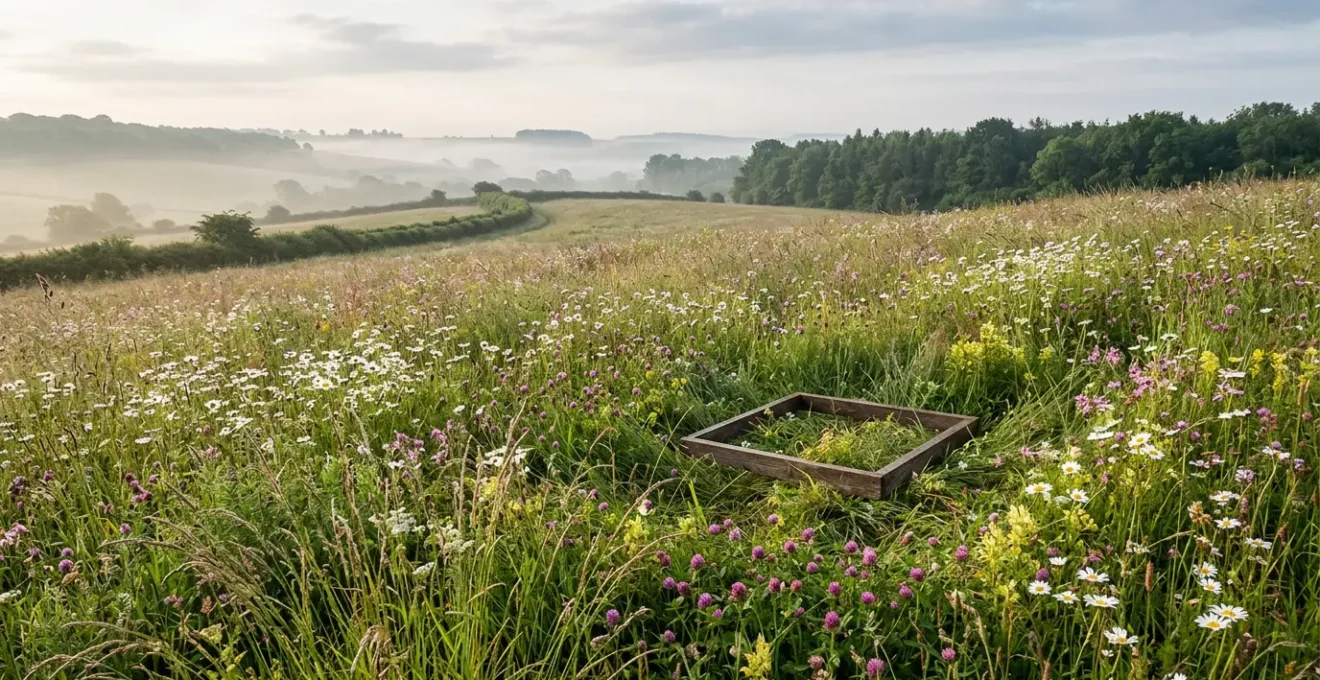
Securing higher-tier stewardship payments is less about the act of planting and more about providing indisputable, audit-proof evidence of biodiversity that withstands an inspector’s scrutiny.
- Utilise the W-transect quadrat sampling method for robust, defensible data collection.
- Master the identification of key indicator species, particularly the role and timing of Yellow Rattle (Rhinanthus minor).
- Strategically delay mowing based on the phenology of key species to maximise natural seed set and demonstrate ecological management.
Recommendation: Adopt a professional auditor’s mindset from day one to build a scientifically and legally defensible ecological case for your land, turning compliance into a financial asset.
For landowners across the UK, the shift towards environmental stewardship schemes like ELMS and the Sustainable Farming Incentive (SFI) represents a significant opportunity. Yet, it also introduces a new level of scrutiny. Many have invested in creating species-rich grasslands, only to face the frustrating possibility of failing an inspection due to insufficient or poorly presented evidence. The common advice to « plant more wildflowers » or « follow the guidelines » often misses the most critical point that Rural Payments Agency (RPA) inspectors focus on: rigorous, verifiable proof.
This is not simply about having a beautiful meadow; it is about demonstrating its ecological value through a botanical audit. The real challenge lies not in the ecology itself, but in the methodology of its measurement and documentation. While many articles discuss the benefits of herbal leys or the importance of pollinators, they rarely delve into the compliant, botanical rigour required to pass an audit. The key to unlocking higher-tier payments is to move beyond the mindset of a farmer and adopt that of an environmental auditor.
But if the very foundation of success isn’t the seed mix itself, but the data you collect about it, how do you build an unchallengeable ecological case? This guide moves beyond the basics to provide a framework for conducting a species richness check that is designed to be audit-proof. We will detail the specific techniques, identification priorities, and documentation strategies that transform your environmental efforts into a defensible asset, ensuring your hard work is properly recognised and rewarded.
Summary: A Guide to Species Richness Audits: Securing Higher-Tier Stewardship Payments
- Why Yellow Rattle is Key to Restoring Species-Rich Grasslands?
- How to Use Quadrats to Estimate Plant Diversity per Square Meter?
- Improved Leys vs Herbal Leys: Which Scores Higher for Biodiversity?
- The Identification Mistake That Can Fail Your Stewardship Inspection
- Hay Cutting Timing: How to Delay Mowing to Maximize Seed Set?
- Why Native Wildflowers Outperform Generic Mixes for UK Pollinators?
- Pasture for Life vs Soil Association: Which Label Fits Your Ethos?
- How to leverage Ethical Stewardship to Command a Premium Price for UK Produce?
Why Yellow Rattle is Key to Restoring Species-Rich Grasslands?
To an inspector, the presence and establishment of Yellow Rattle (Rhinanthus minor) is a primary indicator of genuine grassland restoration, not just diversification. This annual plant is a hemi-parasite, meaning it derives some of its nutrients by tapping into the roots of neighbouring plants, particularly vigorous grasses like perennial ryegrass. Its success is a direct measure of your success in suppressing the competitive grasses that would otherwise outcompete delicate wildflowers. Without this parasitic action, many wildflower species in a mix would fail to establish, regardless of the quality of the seed.
The botanical rigour required for stewardship audits means understanding this mechanism. The plant effectively « engineers » the habitat, creating the open sward structure that allows other, less competitive species to thrive. Showing an established, healthy population of Yellow Rattle is a powerful piece of evidence that you are actively managing the sward for diversity. It demonstrates a deeper ecological understanding than simply broadcasting a generic wildflower mix. An inspector will look for the characteristic « halo effect » of weakened grass growth around Yellow Rattle plants as proof of its activity.
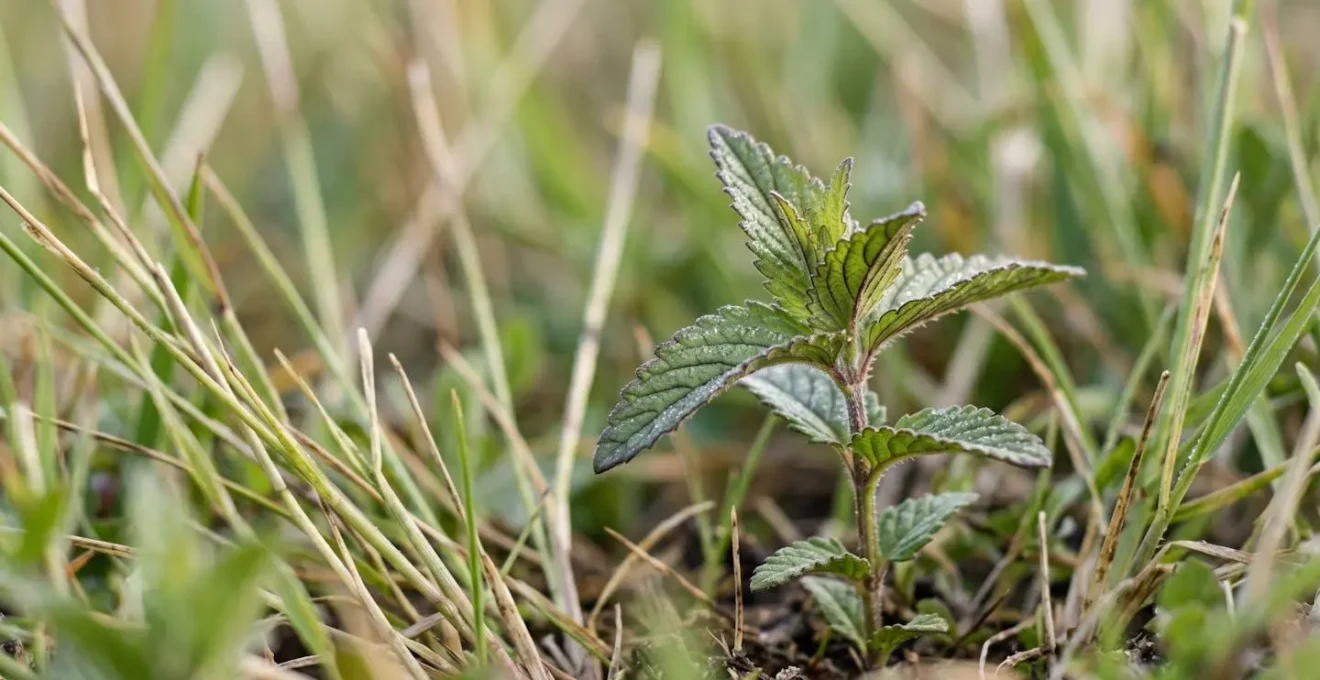
As the image shows, even at an early stage, the distinctive serrated leaves with a purplish tinge are key identification features. Documenting its presence from seedling to flowering is crucial. It is important to note that while essential for restoration, Yellow Rattle must be managed, as it can become dominant. Its annual lifecycle and management via summer cutting or grazing are key knowledge points that demonstrate competent stewardship to an auditor. It is also mildly toxic and can taint milk, a factor to consider in grazing management plans.
How to Use Quadrats to Estimate Plant Diversity per Square Meter?
Simply stating that your field is « diverse » is an opinion; providing a species frequency calculation from a systematic quadrat survey is defensible data. The quadrat is the fundamental tool for translating a qualitative observation into a quantitative, audit-proof metric. For stewardship purposes, the methodology of your survey is as important as the results. Randomly throwing a quadrat is seen by auditors as amateurish and prone to bias. The professional standard, and the method that provides the most robust evidence, is the W-pattern transect survey.
This systematic approach ensures the entire area is sampled representatively, from the field margins to its centre, removing any suggestion that you have cherry-picked the most diverse spots. For each quadrat placement, you must not only list the species present but also estimate their abundance. Using a standardised system like the DAFOR scale (Dominant, Abundant, Frequent, Occasional, Rare) elevates your survey from a simple tick-list to a professional-grade habitat assessment. This provides a nuanced picture of the sward’s structure and composition.
The ultimate goal is to calculate the percentage frequency for key indicator species across the entire site. This figure—derived from the formula: (number of quadrats containing the species / total quadrats surveyed) x 100—is the hard evidence an inspector requires. A 2024 study on plant biodiversity metrics validated this approach, finding that samples with higher biodiversity scores consistently contained more unique and declining species. The study confirmed that for plants, condition scores for plants are effective in assessing habitat quality, reinforcing the validity of this method for statutory assessments.
Your Audit-Proof Survey Plan: The W-Transect Method
- Plan the Transect: Pace out a W-shaped path across the field to ensure systematic, unbiased coverage of the entire survey area, a method seen as highly robust by inspectors.
- Place & Record: At predetermined intervals along the ‘W’, place your quadrat (e.g., 0.5m x 0.5m) and compile a complete list of all plant species present within the frame.
- Assess Coverage with DAFOR: For each species within the quadrat, professionally assess its cover using the DAFOR scale: Dominant, Abundant, Frequent, Occasional, or Rare.
- Calculate Species Frequency: After completing the transect, use the formula (% Frequency = [quadrats with species / total quadrats] × 100) for each key indicator species.
- Create Verifiable Evidence: At each point, take a GPS-enabled photograph of the quadrat. The embedded timestamp and coordinates in the image’s metadata create an unchallengeable digital record supporting your paper submission.
Improved Leys vs Herbal Leys: Which Scores Higher for Biodiversity?
From a stewardship audit perspective, there is no contest: herbal leys consistently score higher for biodiversity than improved leys. An improved ley, typically dominated by one or two highly productive grass species like perennial ryegrass and a single legume like white clover, is designed for maximum forage yield. It is a monoculture or near-monoculture, and an inspector will recognise it as such, awarding it minimal to no biodiversity points. In contrast, a well-managed herbal ley is a complex, functioning ecosystem designed for multiple benefits.
The value of a herbal ley is explicitly recognised within the Sustainable Farming Incentive. Under the 2024 scheme, farmers can claim £382 per hectare per year for the CSAM3 Herbal Leys action. To qualify, the ley must meet minimum species requirements: at least one grass, two legumes, and two herb species. This legislated incentive is a clear governmental signal of the perceived environmental value of these complex swards over standard grassland. They are valued not just for forage, but for soil structure improvement, carbon sequestration, and providing varied forage for pollinators and other insects.
The decision between these sward types is a strategic one, balancing yield against environmental payments and ecological resilience. The following table breaks down the key differences from a compliance and management viewpoint, providing a clear framework for deciding which approach aligns with your farm’s objectives and stewardship ambitions.
| Scheme Version | Grass Species Required | Legume Species Required | Herb Species Required | Nitrogen Fertilizer Limit | Key Purpose |
|---|---|---|---|---|---|
| SFI 2023 (SAM3) | 5 species minimum | 3 species minimum | 5 species minimum | Around 40kg N/ha/year max | Soil structure, carbon capture, soil biology |
| SFI 2024 (CSAM3) | 1 species minimum | 2 species minimum | 2 species minimum | Around 40kg N/ha/year max | High-volume forage with diversity |
| Standard Improved Ley | 1-2 (typically ryegrass dominant) | 1 (typically white clover) | 0 | No restriction (100-200kg N/ha typical) | Maximum forage yield and livestock performance |
| Data sourced from official SFI 2024 guidance and Agrii technical specifications. Herbal ley seed cost averages £75/acre vs £55/acre for standard grassland overseeding. | |||||
The Identification Mistake That Can Fail Your Stewardship Inspection
The single most common point of failure in a grassland audit is misidentification. An inspector’s confidence in your entire submission can be undermined by one or two critical errors in identifying key indicator species. This is not just a risk for amateurs; the challenge is significant even for seasoned professionals. A comprehensive 2016 review in the Journal of Plant Ecology found a 10-20% discrepancy among observers, a figure that can climb as high as 33% in smaller, more complex plots. This highlights the inherent subjectivity and difficulty of field botany.
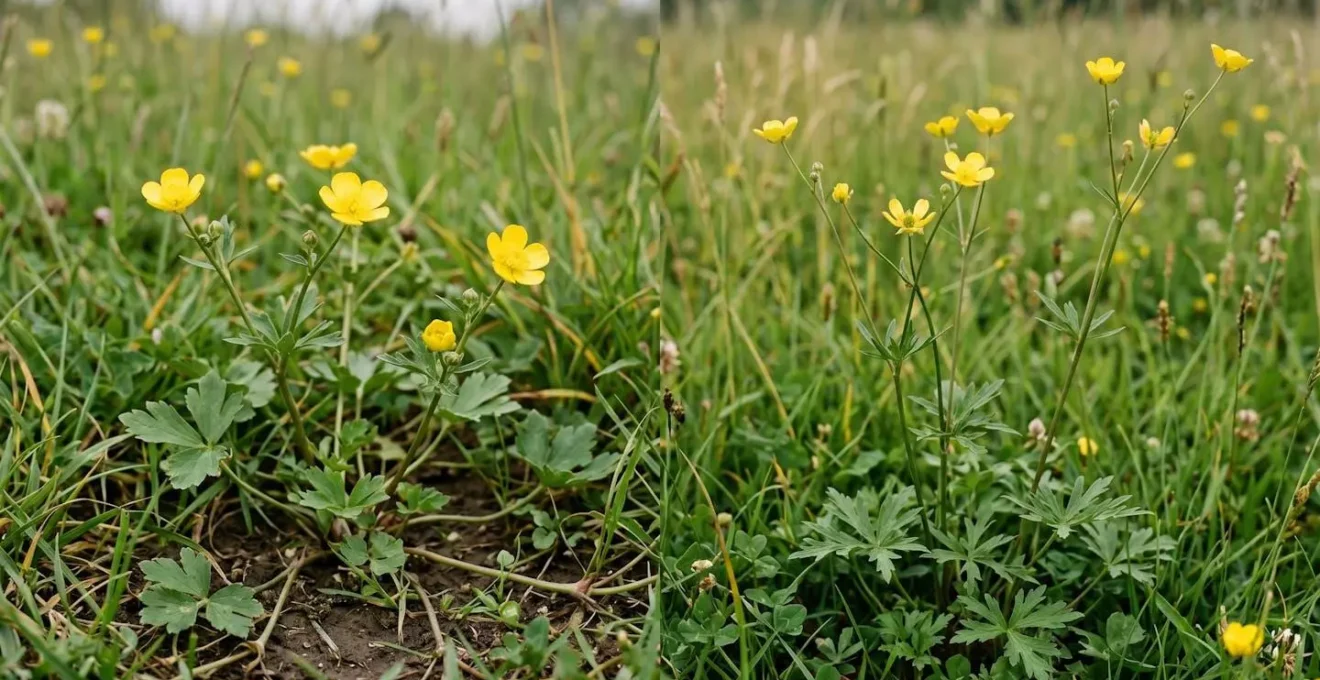
Commonly confused pairs, such as Creeping Buttercup (Ranunculus repens), an indicator of compaction or poor drainage, versus Meadow Buttercup (Ranunculus acris), an indicator of traditional hay meadows, can make or break an assessment. Reporting a high prevalence of the latter when the former is actually present is a red flag for any competent auditor. It suggests a lack of botanical rigour and calls into question the validity of the entire survey. Other problematic pairs include different species of thistle, dock, or even visually similar grasses.
A 2020 field study drove this point home, finding significant variation in species lists and cover estimates even between teams of highly experienced, master’s-level botanists surveying the same sites. The study concluded that observer bias is a persistent factor that requires systematic protocols and cross-verification to manage. For a landowner, this means meticulous preparation is essential. Investing in high-quality field guides, attending identification courses, and, crucially, creating a reference herbarium of pressed and labelled plants from your own land can be an invaluable tool for both learning and demonstrating diligence to an inspector.
Hay Cutting Timing: How to Delay Mowing to Maximize Seed Set?
Demonstrating appropriate hay cutting timing is a sophisticated element of stewardship that separates basic compliance from expert ecological management. Mowing too early removes wildflowers before they can set seed, destroying the potential for natural regeneration in the following year. Mowing too late can lead to a decline in hay quality and allow dominant, undesirable species to shed seed. The key is to time the cut based on the phenology—the life cycle timing—of your target indicator species. This proves you are managing the land as a dynamic ecosystem, not just a production unit.
The most famous indicator for this is Yellow Rattle. As the Wildlife Trusts note, its alternative name is ‘Hay Rattle’ for a very practical reason.
Yellow rattle is also known as ‘Hay Rattle’. After flowering, seeds develop into distinctive seed pods. As they ripen, the seeds loosen inside the brown pods, creating a gentle rattling sound when shaken.
– Wildlife Trusts UK / Naturescape, Plant identification and natural history documentation
This auditory cue is a classic piece of fieldcraft, indicating that the seeds are ripe and have begun to dehisce, making it the optimal time to cut and spread the hay to distribute the seed. However, a truly rigorous approach involves monitoring a suite of indicator species. An inspector will be impressed by a management plan that references the seed head maturity of plants like Common Knapweed (Centaurea nigra) and Ox-eye Daisy (Leucanthemum vulgare), as this shows a holistic understanding of the meadow’s composition and reproductive cycle. Using these direct field observations as the trigger for mowing provides powerful, justifiable evidence for your management decisions.
Field Checklist: Determining Optimal Hay Cutting Time
- Monitor Yellow Rattle: Walk through the sward; when the brown seed capsules produce an audible rattle, the primary cutting window is open.
- Check Knapweed Heads: Inspect Common Knapweed seed heads. They should be brown and feel papery, releasing seeds easily when squeezed gently.
- Assess Ox-eye Daisy Dispersal: Check the central disc of Ox-eye Daisy flowers. When it turns dark brown/black and seeds detach with a light thumb-rub, they are mature.
- Inspect Grass Seed Heads: Visually confirm that the seed heads of key meadow grasses (e.g., Crested Dog’s-tail) have turned from green to a golden-brown and are bowing under their own weight.
- Perform the ‘Crumble Test’: Take a representative seed head of a target species and crumble it in your palm. If seeds are firm and release easily, it confirms the cutting window has arrived.
Why Native Wildflowers Outperform Generic Mixes for UK Pollinators?
The principle of local provenance is fundamental to achieving high-scoring, ecologically resilient grasslands. While a generic wildflower mix from a catalogue may look appealing, it often contains species or subspecies not native to your specific locality. These plants may be less adapted to your soil type and microclimate, and, crucially, may not have the co-evolved relationships with local pollinator populations. Native pollinators are often specialists, adapted to the specific morphology, flowering times, and nectar composition of local native plants. Using generic mixes can lead to ecological mismatches that limit the biodiversity benefits.
This principle is so important that it is embedded in official government advice. In its guidance on creating species-rich grassland, Defra makes a clear and authoritative statement.
Using locally collected green hay or seed means the species in your grassland are local to your area. Do not sow a seed mix next to valuable botanical sites, such as Sites of Special Scientific Interest (SSSI).
– UK Department for Environment, Food & Rural Affairs (Defra), Sustainable Farming Incentive guidance on species-rich grassland creation
This directive underscores the risk that non-native species or cultivars could escape and hybridise with, or outcompete, local wild populations, particularly near sensitive habitats. Sourcing seed from a reputable supplier who can guarantee local or at least UK-native provenance is a critical first step an auditor will look for. The gold standard is using green hay or brush-harvested seed from a nearby species-rich donor site, ensuring a perfect genetic and ecological match. The national « Meadow Makers » program, a partnership between National Highways and Plantlife, exemplifies this approach on a grand scale. It aims to restore 100,000 hectares of grassland by 2030, prioritising native species of local provenance, recognising that while grasslands cover 40% of the UK, only 3% of original wildflower meadows remain.
Key Takeaways
- Evidence is Everything: Your primary job is not just to create diversity, but to produce robust, quantitative data (W-transects, DAFOR scores) that can withstand an auditor’s scrutiny.
- Master Indicator Species: Deep knowledge of key species like Yellow Rattle—their function, identification, and phenology—is non-negotiable proof of competent management.
- Methodology Matters: The use of systematic, unbiased survey techniques (like the W-pattern transect) is a key differentiator that signals a professional, audit-proof approach.
Pasture for Life vs Soil Association: Which Label Fits Your Ethos?
For landowners looking to add a layer of market-facing certification on top of their stewardship agreements, choosing between labels like Pasture for Life and Soil Association Organic is a strategic decision. It’s about aligning your farming philosophy with a brand that resonates with your target consumer. These certifications are not mutually exclusive with government schemes like Higher Level Stewardship (HLS) or Countryside Stewardship Higher Tier (CSHT); in fact, they can be complementary, but they serve different primary purposes and involve different audit requirements.
Pasture for Life is a highly specific certification focused on a single principle: the animals are 100% pasture-fed, with no grain, concentrates, or manufactured feeds. The audit is tightly focused on feed records and grazing management. This aligns perfectly with managing species-rich grasslands and can provide a powerful marketing story about animal welfare and natural diets. Soil Association Organic is a much broader, whole-system standard. Its audit covers everything from feed and veterinary medicine to grassland management (prohibiting synthetic inputs) and biodiversity plans. It is a well-established label with strong consumer recognition, particularly for supermarket supply chains.
Both can sit alongside HLS or CSHT, which focus more on habitat features, landscape restoration, and public goods. Indeed, the UK government’s commitment to these schemes remains strong. The decision, therefore, rests on your primary business driver: are you marketing the « grass-fed » story to a niche, high-premium market (Pasture for Life), or are you seeking broad organic recognition (Soil Association)? The table below contrasts the key aspects of these schemes to aid this strategic choice.
| Scheme Type | Primary Focus | Grassland Requirements | Inspection Frequency | Compatible With | Key Benefit |
|---|---|---|---|---|---|
| Higher Level Stewardship (HLS) | Protecting habitats, restoring landscapes, boosting biodiversity | Maintain species-rich grasslands and moorland | Periodic site visits | Capital grants, facilitation funding | Higher payment rates for long-term environmental management (2025 increase) |
| Countryside Stewardship Higher Tier (CSHT) | Protect, restore, enhance environment; climate change mitigation | SSSIs, commons, scheduled monuments protection | Pre-application advice + monitoring | Various land types: woodland, farmed, nature-managed | Comprehensive scheme covering diverse habitat types (rolling out 2025) |
| Pasture for Life Certification | 100% pasture-fed livestock | Animals fed only pasture, no grain/concentrates | Annual certification audit | Can align with stewardship grassland requirements | Premium market access for pasture-fed meat/dairy products |
| Soil Association Organic | Organic farming standards | Organic grassland management, no synthetic inputs | Annual organic inspection | Can combine with environmental schemes | Established organic market recognition and supermarket contracts |
| HLS agreement-holders manage important habitats delivering environmental benefits. CSHT invitations being rolled out 2025 with access expanding to more farmers. Source: Defra Farming Blog. | |||||
How to leverage Ethical Stewardship to Command a Premium Price for UK Produce?
The meticulous work of ethical stewardship—conducting surveys, managing for diversity, and achieving certification—is not just an exercise in compliance; it is the creation of a powerful marketing asset. In a market where consumers are increasingly disconnected from food production, the ability to tell a verifiable story of environmental care is a significant commercial advantage. The key is to translate your complex ecological data into a simple, compelling narrative that justifies a premium price for your produce.
This goes beyond vague claims of being « eco-friendly. » It means leveraging the hard data from your audits. A « Biodiversity Scorecard » for your farm, showing year-on-year increases in indicator species, a higher DAFOR score for your grasslands, or a greater number of butterfly and bee species recorded, becomes your unique selling proposition. This is particularly relevant in the context of wider legislation; the UK Environment Act 2021 now mandates a 10% net biodiversity gain for most new developments, creating a national conversation around measurable ecological improvement that you can tap into.
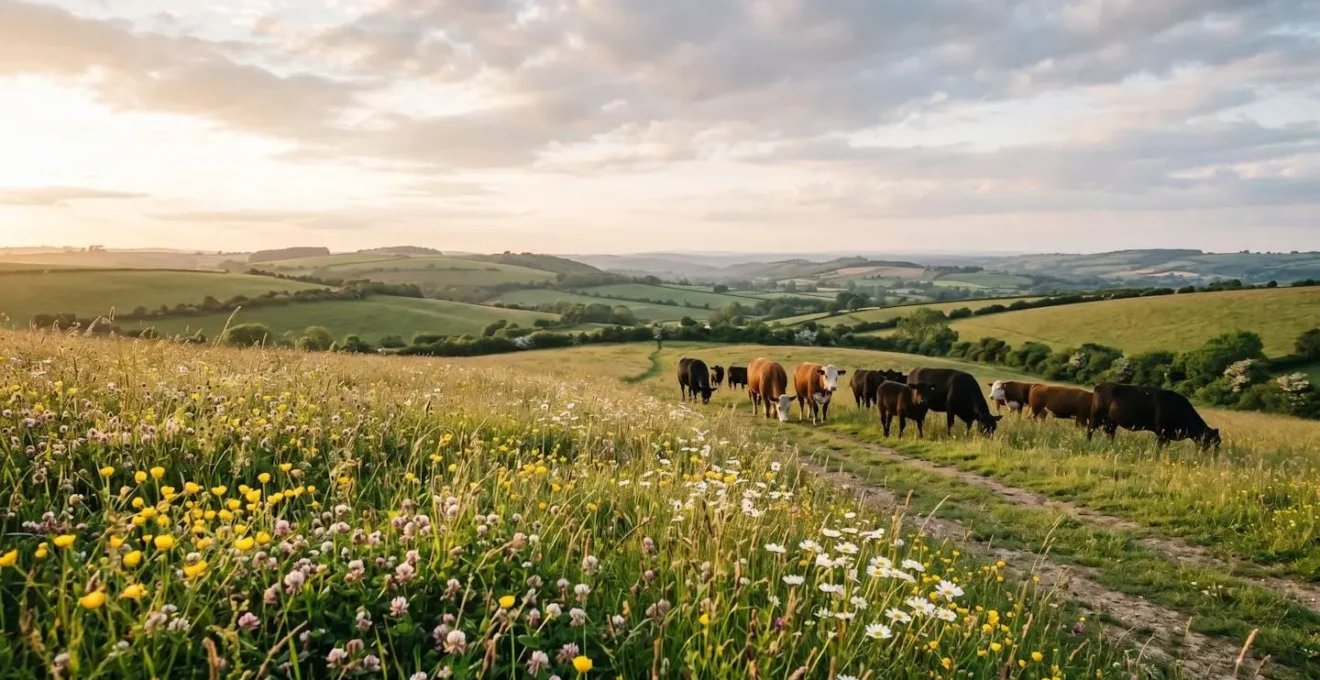
The final step is to connect this story directly to the product. By using simple tools like QR codes on packaging, you can link a customer in a supermarket aisle directly to a webpage showcasing your farm’s species lists, photos of your wildflower meadows, and the results of your latest stewardship audit. This transparency builds unparalleled trust and brand loyalty. It transforms your produce from a commodity into a tangible piece of a functioning, thriving ecosystem, which customers are increasingly willing to pay a premium to support.
- Conduct a Professional Audit: Use your stewardship quadrat surveys to establish a species richness baseline and score habitat quality using the DAFOR scale.
- Showcase Scheme Benefits: Highlight research, like Natural England’s 2024 findings, that links higher scheme uptake with greater abundance of wildlife like butterflies, bees, and birds.
- Create Simple Visuals: Convert your technical survey data into customer-friendly infographics that show biodiversity improvements on your farm.
- Link Diversity to Quality: Clearly explain how diverse, herb-rich pastures improve livestock health and enhance the nutritional profile of the meat and dairy.
- Use QR-Coded Transparency: Add a QR code to your product packaging that links to a simple webpage with your audit results, habitat photos, and species lists, connecting the consumer directly to your conservation story.
Begin today by applying this rigorous, evidence-led mindset to your land management. The process of building a defensible ecological case not only secures vital environmental payments but also creates a powerful, authentic brand story that can command a premium in the modern marketplace.