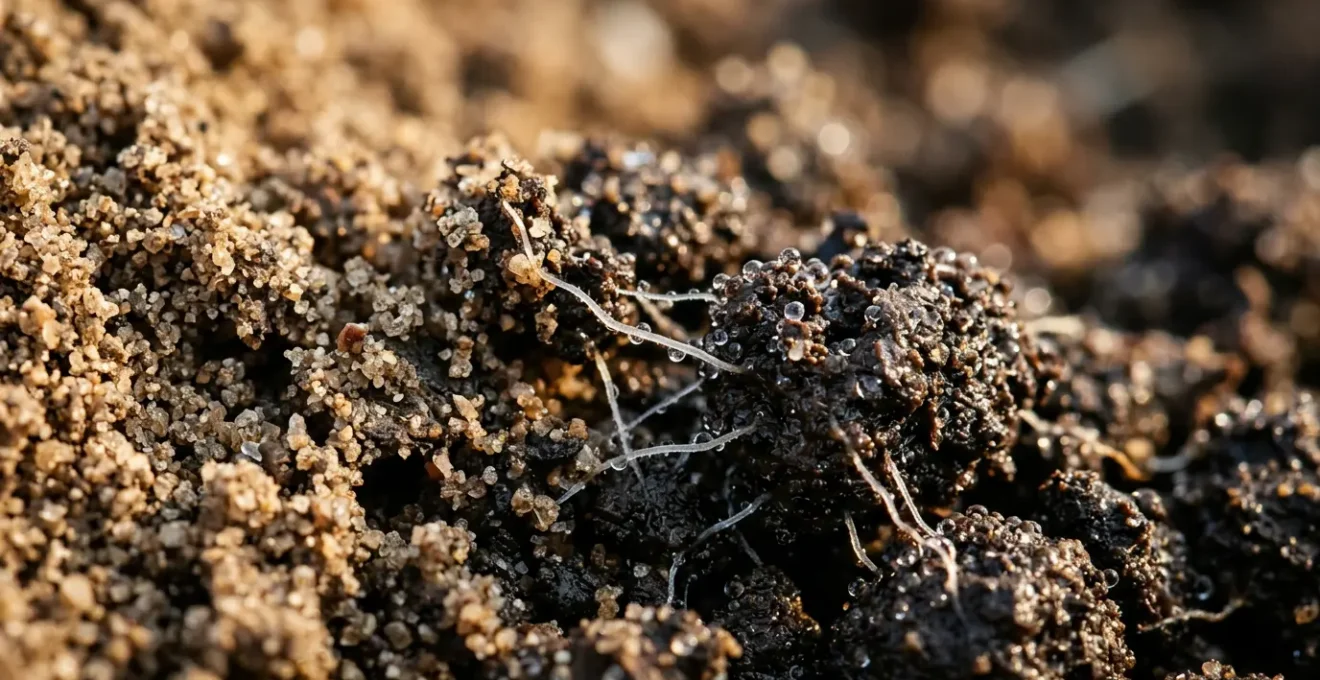
The key to drought-proofing sandy soils isn’t just adding temporary inputs, but systematically engineering a resilient, permanent soil-water system.
- Focus on building stable organic matter with the goal of a 0.5% increase over 5 years.
- Utilize structural tools like biochar and minimum tillage to create a ‘microscopic infrastructure’ that actively holds water.
Recommendation: Shift from short-term fixes to a long-term strategy of building ‘water capital’ directly within your soil profile to secure future yields against climate volatility.
For farmers working the light, sandy soils of regions like East Anglia, the sight of a promising crop wilting under a dry June sky is a familiar and costly frustration. The conventional response often involves reactive measures: running the irrigator more frequently or hoping the next application of muck will make a difference. These are temporary fixes to a deep, structural problem. While advice to « add more organic matter » is common, it often lacks a strategic framework for implementation and fails to capture the full potential of a truly resilient soil.
But what if the solution wasn’t just about adding more inputs, but about fundamentally re-engineering the soil itself? The real key to drought resilience lies in shifting perspective: viewing your soil not as a passive container, but as a dynamic, manageable ‘soil-water system’. This involves building a permanent, water-retaining infrastructure at the microscopic level—a network of pores, aggregates, and biological channels that capture and hold every valuable drop of rainfall.
This guide moves beyond the platitudes to provide a strategic and resilience-focused framework for farmers. We will break down the science, the tools, and the practices required to transform free-draining sandy soil into a robust, productive asset capable of withstanding summer heatwaves. From the quantifiable power of a single percentage point of organic matter to the long-term structural impact of biochar and the crucial choice of grass species, you will learn how to build lasting ‘water capital’ in your fields.
This article provides a structured approach to building soil resilience. The following sections detail the specific strategies and the science behind them, offering a complete roadmap to drought-proofing your farm from the ground up.
Contents: A Strategic Guide to Soil Water Resilience
- Why 1% More Organic Matter Holds 20,000 Gallons of Water?
- How to Use Biochar to Act as a Soil Sponge in Sandy Loams?
- Min-Till vs Ploughing: Which Preserves Soil Moisture in April?
- The Bare Soil Mistake That Loses 5mm of Water per Day
- Drought Tolerant Varieties: Choosing Wheat That Yields on Light Land
- How to Raise Soil Organic Matter by 0.5% in 5 Years on Arable Land?
- Cocksfoot vs Ryegrass: Which Transpires Less in Hot Weather?
- Reducing Evapotranspiration Rates to Keep Pastures Green During Heatwaves?
Why 1% More Organic Matter Holds 20,000 Gallons of Water?
The figure is so significant it bears repeating: a mere 1% increase in soil organic matter (SOM) can enable an acre of sandy soil to hold an additional 20,000 gallons of plant-available water. This isn’t magic; it’s a fundamental change in soil physics. On their own, sand particles are relatively large, smooth, and inert, leaving large pores (macropores) through which water drains rapidly due to gravity. There is little internal surface area to hold onto moisture.
Organic matter transforms this structure. As plant residues, manures, and compost break down, they form complex, stable molecules called humus. These molecules act like microscopic sponges, with vast surface areas and a net negative charge that attracts and holds onto positive water molecules. Furthermore, the biological activity stimulated by SOM creates sticky substances that bind sand particles together into aggregates. This process builds a network of smaller pores (micropores) that are crucial for retaining water against the pull of gravity, creating what can be considered your farm’s ‘water capital’.
This effect is quantifiable and consistently observed. A foundational study highlighted that for each 1-percent increase in SOM, the available water holding capacity in the soil increased by 3.7 percent. For a farmer on light land, this means that investing in SOM is a direct investment in a larger, more reliable water reservoir for your crops, buffering them against dry spells and making rainfall far more effective.
How to Use Biochar to Act as a Soil Sponge in Sandy Loams?
While organic matter is a cornerstone of soil health, biochar offers a unique and powerful tool for engineering long-term water resilience. Biochar is a highly porous form of charcoal produced by heating organic material in a low-oxygen environment. Its incredible stability means it persists in the soil for hundreds, if not thousands, of years, acting as a permanent structural amendment.
Think of it as creating a microscopic infrastructure within the soil. Each piece of biochar is riddled with pores, creating an enormous internal surface area that functions as a ‘microbial hotel’ and a water sponge. This structure dramatically increases the soil’s ability to capture and hold water, especially in the coarse texture of sandy loams where water would otherwise be lost. This is not just a theoretical benefit; research demonstrates that biochar can lead to 20-150% higher water retention in sandy soils.

As the image illustrates, the complex, porous nature of biochar provides a physical framework for water and nutrients. Its honeycomb-like structure doesn’t just hold water passively; it also provides a protected habitat for beneficial fungi and bacteria, which further contribute to soil aggregation and health.
Case Study: 8-Year Biochar Trial in Sandy Loam
An eight-year field trial on a sandy loam soil demonstrated the long-term impact of successive biochar applications. The high-dose treatment (9.0 t/ha per year) resulted in a 17.8% increase in plant-available water content and significantly improved soil water retention in the crucial upper 10 cm layer. This shows that a strategic, long-term biochar plan can build a progressively more resilient and water-efficient soil profile.
Min-Till vs Ploughing: Which Preserves Soil Moisture in April?
The choice of cultivation method in the spring has a profound impact on soil moisture, and for sandy soils, this decision is critical. While the mouldboard plough has been a staple of arable farming for generations, its action in spring can be detrimental to water conservation. Ploughing inverts and breaks up the soil, exposing a vast new surface area to the air. This process, while creating a fine seedbed, leads to rapid drying and the loss of valuable moisture accumulated over the winter. In a dry April, this can mean the difference between successful crop establishment and failure.
In contrast, minimum tillage (min-till) or no-till systems are designed to preserve this vital moisture. By disturbing the soil as little as possible, these systems maintain the soil’s structural integrity and the network of pores created by earthworms and old root channels. The residue from previous crops left on the surface acts as a protective mulch, reducing evaporation and keeping the soil surface cooler. This makes min-till a clear winner for preserving soil moisture in the crucial spring drilling window.
Long-term studies provide clear evidence. A field study comparing different tillage methods found that at the 10-20 cm soil layer, the soil moisture content under sub-soiling and no-tillage was 5.8% and 2.0% higher respectively than under conventional ploughing. By reducing tillage intensity and preserving straw cover, these conservation practices enhance water infiltration and maintain a higher water-holding capacity, giving the crop a vital head start.
The Bare Soil Mistake That Loses 5mm of Water per Day
Leaving soil bare, especially over winter or during fallow periods, is one of the most significant and avoidable mistakes in managing light land. Bare soil is directly exposed to the elements—sun, wind, and rain—leading to an immense ‘evaporation penalty’. Under direct sun and wind, water is pulled from the soil surface through capillary action, with potential losses of up to 5mm of water per day in warm, breezy conditions. That’s 50,000 litres per hectare, gone. This process also leads to surface crusting, which severely reduces infiltration when rain does fall, causing runoff and erosion.
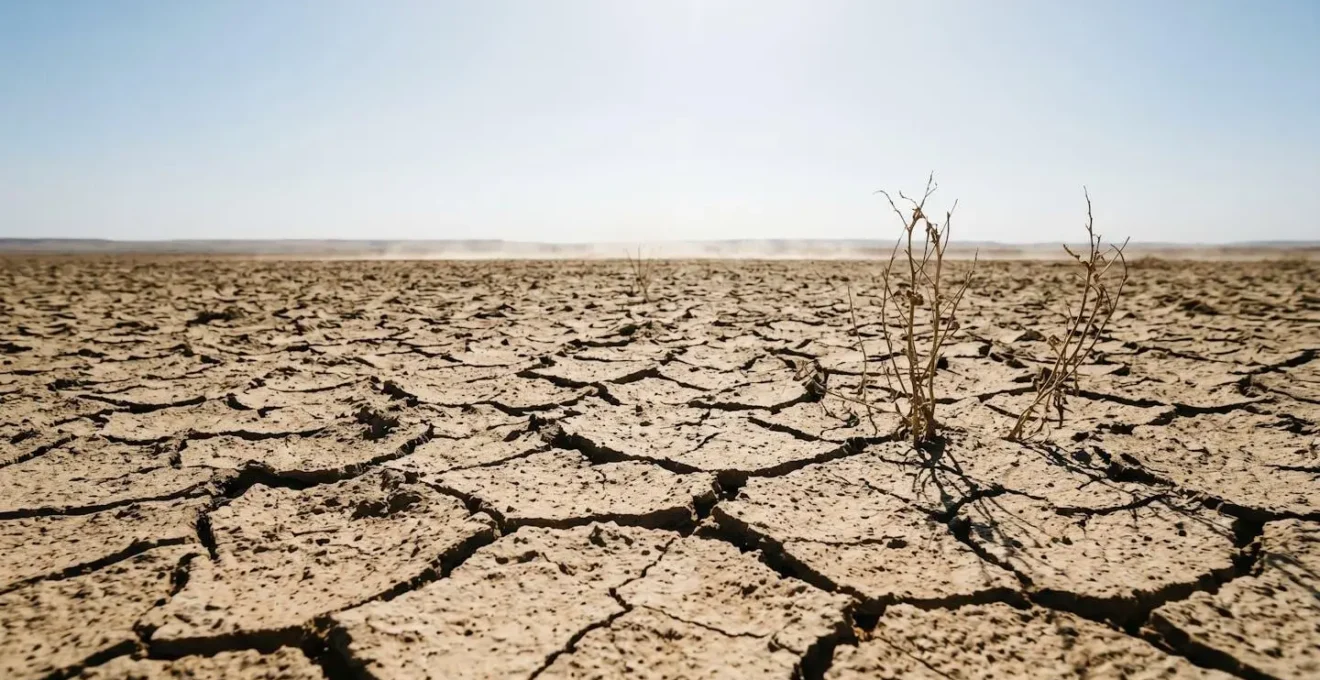
The solution is simple in principle: keep the soil covered at all times. Cover crops, or ‘green manures’, are the most effective tool for this. A living carpet of vegetation intercepts the energy of raindrops, shades the soil from the sun, and reduces wind speed at the surface, all of which dramatically cut down on evaporative losses. Species like phacelia, vetch, or deep-rooting rye not only protect the surface but also actively build soil structure and add organic matter when they are incorporated. The value of this protection cannot be overstated.
Certain types of soil organic matter can hold up to 20 times their weight in water.
– Reicosky, FAO report on soil organic matter importance (2005)
This highlights the immense potential being lost when soil is left bare. Instead of allowing water to evaporate, a cover crop system captures that moisture and converts it into organic matter—the very foundation of a water-retentive soil.
Drought Tolerant Varieties: Choosing Wheat That Yields on Light Land
Beyond soil management, genetic selection is a powerful lever for building drought resilience. Not all crop varieties are created equal when it comes to handling water stress. For farmers on light land, choosing wheat varieties specifically bred for drought tolerance is a strategic imperative, not an afterthought. These varieties possess physiological traits that allow them to maintain yield potential even when water is scarce.
One of the most important traits is a deep and vigorous rooting system. Varieties that can quickly establish roots that penetrate deep into the soil profile can access moisture that is unavailable to shallower-rooting plants. This allows them to tap into subsoil water reserves during dry periods in late spring and early summer when the topsoil has dried out. Another key trait is efficient stomatal control. Stomata are the pores on a leaf’s surface that regulate gas exchange and water loss (transpiration). Drought-tolerant varieties are better at closing their stomata during the hottest parts of the day to conserve water, reopening them when conditions are more favourable, thus improving their water use efficiency.
When making selections, it is essential to consult up-to-date, independent resources tailored to your region. For UK farmers, the AHDB Recommended List is an indispensable tool. It provides robust data on how different varieties perform under various conditions, including information on their suitability for light soils and their resilience to environmental stresses. Choosing a variety that is proven to perform well in your specific environment is a low-cost, high-impact decision that complements your soil improvement efforts.
How to Raise Soil Organic Matter by 0.5% in 5 Years on Arable Land?
Building soil organic matter (SOM) on sandy arable land is a marathon, not a sprint. However, with a consistent and strategic approach, a target of increasing SOM by 0.5% over five years (an average of 0.1% per year) is both ambitious and achievable. This requires a shift from viewing organic inputs as waste disposal to seeing them as a core part of a soil-building investment strategy. It’s about feeding the soil biology and creating a positive feedback loop where healthier soil grows healthier crops, which in turn leave more residues to build more soil.
The strategy must be multi-faceted, combining several practices that work in synergy. No single action will be enough; it is the cumulative effect of a whole-system approach that drives meaningful change. This involves diversifying what you grow, minimising soil disturbance that burns off carbon, and actively adding organic amendments to the system. Monitoring is also key; annual soil testing provides the data needed to track progress and adjust your strategy.
Achieving this goal requires a clear, actionable plan. The following steps outline a proven framework for systematically increasing SOM content in a commercial arable rotation.
Your 5-Year Plan for Building Soil Organic Matter
- Implement long and diverse crop rotations: Increase the quality and quantity of crop residues incorporated into the soil, which becomes available to microbial communities. Move away from short, simple rotations to include a wider variety of plant families.
- Plant cover crops as ‘green manure’: Use the time between main crop cycles to continuously add organic matter and prevent bare soil periods. This protects the soil and provides a constant food source for soil biology.
- Reduce tillage intensity: Adopt minimum tillage or no-till systems to minimize soil disturbance. This preserves existing organic matter from rapid decomposition and protects the fungal networks essential for soil structure.
- Apply organic amendments strategically: Use compost or manure at targeted rates. For sandy soils, applying 1-2 tons per acre annually can lead to measurable improvements in SOM and water retention.
- Monitor and measure: Conduct annual soil organic matter tests to track progress toward the 0.1% per year increase target. Use this data to adjust practices and demonstrate the return on your investment.
Key Takeaways
- The primary goal is to engineer a resilient ‘soil-water system’, not just reactively add organic matter.
- Tools like biochar and min-till should be viewed as soil engineering practices that build permanent, water-retaining structures.
- A systematic 5-year plan focusing on diverse rotations, cover crops, and reduced tillage can realistically raise soil organic matter by 0.5%.
Cocksfoot vs Ryegrass: Which Transpires Less in Hot Weather?
For livestock farmers or those incorporating grass leys into their arable rotation on light land, the choice of grass species is a critical decision in the fight against drought. The two most common options, Perennial Ryegrass and Cocksfoot, have vastly different strategies for dealing with water stress. While Perennial Ryegrass (Lolium perenne) is known for its high yield and palatability in ideal conditions, it is notoriously shallow-rooting and drought-susceptible.
In hot weather, ryegrass continues to transpire heavily, rapidly depleting the limited moisture in the topsoil. Once this water is gone, its growth stops, and the plant quickly becomes dormant or dies back, leaving pastures brown and unproductive. It is a high-input, high-output species that struggles when conditions are not perfect.
Cocksfoot (Dactylis glomerata), on the other hand, is a true drought survivor. Its primary advantage is its deep and extensive fibrous root system, which can penetrate far deeper into the soil profile to find water long after the ryegrass has given up. This makes it far more resilient during prolonged dry spells. Cocksfoot also exhibits better stomatal control, reducing its transpiration rate during the heat of the day to conserve water. While it may have a reputation for being slightly less palatable and lower in quality than ryegrass, modern varieties have greatly improved on these traits. For a pasture on sandy soil that needs to stay green and productive through a heatwave, Cocksfoot is unequivocally the superior choice.
Reducing Evapotranspiration Rates to Keep Pastures Green During Heatwaves?
Keeping pastures and crops green during a heatwave is the ultimate test of a resilient farming system. The key challenge is to manage evapotranspiration—the combined loss of water from soil evaporation and plant transpiration. A successful strategy is not about a single action but a holistic approach that integrates all the principles we have discussed. It is the culmination of proactive ‘resilience engineering’ across the entire farm.
By systematically building a high-functioning soil-water system, you create a buffer that fundamentally alters how your farm responds to drought. A soil rich in organic matter (as discussed in section 31.1 and 9.2) has a much larger water reservoir to begin with. Practices like minimum tillage (section 31.3) and maintaining constant soil cover (section 31.4) drastically reduce the ‘evaporation’ part of the equation, saving huge volumes of water. Structural amendments like biochar (section 31.2) add another layer of water-holding security within the root zone.
Finally, choosing the right genetics, whether it’s drought-tolerant wheat (section 31.5) or deep-rooting grasses like Cocksfoot (section 50.3), tackles the ‘transpiration’ component. These plants are simply more efficient with every litre of water they use. When all these elements are combined, the effect is synergistic. You create a system that not only holds more water but also loses it more slowly, ensuring your crops have the moisture they need to survive and even thrive when others fail.
The journey to drought-proofing your farm is a long-term investment in its most valuable asset: the soil. The time to start building that resilience and securing your future profitability is now. The first step is to assess your current soil health and formulate a plan.